
Hex Cap Bolts
1. Regional Industry Context (Middle East Focus)
High-strength bolting systems are fundamental mechanical components within Middle East industrial infrastructure. In hydrocarbon processing environments, pressure-retaining assemblies rely on controlled mechanical clamping forces to maintain leak-tight connections between flanged components, structural supports, rotating equipment, and pressure vessels.
Across the Gulf Cooperation Council (GCC) region—particularly within Saudi Arabia, the United Arab Emirates, and Qatar—bolted joints form a primary load transfer mechanism in energy infrastructure where welding alone cannot provide the necessary serviceability, maintainability, or inspection accessibility.
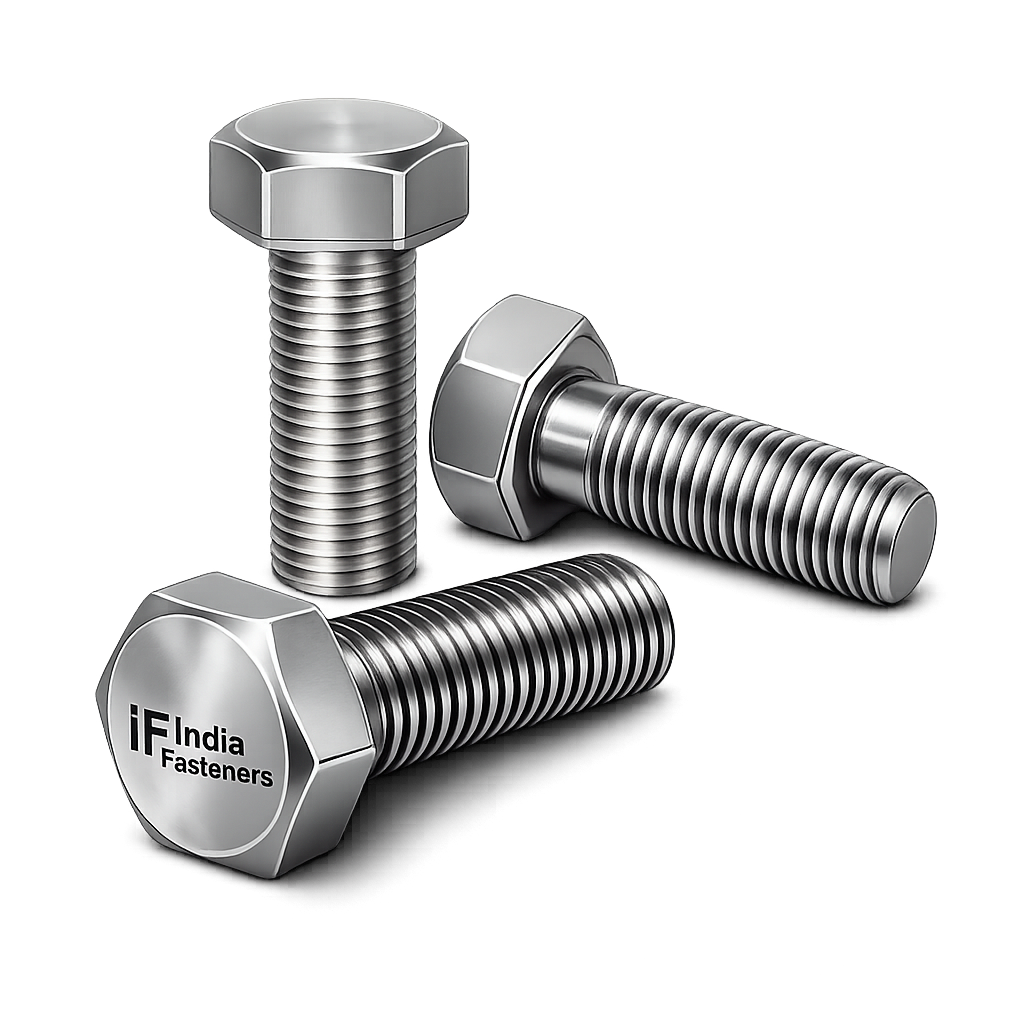
Hex cap bolts are widely deployed in the following industrial systems:
• Oil & gas pipeline infrastructure
• Refinery process piping networks
• LNG liquefaction and regasification facilities
• Petrochemical complexes
• Desalination plants
• Power generation steam systems
• District cooling plants
• Structural steel frameworks
Within these sectors, bolted joints serve as controlled mechanical fastening systems that enable predictable preload application, maintainable connections, and field-serviceable assemblies.
In high-pressure industrial installations, flange joints remain one of the most common connection methods. A flange joint consists of two flanges, a sealing gasket, and a bolting assembly designed to apply compressive load to the gasket surface.
The reliability of this joint depends primarily on the performance of the bolting system.
Hex cap bolts serve as the primary fastener in many pressure equipment assemblies where tapped holes or nut-based assemblies are specified.
1.1 Oil & Gas Pipeline Systems
In upstream and midstream hydrocarbon transportation systems, pipeline networks include thousands of bolted flange joints installed in:
• compressor stations
• valve assemblies
• pipeline pigging systems
• pump skid connections
• instrumentation interfaces
Onshore pipelines in Saudi Arabia frequently operate under significant pressure fluctuations resulting from process flow changes and pump operations.
These cyclic loads generate fluctuating stresses within bolted joints.
Hex cap bolts used in these environments must therefore exhibit:
• high tensile strength
• fatigue resistance
• stable preload retention
• predictable torque-to-tension performance
Alloy steel grades such as ASTM A193 B7 are widely specified for these applications.
1.2 Refinery Process Piping Systems
Refinery piping networks operate under combinations of elevated temperature, internal pressure, and thermal expansion. Hydrocarbon processing units include:
• catalytic cracking systems
• hydrodesulfurization units
• distillation columns
• heat exchanger networks
Bolted joints are used extensively in flanged piping connections that require periodic maintenance or equipment replacement.
Hex cap bolts provide controlled mechanical tightening in these assemblies when the flange design incorporates threaded components or tapped holes.
The reliability of the bolted connection directly affects plant safety, since leakage of hydrocarbons can lead to fire hazards.
1.3 LNG Terminals (Qatar)
Liquefied natural gas (LNG) facilities operate at extremely low temperatures.
During LNG processing, components may experience temperatures approaching –162°C. Bolting systems installed within cryogenic process lines must maintain mechanical integrity under low-temperature conditions where standard alloy steels become brittle.
For this reason, low-temperature bolting materials such as ASTM A320 L7 are commonly specified.
Hex cap bolts produced from these materials undergo impact testing to confirm adequate toughness under cryogenic service conditions.
1.4 Petrochemical Complexes (Jubail / Ruwais)
Petrochemical production complexes such as those located in Jubail Industrial City (Saudi Arabia) and Ruwais Industrial Area (UAE) include large-scale process equipment operating continuously under high pressure and temperature.
Bolted connections within these facilities experience:
• continuous vibration from rotating machinery
• cyclic pressure loading from process fluctuations
• elevated operating temperatures
• chemical exposure from hydrocarbons and process chemicals
High-strength bolting systems must therefore maintain preload stability over long operating periods.
Hex cap bolts are frequently specified where structural connections or mechanical assemblies require head-driven tightening rather than stud-nut assemblies.
1.5 Desalination Plants
Seawater desalination plants are widely deployed throughout the Middle East due to limited freshwater resources.
Within desalination infrastructure, bolting systems are installed in:
• high-pressure pump housings
• pressure vessels for reverse osmosis systems
• structural equipment frames
• large pipeline systems transporting seawater and treated water
The marine environment introduces high chloride concentrations and elevated humidity levels, creating corrosion risks for carbon steel fasteners.
Material selection therefore becomes critical, with stainless steel or coated alloy steel bolts often required.
1.6 Power Generation Steam Systems
Thermal power plants operating on gas or steam turbines require extensive bolting systems in:
• turbine casings
• heat recovery steam generators
• high-temperature piping systems
• condenser assemblies
High-temperature service can exceed 500°C in some components.
Bolting materials used in these systems must maintain mechanical strength at elevated temperature.
Alloy steel grades such as ASTM A193 B16 or ASTM A453 Grade 660 are commonly specified for such applications.
1.7 District Cooling Networks
District cooling infrastructure—commonly deployed in UAE urban developments—uses centralized chilled water systems to provide large-scale building cooling.
These networks contain:
• high-capacity pump stations
• large diameter pipelines
• structural equipment installations
Bolting systems installed in pump assemblies and equipment frames require high mechanical reliability under vibration loading.
1.8 Structural Steel Frameworks
Hex cap bolts are also widely used in structural steel assemblies supporting industrial equipment.
Examples include:
• pipe racks
• compressor skid structures
• heavy equipment foundations
• steel support frames
In these applications, bolts transfer structural loads through friction and clamp force between connected steel members.
1.9 Environmental Factors Affecting Bolted Joints in GCC Climate
Industrial installations in the Gulf region operate under environmental conditions that significantly influence bolted joint performance.
Thermal Expansion
Ambient temperatures in desert regions frequently exceed 45°C during summer months.
Thermal expansion of steel components can generate differential movement within bolted assemblies.
These temperature variations can affect:
• bolt preload
• gasket compression
• joint relaxation
Engineering design must account for these thermal effects when selecting bolt materials and tightening procedures.
Marine Humidity & Salt Exposure
Many Middle East industrial plants are located near coastal areas.
Marine environments introduce:
• high humidity
• salt deposition
• chloride-induced corrosion
Carbon steel fasteners exposed to these conditions require protective coatings or corrosion-resistant materials.
Vibration from Rotating Equipment
Compressor stations, pumps, and turbines generate mechanical vibration transmitted through structural supports and piping systems.
Vibration loading can gradually reduce bolt preload if the joint design does not maintain sufficient clamp force.
High-strength hex cap bolts are therefore selected to maintain reliable preload levels under cyclic vibration conditions.
Cyclic Pressure Loading
Hydrocarbon processing plants frequently experience pressure variations caused by operational changes.
Repeated pressure cycles produce fluctuating stresses in bolted joints, which can eventually cause fatigue failure if bolt tension is insufficient.
For this reason, correct bolt preload and appropriate material selection are critical.
2. Technical Definition of Hex Cap Bolt
A hex cap bolt is a threaded fastener featuring a hexagonal head designed to transmit tightening torque using standard wrench or socket tools.
The bolt typically includes:
• a hexagonal head for torque application
• a threaded shank for mechanical engagement
• a bearing surface under the head to distribute clamp load
Hex cap bolts are used in assemblies where:
• a nut is installed on the threaded end, or
• the bolt engages directly into a threaded hole.
They are designed to withstand high mechanical loads and maintain clamping force between joined components.
2.1 Dimensional Standards
Several international standards define the geometry and dimensions of hex cap bolts.
Key dimensional standards include:
ASME B18.2.1
Defines dimensional requirements for inch-series hex bolts and hex cap screws used in industrial applications.
ISO 4014 / ISO 4017
International metric standards specifying hex head bolts with partial or full threads.
These standards establish tolerances for:
• head width across flats
• head height
• thread length
• shank diameter
• thread pitch
Dimensional compliance ensures compatibility with nuts, washers, and structural components across international projects.
2.2 Material Standards
The material properties of hex cap bolts used in industrial pressure systems are governed by ASTM material specifications.
Key standards include:
ASTM A193
Covers alloy steel and stainless steel bolting materials designed for high-temperature or high-pressure service.
ASTM A320
Specifies alloy and stainless steel bolting materials for low-temperature applications.
These standards define:
• mechanical strength requirements
• chemical composition limits
• heat treatment procedures
• hardness limits
• impact testing requirements
2.3 Head Geometry and Load Transfer
The hexagonal head of the bolt provides multiple flat surfaces allowing torque to be applied using a wrench or socket.
During tightening, torque applied to the bolt head generates tensile stress in the shank of the bolt.
This tensile stress produces clamp force that compresses the connected components together.
The clamping force must exceed any external forces attempting to separate the joint.
2.4 Thread Engagement Principles
Thread engagement occurs between the bolt threads and the internal threads of a nut or tapped hole.
Proper engagement length is necessary to prevent thread stripping.
Engineering guidelines typically recommend a thread engagement length equal to:
• one bolt diameter for steel components
• greater engagement lengths for softer materials.
2.5 Bolt Tension and Joint Integrity
The integrity of a bolted joint depends primarily on bolt tension rather than torque itself.
Torque is merely a method used to generate tension within the bolt.
The bolt behaves as an elastic spring.
When tightened, it elongates slightly, generating tensile stress that creates compressive force across the joint interface.
If this clamping force remains higher than external separating forces, the joint remains secure.
2.6 Differences Between Common Industrial Bolts
• Manufactured with precise dimensional tolerances
• Designed for high-strength industrial assemblies
• Typically used in pressure equipment or structural connections1. Regional Industry Context (Middle East Focus)
High-strength bolting systems are fundamental mechanical components within Middle East industrial infrastructure. In hydrocarbon processing environments, pressure-retaining assemblies rely on controlled mechanical clamping forces to maintain leak-tight connections between flanged components, structural supports, rotating equipment, and pressure vessels.
Thermal Expansion
Ambient temperatures in desert regions frequently exceed 45°C during summer months.
Thermal expansion of steel components can generate differential movement within bolted assemblies.
These temperature variations can affect:
• bolt preload
• gasket compression
• joint relaxation
Engineering design must account for these thermal effects when selecting bolt materials and tightening procedures.
Marine Humidity & Salt Exposure
Many Middle East industrial plants are located near coastal areas.
Marine environments introduce:
• high humidity
• salt deposition
• chloride-induced corrosion
Carbon steel fasteners exposed to these conditions require protective coatings or corrosion-resistant materials.
Vibration from Rotating Equipment
Compressor stations, pumps, and turbines generate mechanical vibration transmitted through structural supports and piping systems.
Vibration loading can gradually reduce bolt preload if the joint design does not maintain sufficient clamp force.
High-strength hex cap bolts are therefore selected to maintain reliable preload levels under cyclic vibration conditions.
Hex Bolt
Hex Cap Bolt
Often similar in appearance but may have looser dimensional tolerances.
Hex bolts are sometimes used in general construction applications.
A heavy hex bolt features a larger hex head and increased bearing surface.
Stud Bolt
A stud bolt is threaded on both ends and used with two nuts.
Stud bolts are commonly used in flange connections within oil and gas piping systems.
Heavy Hex Bolt
These bolts are frequently specified in high-pressure flange connections such as those defined by ASME B16.5.
Cyclic Pressure Loading
Hydrocarbon processing plants frequently experience pressure variations caused by operational changes.
Repeated pressure cycles produce fluctuating stresses in bolted joints, which can eventually cause fatigue failure if bolt tension is insufficient.
For this reason, correct bolt preload and appropriate material selection are critical.
3. Bolted Joint Mechanics & Load Distribution
Understanding bolted joint mechanics is essential for designing reliable mechanical assemblies in high-pressure industrial environments.
3.1 Bolt Preload Generation
Preload is the tensile force generated in a bolt during tightening.
This force compresses the joined components together.
Preload must be sufficient to prevent joint separation when external forces act on the assembly.
3.2 Clamp Force Mechanics
Clamp force is the compressive force exerted across the joint interface due to bolt tension.
This force holds the connected components together.
If external forces exceed clamp force, the joint may separate, potentially causing leakage or mechanical failure.
3.3 Friction Coefficient Impact
Friction plays a major role in torque-to-tension relationships.
During tightening, approximately:
• 50% of torque overcomes thread friction
• 40% overcomes friction under the bolt head
• only about 10% generates actual bolt tension
Therefore lubrication conditions significantly influence achieved bolt preload.
3.4 Torque-to-Tension Relationship
The relationship between applied torque and bolt preload can be approximated using the equation:

Where:
 = tightening torque
 = nut factor (dimensionless friction coefficient)
 = bolt preload force
 = nominal bolt diameter
The nut factor depends on lubrication conditions and surface finish.
Typical nut factor values:
• Dry threads: ~0.20
• Lubricated threads: ~0.15
3.5 Bolt Tensile Stress
Bolt stress can be calculated using the equation:

Where:
 = tensile stress= applied force
 = tensile stress area of the bolt
This calculation is used in bolting design to ensure that applied preload remains within allowable stress limits defined by material standards.
3.6 Joint Separation Risk
Joint separation occurs when external forces exceed the clamp force generated by bolt preload.
In pressure flange joints, internal pressure attempts to separate the flanges.
If bolt preload is insufficient, gasket sealing pressure decreases, leading to leakage.
3.7 Fatigue Failure Mechanisms
Bolts subjected to cyclic loading may experience fatigue failure.
Fatigue occurs when repeated stress cycles cause microscopic crack growth within the material.
High-strength alloy steels are selected to provide improved fatigue resistance under such conditions.
3.8 Relaxation Under Temperature Cycling
Temperature changes can cause relaxation in bolted joints due to:
• differential thermal expansion
• gasket creep
• material stress relaxation
Periodic inspection and controlled tightening procedures are often specified in EPC installation standards.
3.9 Improper Torque Effects in High-Pressure Flange Joints
If torque is too low:
• insufficient preload occurs
• gasket compression becomes inadequate
• leakage risk increases.
If torque is excessive:
• bolt yielding may occur
• thread damage may develop
• long-term fatigue resistance decreases.
Therefore torque values specified by engineering standards must be carefully followed.
3.10 Safety Factor in EPC Bolting Design
Engineering design for hydrocarbon processing plants typically incorporates safety factors to ensure reliable performance.
Bolting systems are generally tightened to approximately:
60–75% of bolt yield strength
Material Engineering, Standards & Manufacturing Discipline
4. Applicable Standards and Material Specifications (Mapped to GCC Industrial Use)
Material selection for industrial hex cap bolts used in pressure systems is governed primarily by internationally recognized ASTM and ASME specifications. These standards define mechanical properties, chemical composition, heat treatment procedures, and testing requirements necessary to ensure reliable performance under demanding service conditions.
In Middle East energy infrastructure projects, material compliance is typically verified during EPC procurement evaluation. Procurement teams assess bolt materials according to operating temperature ranges, corrosion exposure, and pressure service requirements.
The following ASTM standards are commonly specified for hex cap bolts used in hydrocarbon processing, power generation, and desalination infrastructure.
4.1 ASTM A193 – Alloy and Stainless Steel Bolting for High-Temperature Service
ASTM A193 is one of the most widely used specifications for alloy steel and stainless steel bolting materials intended for high-temperature and high-pressure applications.
The specification defines requirements for:
• chemical composition
• mechanical strength properties
• heat treatment procedures
• hardness limits
• testing requirements
ASTM A193 bolting materials are commonly used in refinery piping systems, high-pressure vessels, and heat exchanger assemblies.
Key grades relevant to hex cap bolt manufacturing include:
• ASTM A193 B7
• ASTM A193 B16
• ASTM A193 B8
• ASTM A193 B8M
ASTM A193 B7
ASTM A193 Grade B7 is a chromium-molybdenum alloy steel widely used for high-pressure bolting in oil and gas infrastructure.
Typical characteristics:
• quenched and tempered alloy steel
• high tensile strength
• suitable for elevated temperature service
• good fatigue resistance
B7 bolts are commonly specified for:
• refinery piping systems
• pressure vessel flanges
• valve assemblies
• high-pressure pump housings
In Saudi Aramco and ADNOC infrastructure, ASTM A193 B7 remains one of the most frequently specified bolting grades.
ASTM A193 B16
ASTM A193 Grade B16 is a higher strength alloy steel developed for elevated temperature environments where B7 material may approach its strength limitations.
Key characteristics:
• chromium-molybdenum-vanadium alloy steel
• superior high-temperature strength retention
• higher yield strength than B7
Typical applications include:
• high-temperature refinery units
• steam generation systems
• turbine assemblies
ASTM A193 B8
ASTM A193 Grade B8 refers to austenitic stainless steel bolting material equivalent to Type 304 stainless steel.
Properties include:
• good corrosion resistance
• moderate mechanical strength
• suitability for moderate temperature service
Typical applications:
• chemical processing equipment
• desalination infrastructure
• non-sour hydrocarbon environments
ASTM A193 B8M
ASTM A193 Grade B8M corresponds to Type 316 stainless steel.
Compared to B8, B8M provides improved resistance to chloride corrosion due to the presence of molybdenum in the alloy composition.
Applications include:
• marine environments
• desalination systems
• coastal petrochemical plants
4.2 ASTM A320 – Bolting Materials for Low Temperature Service
ASTM A320 defines alloy and stainless steel bolting materials designed for low-temperature service environments.
The standard includes mandatory impact testing to verify material toughness under cryogenic or sub-zero conditions.
Two grades frequently used in LNG and gas processing facilities include:
• ASTM A320 L7
• ASTM A320 L7M
ASTM A320 L7
ASTM A320 Grade L7 is a low-temperature alloy steel produced through quenching and tempering processes.
Properties include:
• high tensile strength
• good impact toughness at low temperature
• suitability for cryogenic conditions
L7 hex cap bolts are commonly used in:
• LNG terminals
• natural gas processing plants
• cryogenic storage systems
ASTM A320 L7M
L7M is a modified version of the L7 alloy steel designed for applications where lower hardness limits are required.
Lower hardness reduces susceptibility to sulfide stress cracking in sour service environments.
Typical applications include:
• sour gas processing units
• offshore hydrocarbon production systems
4.3 ASTM A453 Grade 660
ASTM A453 Grade 660 is an austenitic stainless steel alloy designed for high-temperature service.
Key characteristics include:
• high creep resistance
• excellent oxidation resistance
• strength retention at temperatures exceeding 650°C
These bolts are commonly used in:
• gas turbine assemblies
• high-temperature pressure vessels
• petrochemical reactors
4.4 ASTM A307 – Carbon Steel Bolting
ASTM A307 covers carbon steel bolts and studs used in general structural applications.
Mechanical strength levels are lower than alloy steel bolting materials.
Typical applications include:
• structural steel connections
• equipment mounting frames
• general mechanical assemblies
ASTM A307 bolts are not typically used for high-pressure or high-temperature pressure-retaining joints.
4.5 International Dimensional and Mechanical Standards
In addition to ASTM material specifications, hex cap bolts must comply with dimensional and mechanical standards used across global EPC projects.
Key standards include:
ASME B18.2.1
Defines dimensional requirements for hex bolts and hex cap screws.
Includes:
• head dimensions
• thread length requirements
• tolerances for bolt diameter and pitch
This standard ensures compatibility with ASME pressure piping and flange standards.
ISO 4014 / ISO 4017
These standards specify metric hex head bolts with either partial or full threading.
ISO standards are widely used in international infrastructure projects outside North America.
EN ISO 898
EN ISO 898 defines mechanical property classes for carbon steel and alloy steel bolts.
Property classes include:
• 8.8
• 10.9
• 12.9
These classes correspond to tensile strength and yield strength levels.
Many Middle East EPC projects require compatibility between ASTM and ISO property classes.
4.6 Mapping Bolt Materials to GCC Industrial Applications
Material selection for hex cap bolts must consider service temperature, corrosion exposure, and pressure requirements.
For example:
• High-temperature refinery units typically require ASTM A193 B16 or B7
• LNG cryogenic systems require ASTM A320 L7
• Coastal desalination plants may require stainless grades such as B8M
• Structural steel assemblies may use ASTM A307
Proper material selection is normally defined within EPC project specifications and approved during engineering design review.
5. Material Comparison Table (Engineering Reference)
| Grade | Yield Strength (MPa) | Tensile Strength (MPa) | Operating Temperature Range | Corrosion Resistance | Typical GCC Application |
|---|---|---|---|---|---|
| ASTM A193 B7 | 720 | 860 | -30°C to 450°C | Moderate | Refinery piping, pressure vessels |
| ASTM A193 B16 | 860 | 1035 | -30°C to 540°C | Moderate | High-temperature refinery units |
| ASTM A320 L7 | 720 | 860 | -100°C to 450°C | Moderate | LNG facilities, cryogenic piping |
| ASTM A320 L7M | 620 | 760 | -100°C to 400°C | Moderate | Sour gas processing |
| ASTM A193 B8 | 515 | 690 | -200°C to 400°C | Good | Chemical plants, desalination |
| ASTM A193 B8M | 515 | 690 | -200°C to 400°C | High | Marine and coastal plants |
| ASTM A453 Gr 660 | 585 | 895 | Up to 650°C | High | Turbines, reactors |
| ASTM A307 | 240 | 415 | -20°C to 200°C | Low | Structural assemblies |
6. Heat Treatment and Metallurgical Control
Mechanical properties of hex cap bolts depend heavily on controlled heat treatment procedures.
Heat treatment modifies the internal microstructure of steel, enabling the required combination of strength, ductility, and toughness.
6.1 Quenching and Tempering
Alloy steel grades such as ASTM A193 B7 and ASTM A320 L7 are produced using a quench-and-temper heat treatment process.
The procedure includes:
- Heating steel above its critical temperature
- Rapid cooling (quenching) in oil or water
- Reheating to a controlled temperature (tempering)
Quenching forms a hard martensitic microstructure.
Tempering reduces brittleness and improves toughness.
6.2 Normalizing
Normalizing involves heating steel above the transformation temperature followed by controlled air cooling.
This process refines grain structure and improves mechanical uniformity.
Normalizing is often applied prior to additional heat treatment processes.
6.3 Solution Annealing for Stainless Steels
Austenitic stainless steel grades such as ASTM A193 B8 and B8M undergo solution annealing.
This process involves heating the material to high temperature followed by rapid cooling.
The process dissolves chromium carbides and restores corrosion resistance.
6.4 Stress Relieving
Stress relieving may be applied after machining or cold forming operations.
This process reduces residual stresses within the material.
Stress relieving helps improve dimensional stability and fatigue resistance.
6.5 Tempering Control
For alloy steels used in pressure equipment, tempering temperatures must be carefully controlled.
Improper tempering can lead to:
• excessive hardness
• reduced toughness
• susceptibility to brittle fracture
ASTM standards therefore specify maximum hardness limits.
6.6 Hardness Control
Hardness is measured using Rockwell or Brinell testing methods.
Hardness limits ensure the material maintains adequate toughness while achieving required strength levels.
Excessively hard bolts may become susceptible to brittle fracture.
6.7 Charpy V-Notch Impact Testing
Low-temperature bolting materials must demonstrate adequate impact toughness.
Charpy V-notch testing measures the energy absorbed during fracture at specified temperatures.
For LNG service applications, impact tests confirm that the material will not fail in a brittle manner under cryogenic conditions.
6.8 Hydrogen Embrittlement Considerations
High-strength alloy steel fasteners can be susceptible to hydrogen embrittlement.
Hydrogen atoms may enter the steel during:
• electroplating
• acid pickling
• corrosion reactions
Hydrogen embrittlement can cause delayed brittle fracture under load.
Manufacturing procedures must therefore control processes that may introduce hydrogen into the material.
6.9 NACE Compliance
Certain hydrocarbon processing environments contain hydrogen sulfide (H₂S).
These environments are classified as sour service.
In sour environments, materials must comply with requirements defined in NACE MR0175 / ISO 15156 to prevent sulfide stress cracking.
Bolting materials used in such environments may require controlled hardness levels or specialized alloy compositions.
7. Manufacturing Process Flow for Hex Cap Bolts
Manufacturing high-strength hex cap bolts for industrial applications requires controlled production processes and traceability.
The following process flow describes a typical manufacturing sequence used for alloy steel hex cap bolts.
7.1 Raw Material Traceability
Production begins with certified alloy steel bar stock supplied by approved steel mills.
Each batch of material includes:
• mill heat number
• chemical composition certificate
• mechanical property verification
Heat numbers allow full traceability from raw material to finished fastener.
7.2 Heat Number Verification
Incoming raw materials are verified against mill certificates.
This step ensures that chemical composition matches the specified ASTM grade.
Traceability records are maintained throughout production.
7.3 Positive Material Identification (PMI)
PMI testing may be performed using handheld spectrometers or X-ray fluorescence equipment.
PMI confirms alloy composition before manufacturing begins.
7.4 Hot Forging of Hex Head
Hex bolt heads are typically formed through hot forging.
In this process:
- Steel bar is heated to forging temperature
- Material is placed into a forging die
- Hydraulic or mechanical presses form the hexagonal head shape
Hot forging improves grain flow alignment, increasing strength at the head-to-shank transition.
7.5 Thread Rolling or Thread Cutting
Threads may be produced by:
Cold forming process where hardened dies roll the thread shape into the material.
Benefits include:
• improved fatigue strength
• smooth surface finish
• work-hardened thread surface
Thread Cutting
Machining process used for certain bolt sizes or materials.
Thread cutting removes material to produce the thread profile.
7.6 Heat Treatment Cycle
After forming, bolts undergo controlled heat treatment processes.
For alloy steel bolts this typically includes:
• quenching
• tempering
Heat treatment furnaces are temperature-controlled and monitored to ensure uniform mechanical properties.
7.7 CNC Machining of Head Dimensions
After heat treatment, head dimensions may be precision-machined to ensure compliance with dimensional tolerances.
Critical parameters include:
• head height
• width across flats
• bearing surface flatness
7.8 Surface Finishing
Surface treatments may include:
• black oxide finish
• phosphate coating
• hot-dip galvanizing
• specialized corrosion-resistant coatings
Surface finish selection depends on project requirements.
7.9 Marking and Grade Stamping
Bolt heads are stamped with identification markings indicating:
• manufacturer identification
• material grade
• traceability codes
Markings allow field verification of bolt specification during installation.
7.10 Dimensional Inspection
Finished bolts undergo dimensional inspection using calibrated gauges.
Measurements include:
• thread pitch
• thread diameter
• head dimensions
• bolt length
Inspection ensures compliance with ASME B18.2.1 dimensional requirements.
7.11 Final Quality Assurance Release
Prior to shipment, quality assurance personnel review inspection records and test results.
Documentation packages may include:
• mill test certificates
• inspection reports
• heat treatment records
• dimensional inspection reports
Technical Data Tables, Engineering Calculations & Quality Control
8. Dimensional Reference Tables for Hex Cap Bolts
Dimensional standardization is essential for ensuring compatibility between bolts, nuts, washers, and mechanical assemblies used in industrial infrastructure.
Hex cap bolt dimensions are governed primarily by ASME B18.2.1 for inch-series fasteners and ISO 4014 / ISO 4017 for metric equivalents.
These standards define geometric tolerances that allow interchangeability across equipment manufactured by different vendors.
Key dimensional parameters include:
• nominal bolt diameter
• thread pitch
• width across flats (hex head)
• head height
• thread length
• total bolt length
Dimensional compliance ensures that bolts fit correctly into mechanical assemblies without interference or excessive clearance.
8.1 ASME B18.2.1 Hex Cap Bolt Dimensional Table (Typical Reference)
| Nominal Bolt Diameter | Thread Pitch (UNC) | Width Across Flats | Head Height | Standard Thread Length | Typical Length Range |
|---|---|---|---|---|---|
| 1/4 in | 20 TPI | 7/16 in | 5/32 in | 3/4 in | 1/2 – 3 in |
| 5/16 in | 18 TPI | 1/2 in | 7/32 in | 7/8 in | 1/2 – 4 in |
| 3/8 in | 16 TPI | 9/16 in | 1/4 in | 1 in | 1 – 6 in |
| 1/2 in | 13 TPI | 3/4 in | 5/16 in | 1 1/4 in | 1 – 8 in |
| 5/8 in | 11 TPI | 15/16 in | 3/8 in | 1 1/2 in | 1 1/2 – 10 in |
| 3/4 in | 10 TPI | 1 1/8 in | 15/32 in | 1 3/4 in | 2 – 12 in |
| 7/8 in | 9 TPI | 1 5/16 in | 35/64 in | 2 in | 2 – 14 in |
| 1 in | 8 TPI | 1 1/2 in | 5/8 in | 2 1/4 in | 2 – 16 in |
| 1 1/4 in | 7 TPI | 1 7/8 in | 25/32 in | 2 3/4 in | 3 – 18 in |
| 1 1/2 in | 6 TPI | 2 1/4 in | 15/16 in | 3 1/4 in | 4 – 20 in |
These values represent typical reference dimensions. Project specifications may require verification against the latest ASME B18.2.1 edition.
8.2 Thread Pitch Systems
Hex cap bolts are manufactured using standardized thread systems.
Two thread series are commonly used:
UNC (Unified National Coarse)
• larger pitch spacing
• faster installation
• better resistance to thread damage
UNF (Unified National Fine)
• smaller pitch spacing
• higher tensile stress area
• improved resistance to loosening in vibration environments
Most industrial flange bolting systems use coarse thread series due to improved field installation performance.
9. Mechanical Property Table for Common Bolting Grades
Mechanical properties determine the load-carrying capacity of bolts under tensile stress.
ASTM standards define minimum values for yield strength, tensile strength, elongation, hardness, and impact resistance.
9.1 Mechanical Property Reference Table
| Material Grade | Yield Strength | Tensile Strength | Elongation | Hardness | Impact Energy Requirement |
|---|---|---|---|---|---|
| ASTM A193 B7 | 720 MPa | 860 MPa | 16% | 24–35 HRC | Not mandatory |
| ASTM A193 B16 | 860 MPa | 1035 MPa | 14% | 30–36 HRC | Not mandatory |
| ASTM A320 L7 | 720 MPa | 860 MPa | 16% | 24–35 HRC | Mandatory at low temperature |
| ASTM A320 L7M | 620 MPa | 760 MPa | 18% | ≤23 HRC | Mandatory |
| ASTM A193 B8 | 515 MPa | 690 MPa | 30% | ≤95 HRB | Not mandatory |
| ASTM A193 B8M | 515 MPa | 690 MPa | 30% | ≤95 HRB | Not mandatory |
| ASTM A453 Grade 660 | 585 MPa | 895 MPa | 20% | ≤35 HRC | High-temperature testing |
| ASTM A307 | 240 MPa | 415 MPa | 23% | ≤22 HRC | Not required |
Mechanical properties must be verified through tensile testing performed according to ASTM testing procedures.
10. Bolt Torque Chart (Installation Engineering Reference)
Bolt torque values are used during installation to generate appropriate preload in the fastener.
Torque recommendations depend on several factors including:
• bolt diameter
• material grade
• lubrication condition
• friction coefficient
The following reference values apply to ASTM A193 B7 and ASTM A320 L7 hex cap bolts using standard thread series.
10.1 Recommended Torque Table
| Bolt Diameter | Thread Pitch | Torque (Dry) | Torque (Lubricated) | Estimated Bolt Preload |
|---|---|---|---|---|
| 1/2 in | 13 TPI | 110 Nm | 82 Nm | 24 kN |
| 5/8 in | 11 TPI | 215 Nm | 160 Nm | 38 kN |
| 3/4 in | 10 TPI | 380 Nm | 285 Nm | 60 kN |
| 7/8 in | 9 TPI | 610 Nm | 455 Nm | 85 kN |
| 1 in | 8 TPI | 900 Nm | 675 Nm | 115 kN |
| 1 1/8 in | 7 TPI | 1250 Nm | 940 Nm | 145 kN |
| 1 1/4 in | 7 TPI | 1700 Nm | 1275 Nm | 185 kN |
| 1 1/2 in | 6 TPI | 3000 Nm | 2250 Nm | 265 kN |
These torque values correspond approximately to 70% of yield strength, which is a common tightening target used in EPC bolting procedures.
10.2 Tightening Stress Percentage
During installation, bolts are typically tightened to achieve a stress level between:
60% – 75% of the bolt yield strength
This range provides sufficient preload while maintaining a safety margin below the elastic limit.
Preload levels below 50% of yield strength may allow joint separation under pressure loading.
11. Bolt Preload Calculation Guide
The preload generated in a bolt can be estimated using the torque relationship defined earlier.
Torque Equation
Where:
= tightening torque = nut factor = bolt preload = bolt nominal diameter
11.1 Sample Calculation
Example:
Bolt size: 1 inch ASTM A193 B7 hex cap bolt
Nominal diameter (D): 1 inch = 0.0254 m
Applied torque (T): 675 Nm (lubricated condition)
Nut factor (K): 0.15
Rearranging the equation to solve for preload:

Substituting values:
= 675 / (0.15 × 0.0254)
≈ 177,165 N
Therefore the bolt preload is approximately:
177 kN
This preload force produces compressive clamp load across the bolted joint surfaces.
11.2 Verification During EPC Installation
In large industrial projects, bolt tightening is typically controlled through documented installation procedures.
Methods used include:
• torque-controlled tightening
• hydraulic tensioning
• calibrated torque wrench verification
Inspection personnel may confirm bolt tightening using calibrated tools or load-indicating washers.
12. Corrosion Resistance Comparison Table
Corrosion resistance is an important factor when selecting bolting materials for Middle East industrial installations.
Environmental exposure varies significantly depending on plant location and process conditions.
The following table compares typical corrosion performance for common bolt materials.
12.1 Corrosion Resistance Comparison
| Material Type | Marine Exposure | Sour Gas Service | High Humidity | Hydrocarbon Processing | High Temperature |
|---|---|---|---|---|---|
| Carbon Steel | Low | Poor | Low | Moderate | Limited |
| Alloy Steel (B7) | Moderate (coating required) | Limited | Moderate | High | High |
| Stainless Steel 304 | Good | Limited | High | Moderate | Moderate |
| Stainless Steel 316 | High | Moderate | High | High | Moderate |
| Duplex Stainless Steel | Very High | High | Very High | High | Moderate |
In coastal installations such as desalination plants or offshore facilities, stainless steel or coated alloy steel bolts are typically specified.
13. Inspection and Quality Assurance Procedures
Quality assurance for industrial fasteners used in pressure systems involves multiple inspection stages.
Inspection procedures verify that bolts meet material, dimensional, and mechanical property requirements.
These procedures are typically defined within EPC project specifications and quality plans.
13.1 Positive Material Identification (PMI)
PMI testing confirms the alloy composition of bolts.
Methods include:
• X-ray fluorescence (XRF)
• optical emission spectroscopy (OES)
PMI testing is frequently required for alloy steel and stainless steel bolting used in pressure equipment.
13.2 Ultrasonic Testing of Raw Material
Prior to manufacturing, raw material bars may undergo ultrasonic inspection.
This test detects internal defects such as:
• voids
• inclusions
• internal cracks
Ultrasonic testing ensures structural integrity of the steel before forging operations begin.
13.3 Magnetic Particle Inspection
Magnetic particle inspection (MPI) is used to detect surface and near-surface cracks in ferromagnetic materials.
This test is commonly applied after forging or heat treatment operations.
13.4 Hardness Testing
Hardness testing verifies that the bolt material falls within the limits specified by ASTM standards.
Common testing methods include:
• Rockwell hardness testing
• Brinell hardness testing
Hardness values are important because excessive hardness may increase susceptibility to brittle fracture.
13.5 Thread Gauge Verification
Thread geometry is verified using calibrated gauges.
Inspection typically includes:
• GO / NO-GO thread gauges
• pitch verification
• thread flank angle inspection
Correct thread geometry ensures proper engagement with nuts or threaded components.
13.6 Dimensional Inspection
Dimensional verification confirms that bolt geometry complies with applicable standards.
Measurements include:
• head height
• width across flats
• bolt length
• thread length
Inspection is performed using calibrated measuring equipment.
13.7 Certification Documentation
Industrial bolting supplied to EPC projects typically includes material certification documentation.
Two common certification levels defined in European standards include:
EN 10204 Type 3.1
Manufacturer-issued certificate confirming compliance with specification requirements.
Includes:
• chemical composition
• mechanical property results
• heat treatment records
EN 10204 Type 3.2
Third-party verified certification.
Inspection is witnessed by an independent inspection agency representing the client or project authority.
13.8 Third-Party Inspection Readiness
Large Middle East infrastructure projects often require inspection by independent organizations.
Typical inspection agencies include internationally recognized verification bodies.
Inspection scope may include:
• material verification
• dimensional checks
• witness of mechanical testing
• documentation review
14. Industries Served – GCC Infrastructure Applications
High-strength hex cap bolts are used across multiple sectors within the Middle East industrial economy. In these environments, fasteners function as load-bearing mechanical elements that ensure structural integrity, pressure containment, and maintainable equipment assembly.
Engineering specifications within EPC projects define bolting requirements according to operating conditions such as pressure, temperature, corrosion exposure, and vibration loading.
The following industries represent major applications for industrial hex cap bolts across GCC infrastructure.
14.1 Upstream Oil & Gas Production Facilities
Upstream oil and gas production installations include drilling facilities, wellhead equipment, gathering pipelines, and gas processing plants.
Bolting systems used in upstream facilities must withstand demanding service conditions including:
• high pressure hydrocarbon flow
• sour gas exposure containing hydrogen sulfide
• temperature fluctuations
• vibration from pumping systems
Hex cap bolts are commonly installed in equipment assemblies including:
• valve bodies
• pump casings
• compressor housings
• instrumentation supports
• structural frames supporting drilling equipment
In upstream facilities, bolt material selection typically prioritizes alloy steels with high tensile strength and controlled hardness to ensure resistance to sulfide stress cracking where sour service conditions exist.
ASTM A193 B7 and ASTM A320 L7 materials are frequently specified for these installations.
14.2 Refinery Processing Units
Refineries located throughout the GCC operate complex hydrocarbon processing systems that include distillation columns, catalytic cracking units, hydrotreating reactors, and heat exchanger networks.
Within these facilities, bolting systems are installed in mechanical assemblies that must operate continuously under elevated temperature and pressure.
Typical bolted assemblies include:
• heat exchanger channel covers
• pump housings
• valve assemblies
• reactor access covers
• instrumentation flanges
Hex cap bolts are used where threaded holes or structural equipment assemblies require head-driven tightening.
In refinery environments, bolt materials must maintain mechanical strength at elevated temperatures.
Alloy steels such as ASTM A193 B7 or B16 are commonly used due to their high-temperature strength retention.
14.3 Petrochemical Production Complexes
Petrochemical plants produce chemical feedstocks such as ethylene, propylene, and various polymers.
These facilities operate continuous processing units with extensive piping networks and large equipment installations.
Bolting systems in petrochemical plants must accommodate:
• cyclic pressure loading
• chemical exposure
• elevated operating temperatures
• mechanical vibration from rotating equipment
Hex cap bolts are frequently used in structural equipment assemblies including:
• pipe rack structures
• compressor skids
• pump frames
• equipment foundations
Mechanical strength and fatigue resistance are key design considerations for bolts used in these applications.
14.4 LNG Production and Regasification Facilities
Liquefied natural gas (LNG) terminals operate at extremely low temperatures during gas liquefaction and storage.
Equipment operating in cryogenic environments includes:
• LNG storage tanks
• cryogenic piping systems
• liquefaction process units
• regasification equipment
Bolting materials installed in these systems must maintain toughness at temperatures below −100°C.
ASTM A320 L7 hex cap bolts are commonly specified for these conditions due to their verified low-temperature impact toughness.
Impact testing requirements defined by ASTM A320 ensure that bolts retain ductility under cryogenic service conditions.
14.5 Desalination Plants
Desalination facilities are critical components of water infrastructure throughout the Middle East.
Reverse osmosis and thermal desalination systems involve large mechanical assemblies and high-pressure pumps that rely on bolted connections.
Bolts used in desalination plants must resist corrosion caused by continuous exposure to seawater and salt-laden air.
Applications include:
• pump housings
• pressure vessel assemblies
• structural frames supporting filtration systems
• pipeline equipment installations
Corrosion-resistant materials such as stainless steel grades or coated alloy steels are commonly selected for these environments.
14.6 Power Generation Facilities
Power generation plants across the GCC region include gas turbine plants, steam power stations, and combined cycle power facilities.
Bolting systems used in these plants must perform reliably under conditions including:
• elevated operating temperatures
• vibration from turbine equipment
• thermal cycling during start-up and shutdown
Typical bolted assemblies include:
• turbine casings
• boiler components
• heat recovery steam generator systems
• structural supports for heavy equipment
High-temperature alloy steels such as ASTM A193 B16 or ASTM A453 Grade 660 are commonly specified in high-temperature applications.
14.7 Pipeline Infrastructure
Pipeline systems used for transporting hydrocarbons, natural gas, and water require extensive bolting systems for equipment and structural assemblies.
Bolted joints are installed in:
• pump stations
• valve stations
• pigging launcher assemblies
• instrumentation supports
Hex cap bolts provide mechanical fastening for equipment components requiring periodic maintenance or replacement.
These installations may experience vibration loading, pressure fluctuations, and environmental exposure depending on pipeline location.
14.8 Structural Steel Installations
Industrial plants rely on structural steel frameworks to support piping systems, process equipment, and platforms.
Bolting systems installed in these structures must provide reliable load transfer between steel members.
Hex cap bolts used in structural assemblies transmit forces through clamp load and friction between connected components.
Structural applications include:
• pipe rack systems
• equipment support frames
• access platforms
• heavy equipment foundations
Material grades used in these assemblies depend on structural design requirements and environmental exposure conditions.
15. Export & GCC Supply Capability
Industrial fasteners supplied to Middle East projects must be supported by documented manufacturing and inspection processes.
Engineering procurement teams require traceability, certification, and inspection documentation before approving suppliers for project use.
Manufacturers supplying hex cap bolts to international EPC projects typically provide documentation packages that verify compliance with project specifications.
15.1 Export Supply Regions
Industrial fasteners are supplied to a range of energy infrastructure projects throughout the GCC region.
Typical export destinations include:
• Saudi Arabia
• United Arab Emirates (Dubai and Abu Dhabi)
• Qatar
• Oman
• Kuwait
• Bahrain
Each region maintains project specifications that reference international standards for bolting materials and manufacturing quality.
15.2 Export Packaging Standards
Industrial fasteners used in energy infrastructure projects require controlled packaging procedures to prevent damage or corrosion during transport.
Typical export packaging methods include:
• moisture-resistant packaging materials
• sealed wooden crates
• palletized containers for bulk shipments
• rust-preventive coatings where required
Packaging procedures must ensure that bolts arrive at installation sites without corrosion damage or mechanical deformation.
15.3 Project Documentation Packages
Engineering procurement teams generally require complete documentation packages accompanying bolting shipments.
Typical documentation may include:
• mill test certificates (MTC)
• material traceability reports
• heat treatment records
• dimensional inspection reports
• hardness testing results
Documentation ensures that the supplied fasteners conform to the technical requirements defined in project specifications.
15.4 Mill Test Certificates
Mill test certificates confirm the chemical composition and mechanical properties of the steel used in bolt manufacturing.
Information included in MTC documentation typically includes:
• heat number identification
• chemical composition analysis
• tensile strength verification
• yield strength verification
• elongation results
These certificates provide traceability between finished bolts and the original steel manufacturing batch.
15.5 Inspection Release Documentation
For EPC projects requiring third-party verification, inspection release notes may be issued following inspection activities.
Inspection agencies may witness:
• mechanical testing
• dimensional inspection
• marking verification
• packaging review
Inspection release documentation confirms that the shipment has been accepted according to project quality requirements.
15.6 Material Traceability Systems
Traceability is essential for pressure-retaining equipment components.
Traceability systems ensure that each bolt can be linked to:
• raw material heat number
• manufacturing batch
• inspection records
Head markings and documentation records provide traceability throughout the supply chain.
15.7 Container Loading Discipline
Industrial fasteners are often shipped internationally in containerized cargo.
Proper container loading procedures ensure that fasteners are protected from mechanical damage and moisture exposure during transit.
Typical loading practices include:
• pallet stabilization
• moisture barrier packaging
• secure stacking within containers
These procedures reduce the risk of corrosion or physical damage during transport to project sites.
16. Procurement & Installation Engineering Perspective
Engineering procurement teams responsible for industrial installations must ensure that bolting systems are installed according to documented procedures.
Improper installation can compromise the integrity of mechanical joints regardless of bolt material quality.
EPC contractors therefore implement installation procedures covering lubrication, tightening methods, and inspection verification.
16.1 Bolt Lubrication
Thread lubrication significantly affects the torque-to-tension relationship during bolt tightening.
Lubricated threads reduce friction, allowing more consistent preload generation.
Typical lubrication methods include:
• molybdenum disulfide compounds
• graphite-based lubricants
• specialized anti-seize compounds
Lubrication reduces the risk of thread galling and improves preload accuracy.
16.2 Torque Application Procedures
Bolts installed in pressure equipment are typically tightened using calibrated torque tools.
Torque application procedures may include:
• torque wrench tightening
• hydraulic torque wrenches
• torque multiplier systems for large bolts
Installation procedures often specify torque values corresponding to a defined percentage of bolt yield strength.
16.3 Cross-Pattern Tightening
When tightening bolts on flanged joints, cross-pattern tightening sequences are commonly used.
This tightening method distributes load evenly across the flange surface.
Typical tightening procedure:
- Initial snug tightening
- Intermediate torque pass
- Final torque pass
The cross-pattern sequence prevents uneven gasket compression.
16.4 Flange Gasket Compatibility
Bolting systems must generate sufficient clamp load to maintain gasket sealing pressure.
Different gasket materials require different seating stresses.
Examples include:
• spiral wound gaskets
• ring-type joint gaskets
• compressed fiber gaskets
Proper bolt preload ensures that gasket compression remains adequate during pressure operation.
16.5 Bolt Length Selection
Correct bolt length is essential for proper joint assembly.
Bolts must provide sufficient thread engagement while allowing installation of washers and nuts where applicable.
Typical engineering guidance recommends that:
• two full threads extend beyond the nut after tightening
• thread engagement length meets design requirements
Improper bolt length can compromise joint integrity.
16.6 Inspection Verification in Field Installation
Field inspection verifies that bolting systems have been installed according to project specifications.
Inspection activities may include:
• torque verification
• bolt grade confirmation through head markings
• documentation review
• visual inspection of thread engagement
Inspection results are recorded within project quality documentation.
17. Custom Engineering Capabilities
Industrial projects often require fasteners with dimensions or material characteristics outside standard catalog ranges.
Manufacturers supplying EPC projects typically support custom engineering requirements based on project specifications.
17.1 Non-Standard Bolt Lengths
Certain equipment assemblies require bolt lengths not covered by standard dimensional tables.
Custom manufacturing allows bolts to be produced in project-specific lengths to match assembly requirements.
17.2 Specialized Protective Coatings
Bolts installed in aggressive environments may require protective coatings.
Common coating systems include:
• PTFE-based coatings
• Xylan fluoropolymer coatings
• zinc flake coatings
• phosphate coatings with lubricants
Coatings are selected according to corrosion exposure and operating temperature.
17.3 High-Temperature Bolting Solutions
Equipment operating at elevated temperature requires bolts capable of maintaining strength under thermal stress.
Materials such as ASTM A193 B16 or ASTM A453 Grade 660 are typically used for these applications.
Heat treatment procedures ensure that these materials retain mechanical properties at high temperature.
17.4 Low-Temperature LNG Bolting
Cryogenic service requires bolting materials that maintain toughness at extremely low temperatures.
ASTM A320 L7 bolts are commonly used in LNG infrastructure.
Impact testing verifies that these materials resist brittle fracture under cryogenic conditions.
17.5 NACE-Compliant Bolting
Sour gas environments containing hydrogen sulfide can cause sulfide stress cracking in high-strength steels.
Bolting materials used in these environments must comply with hardness limits defined by NACE standards.
Controlled heat treatment and hardness verification ensure compliance with sour service requirements.
17.6 Project-Specific Marking
Certain EPC projects require customized head markings for identification and traceability.
Markings may include:
• manufacturer identification
• material grade
• heat number reference codes
These markings allow field engineers to verify fastener specification during installation.
17.7 Climate-Resistant Packaging
Fasteners transported to Gulf project sites may experience high humidity and elevated temperature during storage.
Specialized packaging methods are used to protect bolts during transport and site storage.
These methods may include:
• vapor corrosion inhibitor packaging.
Conclusion
Hex cap bolts serve as essential mechanical components within pressure systems, structural frameworks, and equipment assemblies used throughout Middle East energy infrastructure.
Reliable bolting performance depends on several interconnected factors:
• correct material selection according to service conditions
• compliance with ASTM and ASME dimensional standards
• controlled manufacturing and heat treatment processes
• accurate torque application during installation
• documented inspection and certification procedures
Industrial projects within the GCC region require bolting systems that meet strict engineering and quality requirements.
Suppliers participating in EPC project procurement must therefore demonstrate:
• material traceability
• dimensional accuracy
• metallurgical control
• inspection readiness
• compliance with international standards
Hex cap bolts manufactured according to recognized engineering specifications provide reliable mechanical fastening solutions for applications including oil and gas processing, LNG infrastructure, petrochemical production, power generation, desalination systems, and structural installations across the Middle East industrial sector.