
Jam nut locking
1. Regional Industry Context — Middle East Critical Service Environment
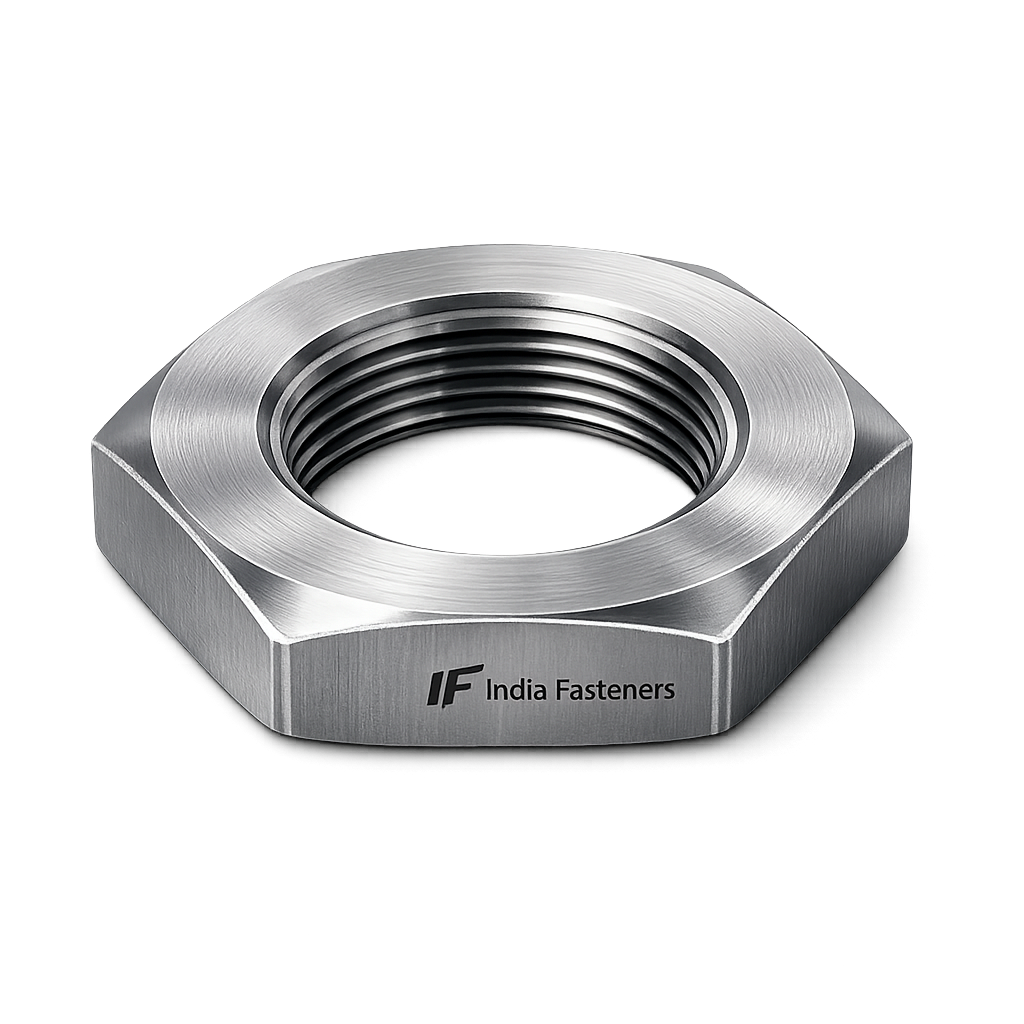
Bolted joint integrity represents one of the primary mechanical reliability challenges across GCC energy and infrastructure facilities. Within Middle East operating conditions, threaded connections are continuously exposed to simultaneous mechanical, thermal, and environmental stresses that accelerate loss of preload and eventual joint failure.
Jam nut locking systems are widely applied where sustained clamp load retention is required without reliance on chemical locking agents or deformation-based locking devices.
1.1 GCC Industrial Operating Environment
Typical facilities utilizing jam nut locking include:
Oil & Gas Transmission Systems
- High-pressure pipelines
- Valve manifolds
- Pig launcher assemblies
- Flanged instrument connections
- Compressor skid assemblies
Offshore Production Platforms — UAE & Qatar Offshore Fields
- Structural bolted connections
- Pipe supports and hangers
- Rotating equipment foundations
- Deck-mounted machinery
- Marine-exposed instrumentation brackets
Petrochemical Complexes — Jubail & Ruwais
- Reactor support structures
- Heat exchanger channel covers
- Pump alignment assemblies
- Catalyst handling systems
- High-temperature piping supports
Gas Compression Stations
- Compressor frame bolting
- Vibration-prone skid mounting
- Auxiliary piping supports
- Structural bracing systems
Desalination & Power Generation Plants
- Turbine auxiliary structures
- Motor base frames
- Cooling water systems
- Pump anchoring assemblies
- Structural steel exposed to marine atmosphere
1.2 Why Bolt Loosening is a Major Failure Mode in GCC Facilities
Field reliability data across Middle East facilities consistently identifies self-loosening of threaded fasteners as a dominant mechanical degradation mechanism.
Primary contributors include:
Vibration-Induced Rotation
Rotating equipment generates cyclic transverse loading. Even micro-slip between joint interfaces initiates progressive rotation of nuts, reducing preload.
Thermal Cycling
Daily temperature variation in desert environments may exceed:
- Ambient range: −5°C to +60°C
- Equipment surface exposure: up to 120°C
Differential thermal expansion between bolt, flange, and structure causes preload fluctuation.
Pressure Pulsation
Gas compressors and high-pressure pumps introduce oscillatory axial loading which accelerates loss of clamp force.
Sand-Induced Vibration
Wind-driven sand accumulation creates imbalance and vibration amplification in exposed equipment assemblies.
Marine Corrosion (Offshore Facilities)
Salt deposition alters friction coefficients on threads and bearing surfaces, changing torque-preload relationships.
Maintenance Constraints
Remote installations face:
- Limited shutdown windows
- Restricted torque verification access
- Extended inspection intervals
Therefore, passive mechanical locking systems capable of maintaining preload without periodic adjustment are preferred.
2. Technical Definition of Jam Nut Locking
A jam nut locking system consists of:
A thin secondary nut installed against a primary nut to create opposing thread forces that resist rotational loosening.
The mechanism does not rely on deformation, adhesives, or inserts.
2.1 Mechanical Configuration
Components:
- Stud bolt or threaded fastener
- Primary load-bearing nut
- Secondary thin jam nut
The jam nut thickness is typically 50–70% of standard nut height.
2.2 Mechanical Locking Principle
The locking effect occurs through controlled redistribution of thread forces.
When installed correctly:
- Primary nut establishes required preload.
- Jam nut introduces opposing axial thread force.
- Thread flank pressure increases.
- Relative motion between mating threads becomes restricted.
This creates a friction-based anti-rotation system.
2.3 Load Redistribution Mechanism
Following installation:
- Load transfers partially from primary nut to jam nut.
- Opposite thread faces engage simultaneously.
- Contact pressure increases within threads.
Result:
- Increased resistance to rotational displacement.
- Stabilized clamp load.
- Reduced susceptibility to vibration-induced loosening.
2.4 Reverse Torque Resistance
The jam nut produces resistance through:
- Thread interference
- Increased normal force
- Opposing frictional vectors
Loosening torque becomes significantly higher than installation torque.
2.5 Applicable International Standards
Jam nut locking systems typically comply with:
- ASME B18.2.2 — Square and Hex Nuts
- ISO 4035 / ISO 8675 — Thin Nuts
- ASTM A194 — Carbon & Alloy Steel Nuts
- ASTM A563 — Structural Nuts
- ASME PCC-1 — Bolted Joint Assembly Guidance
These standards govern dimensional control, mechanical properties, and installation practices used in EPC projects.
3. Locking Mechanics & Preload Theory
Understanding jam nut effectiveness requires examination of bolt preload fundamentals.
3.1 Bolt Preload Fundamentals
Preload represents tensile force generated in a fastener during tightening. 
Where:
 = Preload force
 = Applied torque
 = Nut factor (friction coefficient)
 = Nominal diameter
Preload maintains joint compression and prevents separation.
3.2 Torque vs Tension Relationship
Only approximately 10–15% of tightening torque produces bolt tension.
Remaining torque is consumed by:
- Thread friction
- Bearing surface friction
Jam nuts improve reliability by stabilizing friction conditions after tightening.
3.3 Friction Coefficient Influence
Typical friction values:
| Condition | Friction Factor (K) |
|---|---|
| Dry threads | 0.20 – 0.25 |
| Lubricated | 0.15 – 0.18 |
| PTFE coated | 0.10 – 0.13 |
Variation directly affects achieved preload.
Jam nuts reduce preload loss caused by friction variation during service.
3.4 Elastic Interaction Between Nuts
After tightening:
- Primary nut attempts elastic relaxation.
- Jam nut introduces counteracting force.
- Thread contact occurs on opposite flanks.
The assembly behaves as a mechanically stabilized system.
3.5 Clamp Load Retention
Clamp load remains stable because:
- Relative rotation requires simultaneous overcoming of two friction interfaces.
- Micro-slip is reduced.
- Transverse vibration cannot easily overcome opposing thread forces.
3.6 Why Jam Nuts Are Used Instead of Alternative Locking Methods
| Method | Limitation in GCC Service |
|---|---|
| Lock washers Spring Washers (Lock Washers) | Ineffective under vibration |
| Chemical lockers | Temperature degradation |
| Nylon insert nuts | Unsuitable for high temperature |
| Prevailing torque nuts | Wear after reuse |
| Adhesives | Inspection difficulties |
Jam nuts remain preferred for:
- High temperature
- Offshore service
- Maintainable joints
- Reusable assemblies
4. Failure Modes Prevented by Jam Nut Locking
4.1 Self-Loosening Under Vibration (Junker Effect)
Dynamic transverse motion reduces friction between threads, allowing rotation.
Jam nuts prevent this through increased thread flank pressure.
4.2 Thermal Expansion Differential
Different materials expand at different rates:
- STUD BOLT
- Flange
- Structure
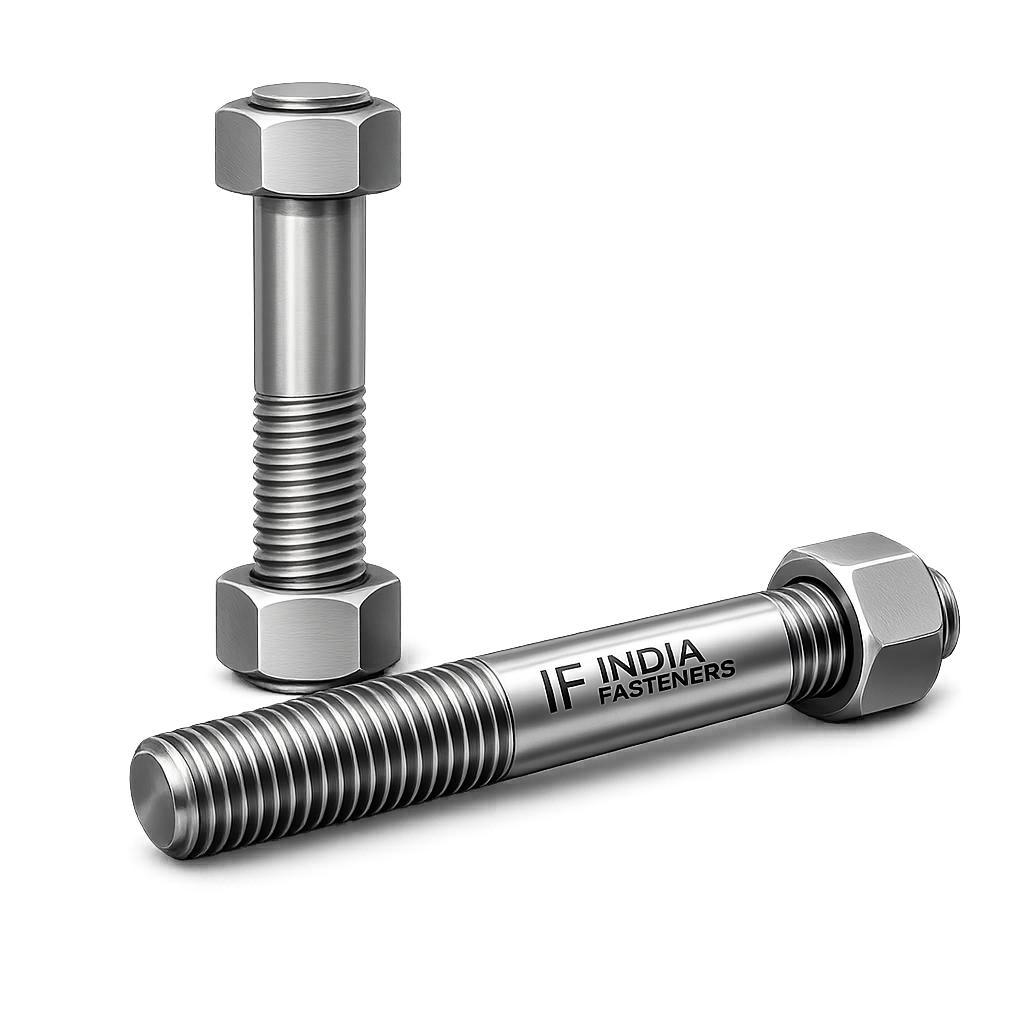
Jam nuts absorb preload variation and maintain locking condition.
4.3 Dynamic Loading
Examples:
- Compressor startup cycles
- Pump cavitation
- Valve actuation shocks
Jam nut locking prevents progressive loss of clamp force.
4.4 Shock Loading
Emergency shutdown events introduce sudden load reversals.
Double-nut systems prevent rotational release.
4.5 Fatigue Loosening
Repeated cyclic loading causes gradual nut back-off.
Jam nut systems extend fatigue life by stabilizing preload.
4.6 GCC Case-Based Engineering Scenarios
Pipeline Supports — Saudi Desert Installations
- Wind vibration causes bolt rotation.
- Jam nut locking stabilizes support alignment.
Offshore Pump Skids — UAE
- Marine vibration and corrosion change friction conditions.
- Double-nut locking maintains torque integrity.
Gas Compressor Foundations — Qatar
Jam nuts prevent loosening between shutdown inspections.
Pulsating loads induce micro-movement.
5. Applicable Material Standards — Mapped to GCC Service Conditions
Material selection for jam nut locking systems directly determines joint reliability, preload retention capability, corrosion resistance, and inspection acceptance within Middle East EPC projects.
Jam nuts are frequently installed in critical bolted joints, meaning material compatibility with the primary nut, stud bolt, and operating environment must be verified during engineering design.
GCC operating environments introduce combined exposure to:
- Elevated temperature
- Chloride contamination
- Hydrogen sulfide presence
- Offshore salt spray
- Desert humidity and sand abrasion
- Thermal cycling
Material standards referenced below align with ASME pressure equipment practice and EPC procurement specifications.
5.1 ASTM A194 Grade 2H — Carbon Steel Jam Nuts
Primary Use: Pressure equipment and pipeline bolting.
Material Characteristics
- Quenched and tempered carbon steel
- High strength capability
- Stable hardness range for controlled preload
Typical Applications
- Pipeline flange assemblies
- Valve bonnet bolting
- Pressure vessel connections
- Refinery piping supports
Service Characteristics
- Suitable for moderate temperature service
- Common pairing with ASTM A193 B7 stud bolts
- Widely accepted by Saudi Aramco and ADNOC contractors
Engineering Notes
- Requires corrosion protection in marine environments
- Controlled hardness reduces galling risk
5.2 ASTM A194 Grade 7 — Alloy Steel Jam Nuts
Primary Use: High temperature and high-pressure applications.
Material Characteristics
- Alloy steel composition
- Superior tensile strength
- Improved creep resistance
Typical GCC Applications
- Gas turbine auxiliary systems
- High-pressure steam service
- Compressor discharge systems
Engineering Considerations
- Maintains mechanical properties at elevated temperatures
- Often specified for rotating equipment foundations
5.3 ASTM A563 Grade DH — Structural Jam Nuts
Primary Use: Structural bolted connections.
Material Characteristics
- High-strength carbon steel
- Designed for structural load transfer
Typical Applications
- Structural steel frames
- Pipe racks
- Offshore structural modules
- Equipment support structures
Regional Relevance
Common in desalination plants, tank farms, and power station construction projects.
5.4 ASTM A182 F304 / F316 Stainless Steel Jam Nuts
Stainless steel jam nuts are selected when corrosion resistance becomes the governing design requirement.
ASTM A182 F304
Applications:
- Process instrumentation
- Water treatment facilities
- Non-sour environments
Characteristics:
- Good corrosion resistance
- Suitable for moderate chloride exposure
ASTM A182 F316
Applications:
- Offshore platforms
- Marine desalination facilities
- Chemical injection systems
Characteristics:
- Molybdenum addition improves pitting resistance
- Preferred for chloride-rich Gulf environments
5.5 Duplex Stainless Steel Jam Nuts
Used where both strength and corrosion resistance are required.
Characteristics:
- Dual-phase microstructure
- High yield strength
- Excellent resistance to chloride stress corrosion cracking
Applications:
- Offshore subsea systems
- Sour gas installations
- Seawater cooling systems
5.6 Alloy Steel Grades for Specialized Service
Additional material grades may include:
- High-temperature alloy steels
- NACE-compliant materials
- Custom project-specific metallurgy
Used in:
- Sour service pipelines
- High-temperature reactors
- Hydrogen service systems
5.7 Material Selection Logic for GCC Conditions
| Service Environment | Recommended Material |
|---|---|
| Onshore pipeline | ASTM A194 2H |
| Offshore platform | F316 / Duplex |
| High temperature | ASTM A194 Grade 7 |
| Structural steel | ASTM A563 DH |
| Desalination plants | F316 Stainless |
| Sour gas service | NACE-compliant Alloy |
Material compatibility between jam nut and primary nut must prevent differential hardness or galvanic corrosion.
6. Material Comparison Table (Engineering Reference)
| Grade | Yield Strength (MPa) | Tensile Strength (MPa) | Hardness Range | Temperature Limit | Typical GCC Application |
|---|---|---|---|---|---|
| ASTM A194 2H | ≥ 655 | ≥ 860 | 24–35 HRC | 425°C | Pipeline & pressure vessels |
| ASTM A194 Gr 7 | ≥ 720 | ≥ 940 | 28–36 HRC | 540°C | High-pressure systems |
| ASTM A563 DH | ≥ 620 | ≥ 830 | 24–32 HRC | 300°C | Structural steel |
| F304 SS | ≥ 205 | ≥ 515 | ≤ 95 HRB | 870°C | Process equipment |
| F316 SS | ≥ 205 | ≥ 515 | ≤ 95 HRB | 870°C | Marine/offshore |
| Duplex SS | ≥ 450 | ≥ 620 | 28–32 HRC | 300°C | Offshore sour service |
Values represent typical specification ranges used for EPC evaluation.
7. Heat Treatment & Metallurgical Control
Mechanical performance of jam nuts depends heavily on controlled metallurgical processing.
7.1 Quenching & Tempering — Carbon and Alloy Steel Grades
Process Steps:
- Austenitizing at controlled temperature
- Rapid quenching
- Tempering for hardness stabilization
Objectives:
- Achieve required strength
- Maintain ductility
- Prevent brittle fracture
Improper tempering may cause hydrogen-assisted cracking.
7.2 Stress Relieving
Applied when machining or forging introduces residual stress.
Benefits:
- Dimensional stability
- Reduced distortion
- Improved fatigue resistance
7.3 Solution Annealing — Stainless Steel Jam Nuts
Process:
- Heating above solution temperature
- Rapid cooling
Purpose:
- Dissolve chromium carbides
- Restore corrosion resistance
- Prevent intergranular corrosion
Critical for offshore GCC applications.
7.4 Grain Flow Integrity
Forged jam nuts maintain directional grain flow following hex geometry.
Engineering Advantages:
- Increased fatigue resistance
- Improved load transfer
- Reduced crack initiation sites
Forged manufacturing is preferred for EPC-critical applications.
7.5 Hardness Control — NACE MR0175 Considerations
Sour service environments require hardness limits to prevent sulfide stress cracking.
Typical Control:
- ≤ 22 HRC for sour environments (project dependent)
Hardness verification performed per controlled sampling plans.
7.6 Hydrogen Embrittlement Prevention
High-strength fasteners are susceptible to hydrogen ingress during:
- Electroplating
- Acid cleaning
- Corrosive service
Preventive Measures:
- Controlled coating processes
- Post-coating baking
- Surface cleanliness control
8. Manufacturing Process Flow — Engineering Documentation Level
Jam nut manufacturing follows traceable, inspection-oriented procedures aligned with EPC procurement expectations.
8.1 Raw Material Procurement & Traceability
Controls include:
- Mill Test Certificate verification
- Heat number identification
- Chemical composition validation
- Incoming inspection records
Traceability maintained from raw material to finished product.
8.2 Heat Number Verification
Each production batch linked to:
- Steel melt number
- Material certificate
- Manufacturing lot
Required for EN 10204 certification.
8.3 Forging Operations
Cold Forging
- Improved dimensional consistency
- Surface integrity
Hot Forging
- Used for larger diameters
- Ensures internal soundness
Forging eliminates internal porosity common in machined nuts.
8.4 Thread Forming — Rolling or Machining
Thread production methods:
Thread Rolling
- Compressive process
- Increased fatigue strength
- Improved surface finish
Thread Machining
- Used for large or specialty threads
- Allows custom geometry
Thread form typically:
- Unified UNC/UNF
- Metric coarse/fine
- Project-specific pitch
8.5 Thread Gauging & Dimensional Control
Inspection Tools:
- GO/NO-GO gauges
- Pitch diameter verification
- Thread angle inspection
Compliance with ASME and ISO dimensional tolerances.
8.6 Heat Treatment Control
Key Controls:
- Furnace calibration
- Temperature uniformity survey
- Controlled atmosphere
- Recorded thermal cycles
Ensures repeatable mechanical properties.
8.7 Surface Finishing & Coating Application
Typical finishes:
- Black oxide
- Phosphate coating
- Zinc plating
- Hot dip galvanizing
- PTFE or Xylan coatings
- Zinc-nickel coating
Coating selection based on:
- Corrosion environment
- Torque coefficient control
- Project specification
8.8 Final Inspection Procedures
Inspection stages include:
- Dimensional inspection
- Thread inspection
- Visual examination
- Hardness testing
- Marking verification
Inspection records maintained for audit review.
8.9 Identification & Lot Traceability Marking
Each jam nut batch marked with:
- Manufacturer identification
- Material grade
- Heat number traceability
- Size designation
Supports EPC project documentation requirements.
8.10 Dimensional Tolerance & Thread Accuracy Control
Critical parameters controlled:
- Across flats dimension
- Nut thickness tolerance
- Thread concentricity
- Bearing surface flatness
Accuracy ensures uniform preload distribution during installation.
8.11 Documentation Prepared for GCC Third-Party Inspection
Typical documentation package includes:
- Mill Test Certificates
- Heat treatment records
- Inspection reports
- Dimensional inspection sheets
- Coating certification
- Hardness reports
- EN 10204 3.1 / 3.2 certificates
Prepared for review by independent inspection bodies during pre-shipment release.
9. Dimensional Reference Tables — Jam Nut Engineering Data
Jam nuts differ from standard nuts primarily by reduced thickness while maintaining identical thread geometry. Proper dimensional conformity is essential to achieve predictable locking performance and compatibility with primary nuts and stud bolts.
Dimensions shown below represent commonly specified EPC project sizes aligned with ASME B18.2.2 and ISO thin nut standards.
9.1 Jam Nut Dimensional Reference Table
| Nominal Size | Thread Pitch | Jam Nut Thickness (T) | Across Flats (AF) | Proof Load Rating (kN) | Compatible Bolt Grades |
|---|---|---|---|---|---|
| M10 | 1.5 mm | 5 mm | 17 mm | 23 | B7 / Class 8.8 |
| M12 | 1.75 mm | 6 mm | 19 mm | 33 | B7 / Class 8.8 |
| M16 | 2.0 mm | 8 mm | 24 mm | 61 | B7 / Class 10.9 |
| M20 | 2.5 mm | 10 mm | 30 mm | 95 | B7 / B16 |
| M24 | 3.0 mm | 12 mm | 36 mm | 137 | B7 / B16 |
| M30 | 3.5 mm | 15 mm | 46 mm | 220 | B16 / Alloy Steel |
| M36 | 4.0 mm | 18 mm | 55 mm | 320 | B16 / Structural |
| M42 | 4.5 mm | 21 mm | 65 mm | 450 | High Strength Studs |
Typical jam nut height ≈ 0.5–0.7 × standard nut height.
Engineering verification requires:
- Full thread engagement
- Bearing surface contact
- Proper thread class compatibility
10. Torque & Preload Engineering Table (MANDATORY)
Torque values depend heavily on lubrication condition and friction factor. Values below represent engineering reference ranges used during bolting procedures aligned with ASME PCC-1 practices.
10.1 Recommended Torque Values — Carbon Steel Studs with Jam Nut Locking
| Bolt Size | Target Preload (kN) | Torque Dry (Nm) | Torque Lubricated (Nm) | Typical Preload % of Yield |
|---|---|---|---|---|
| M12 | 32 | 95 | 70 | 70% |
| M16 | 60 | 240 | 180 | 70% |
| M20 | 95 | 470 | 350 | 70% |
| M24 | 135 | 820 | 610 | 70% |
| M30 | 215 | 1650 | 1220 | 70% |
| M36 | 310 | 2850 | 2100 | 70% |
| M42 | 430 | 4500 | 3300 | 70% |
Values are indicative engineering references. Final torque shall follow project specifications.
10.2 Jam Nut Tightening Sequence — Engineering Logic
Correct sequence is critical. Improper installation eliminates locking effectiveness.
Step Logic
- Apply torque to primary nut to achieve required preload.
- Run jam nut down hand-tight.
- Hold primary nut stationary.
- Tighten jam nut against primary nut.
- Apply reverse torque interaction.
The locking action results from opposing forces generated between nuts.
10.3 Preload Percentage Logic
Industry practice targets: 60%−75% of bolt yield strength60\%-75\% \text{ of bolt yield strength}60%−75% of bolt yield strength
Reasons:
- Maximizes clamp force
- Avoids plastic deformation
- Maintains fatigue resistance
- Prevents relaxation during thermal cycling
Jam nuts stabilize this preload over operating life.
11. Double-Nut Locking Procedure (MANDATORY)
Jam nut locking effectiveness depends entirely on installation discipline.
11.1 Step-by-Step Engineering Procedure
Step 1 — Thread Preparation
- Clean threads
- Remove debris and corrosion
- Apply approved lubricant if specified
Step 2 — Primary Nut Tightening
- Install primary nut against joint surface.
- Tighten using calibrated torque equipment.
- Achieve specified preload.
Primary nut carries structural load.
Step 3 — Jam Nut Installation
- Install thin jam nut above primary nut.
- Bring into contact manually.
- Do not torque yet.
Step 4 — Back-Torque Method (Critical Step)
- Hold primary nut stationary.
- Tighten jam nut using wrench.
- Jam nut rotation induces opposing thread load.
This step creates locking tension.
Step 5 — Reverse Tightening Principle
Mechanical physics:
- Jam nut slightly unloads primary nut.
- Thread pressure shifts to opposite flanks.
- Two friction interfaces are created.
Result:
- Increased resistance to rotation
- Stabilized preload
Step 6 — Verification Procedure
Verification includes:
- Witness marking
- Torque audit
- Visual inspection
- Gap verification between nuts
Inspection confirms locking condition.
11.2 Mechanical Locking Physics Explanation
When correctly installed:
- Primary nut loads lower thread faces.
- Jam nut loads upper thread faces.
- Axial clearance is eliminated.
Self-loosening requires simultaneous overcoming of both friction zones, which is unlikely under operational vibration.
12. Mechanical Properties Table
Mechanical properties must align with material standards and EPC project specifications.
| Property | ASTM A194 2H | ASTM A194 Gr 7 | A563 DH | F316 Stainless | Duplex SS |
|---|---|---|---|---|---|
| Yield Strength (MPa) | ≥655 | ≥720 | ≥620 | ≥205 | ≥450 |
| Proof Load (MPa) | 600 | 650 | 580 | 170 | 400 |
| Hardness | 24–35 HRC | 28–36 HRC | 24–32 HRC | ≤95 HRB | 28–32 HRC |
| Elongation | ≥12% | ≥12% | ≥14% | ≥30% | ≥25% |
| Impact Resistance | Good | High | Moderate | Excellent | Excellent |
Mechanical verification performed through controlled sampling and certified testing.
13. Corrosion Resistance Comparison Table
Corrosion performance strongly influences jam nut locking reliability in GCC environments.
| Material | Marine Exposure | Desert Humidity | Sour Gas Service | High Temperature | Outdoor Structural |
|---|---|---|---|---|---|
| Carbon Steel | Low | Moderate | Limited | Good | Moderate |
| Hot Dip Galvanized | Moderate | Good | Limited | Moderate | Good |
| SS304 | Good | Excellent | Moderate | Excellent | Excellent |
| SS316 | Very Good | Excellent | Good | Excellent | Excellent |
| Duplex Stainless | Excellent | Excellent | Excellent | Good | Excellent |
Material selection must consider galvanic compatibility with stud bolt material.
14. Inspection & Quality Assurance — EPC Compliance Expectations
Jam nuts supplied for GCC projects undergo rigorous inspection processes aligned with consultant approval requirements.
14.1 Thread Gauge Inspection
Performed using calibrated gauges:
- GO gauge verification
- NO-GO rejection check
- Pitch diameter confirmation
Ensures full thread engagement and load transfer.
14.2 Hardness Testing
Methods:
- Rockwell hardness testing
- Sample-based verification
Confirms heat treatment effectiveness and sour service compliance.
14.3 Positive Material Identification (PMI)
Used primarily for:
- Stainless steel grades
- Alloy steels
- Duplex materials
Verifies chemical composition through spectrographic analysis.
14.4 Coating Thickness Inspection
Typical methods:
- Magnetic thickness gauge
- Micron verification
Ensures corrosion protection without excessive hydrogen risk.
14.5 Visual Inspection Requirements
Inspectors verify:
- Surface defects
- Burr-free threads
- Forging integrity
- Marking legibility
- Coating uniformity
14.6 Lot Traceability Control
Each production lot linked to:
- Heat number
- Manufacturing batch
- Inspection records
- Material certificates
Traceability maintained throughout export process.
14.7 Third-Party Inspection Readiness
Jam nuts prepared for inspection by independent agencies including:
- TÜV-type inspection bodies
- Bureau Veritas-type inspectors
- SGS-type verification authorities
Inspection scope may include:
- Witness testing
- Random sampling
- Documentation audit
- Pre-shipment release
14.8 Certification Documentation
Typical certification supplied:
- EN 10204 Type 3.1 certificates
- Type 3.2 certification (when required)
- Mechanical test reports
- Heat treatment records
- Coating certificates
- Dimensional inspection reports
Documentation format supports EPC contractor submission requirements.
14.9 Consultant Mechanical Integrity Expectations
GCC consultants typically verify:
- Compliance with ASME/ISO standards
- Traceability continuity
- Mechanical property validation
- Installation compatibility
- Corrosion suitability
Jam nut locking systems must demonstrate engineering consistency rather than product branding.
15. Industries Served — Middle East Critical Applications
Jam nut locking systems are primarily applied where mechanical joint reliability, preload retention, and inspectable locking mechanisms are required within regulated industrial facilities.
Across GCC projects, procurement engineers typically specify jam nuts for assemblies subjected to vibration, thermal fluctuation, or maintenance access limitations.
15.1 Oil & Gas Production Facilities
Typical usage includes:
- Pipeline support structures
- Valve actuator mounting
- Instrument impulse line brackets
- Flange alignment assemblies
- Pig launcher structural bolting
- Metering skid installations
Operational challenges addressed:
- Pulsation from multiphase flow
- Compressor vibration
- Remote inspection intervals
- High consequence of joint loosening
Jam nut locking allows mechanical locking verification without removal of components during inspection.
15.2 Refineries & Downstream Processing Units
Applications commonly observed in:
- Reactor platform structures
- Furnace support frames
- Heat exchanger channel covers
- Pipe rack assemblies
- Pump and motor foundations
- Maintenance-access structural bolting
Refinery environments introduce:
- Continuous vibration
- Elevated temperature exposure
- Hydrocarbon contamination affecting friction conditions
Double-nut locking maintains preload stability despite lubrication degradation over time.
15.3 Petrochemical Complexes
Petrochemical plants in the GCC operate under continuous service cycles where shutdown frequency is minimized.
Jam nut locking is selected for:
- Polymer reactor structures
- Catalyst handling equipment
- Agitator drive supports
- Column access platforms
- High-temperature piping supports
Engineering preference exists for locking systems that remain fully mechanical, allowing inspection engineers to verify integrity visually.
15.4 Offshore Structures
Offshore platforms in UAE, Qatar, Oman, and Saudi waters expose fasteners to simultaneous vibration and chloride corrosion.
Jam nut applications include:
- Deck equipment mounting
- Pipe supports
- Cable tray supports
- Safety barrier assemblies
- Marine crane structures
Advantages in offshore service:
- No polymer inserts subject to degradation
- No chemical locking agents affected by seawater
- Maintainable and reusable during shutdown campaigns
15.5 Power Generation Facilities
Jam nut locking systems are widely applied within power generation environments:
- Gas turbine auxiliary systems
- Generator frame anchoring
- Cooling water pump bases
- Structural vibration restraints
- Exhaust stack support systems
Thermal cycling during startup and shutdown creates preload variation; double-nut locking mitigates this effect.
15.6 Desalination Plants
GCC desalination facilities present aggressive corrosion environments due to chloride-rich seawater exposure.
Typical installations:
- Reverse osmosis skid structures
- High-pressure pump supports
- Structural frames exposed to spray zones
- Pipe support systems
Preferred materials include F316 and Duplex stainless steel jam nuts.
15.7 Pipeline Infrastructure & Structural Supports
Jam nuts are extensively used on:
- Pipe rack assemblies
- Expansion support systems
- Anchor supports
- Structural bracing exposed to desert winds
Desert wind-induced vibration produces cyclic loading capable of loosening single-nut assemblies over long operating periods.
15.8 Rotating Equipment Foundations
Critical reliability applications include:
- Compressors
- Pumps
- Blowers
- Fans
- Turbine auxiliary equipment
Preload stability directly influences alignment retention and bearing life.
Jam nut locking contributes to sustained equipment alignment.
16. Export & GCC Supply Capability
Industrial fasteners supplied to Middle East projects must satisfy both technical and logistical requirements defined by EPC contractors.
India Fasteners supports export supply aligned with international project execution expectations.
16.1 GCC Export Regions
Supply capability extends to:
- Saudi Arabia
- United Arab Emirates
- Qatar
- Oman
- Kuwait
- Bahrain
Documentation structures are prepared to support EPC contractor vendor registration and project procurement evaluation.
16.2 Export Packaging Discipline
Packaging design must prevent corrosion and mechanical damage during extended marine transport.
Typical measures include:
- Moisture-resistant packaging
- Vapor corrosion inhibitor (VCI) protection
- Sealed wooden export crates
- Heat-number segregation
- Size identification labeling
- Palletized handling compatibility
Packaging ensures traceability is preserved until site installation.
16.3 Corrosion Protection During Shipment
Transit conditions may include:
- High humidity exposure
- Temperature variation
- Extended port storage duration
Protection practices include:
- Controlled coating selection
- Protective oiling where applicable
- Desiccant integration inside crates
- Waterproof labeling systems
16.4 Project Documentation Package
Jam nut locking system deliveries are accompanied by structured documentation suitable for EPC submission.
Typical package includes:
- Material Test Certificates
- Heat treatment reports
- Dimensional inspection reports
- Hardness test records
- Coating certification
- Traceability register
- Packing list linked to heat numbers
Documentation organization supports consultant review workflows.
16.5 Inspection Release Documentation
Prior to shipment, documentation may support:
- Client inspection notifications
- Third-party witness inspection
- Release notes
- Inspection clearance certificates
Inspection readiness aligns with GCC contractor practices.
16.6 Container Loading Standards
Engineering considerations during loading:
- Load distribution control
- Crate stabilization
- Corrosion exposure minimization
- Segregation of stainless and carbon steel products
Proper loading prevents coating damage and maintains dimensional integrity.
17. Installation Engineering & Field Practices
Correct installation is essential for jam nut locking performance. Improper tightening sequence negates locking effectiveness regardless of material quality.
17.1 Correct Nut Orientation
Standard practice:
- Primary full-height nut installed against joint surface.
- Thin jam nut installed outward.
Reason:
Primary nut must carry structural load while jam nut provides locking action.
17.2 Torque Application Sequence
Recommended approach:
- Torque primary nut to required preload.
- Hold primary nut stationary.
- Tighten jam nut against it.
- Apply controlled back-torque interaction.
Simultaneous tightening of both nuts is incorrect.
17.3 Lubrication Control
Lubrication directly affects achieved preload.
Field considerations:
- Use project-approved lubricant only.
- Maintain consistent lubrication condition across joint.
- Avoid mixing coated and uncoated nuts in same assembly.
17.4 Preload Verification Methods
Verification may include:
- Torque audit
- Hydraulic tensioning verification
- Bolt elongation measurement
- Witness marking
Jam nuts allow visual confirmation without disassembly.
17.5 Re-Tightening Practices
During maintenance shutdown:
- Verify witness marks.
- Inspect corrosion condition.
- Re-torque only if preload loss detected.
Jam nuts remain reusable when threads remain within tolerance.
17.6 Field Inspection Checklist
Inspection engineers typically verify:
- Correct nut order
- Full thread engagement
- Absence of thread damage
- Proper coating condition
- Witness marks intact
- No visible rotation
Checklist compliance supports mechanical integrity programs.
17.7 Storage in Gulf Climate Conditions
Site storage recommendations:
- Covered storage areas
- Avoid direct sand exposure
- Maintain original packaging
- Prevent contact between dissimilar metals
- Avoid condensation environments
Improper storage alters friction factors and torque accuracy.
18. Custom Engineering Capability — Project-Specific Supply
EPC projects frequently require non-standard configurations beyond catalogue dimensions.
Engineering flexibility is necessary for successful procurement qualification.
18.1 Non-Standard Thickness Jam Nuts
Custom thickness may be required for:
- Limited stud projection
- Structural clearance constraints
- Retrofit maintenance projects
Manufacturing capability allows controlled dimensional modification while maintaining mechanical compliance.
18.2 Heavy Hex Jam Nut Options
Applications requiring higher wrenching strength or load distribution may utilize heavy hex configurations.
Used in:
- Structural bolting
- Offshore heavy equipment
- High-load anchoring systems
18.3 Specialized Surface Coatings
Project specifications may require advanced coatings to control corrosion and friction characteristics.
Examples include:
- PTFE coatings
- Xylan fluoropolymer systems
- Zinc-Nickel plating
- Hot Dip Galvanizing
- Controlled friction coatings for tensioning systems
Coating selection coordinated with torque-preload calculations.
18.4 High-Temperature Applications
Jam nuts may be supplied for elevated temperature service requiring:
- Alloy steel grades
- Oxidation-resistant coatings
- Controlled hardness ranges
Used in:
- Furnace systems
- Steam lines
- Turbine auxiliary assemblies
18.5 NACE-Compliant Supply
Sour service applications require:
- Controlled hardness
- Verified chemical composition
- Documentation aligned with NACE MR0175 requirements
Used in:
- H₂S environments
- Gas processing facilities
- Offshore sour wells
18.6 Project Stamping & Identification
EPC contractors frequently require additional marking:
- Project identification numbers
- Client approval stamps
- Heat traceability coding
- Inspection hold-point marking
Manufacturing processes accommodate controlled marking without compromising mechanical properties.
18.7 Special Thread Forms
Where required, jam nuts may be produced with:
- Fine threads
- UNC / UNF configurations
- Metric fine pitch
- Special tolerance classes
- Left-hand threads for rotating assemblies
Engineering review ensures compatibility with mating fasteners.
Procurement Engineering Perspective — Final Technical Position
From a consultant or EPC procurement viewpoint, a jam nut locking system supplier must demonstrate:
- Understanding of bolted joint preload mechanics
- Compliance with ASME and ISO standards
- Material traceability discipline
- GCC environmental awareness
- Installation engineering clarity
- Inspection readiness
- Export documentation capability
The jam nut locking system described herein is structured as an engineering-controlled fastening solution intended for critical industrial service rather than general-purpose fastening.
Evaluation criteria typically applied by Middle East project engineers include:
- Mechanical reliability
- Documentation completeness
- Manufacturing control
- Inspection transparency
- Service suitability
When these requirements are met, the supplier becomes technically eligible for project consideration within GCC EPC environments.