
Cap NutS Protective
1. Regional Industry Context — Middle East Operating Environment
Protective fastening systems used across Gulf Cooperation Council (GCC) industrial facilities operate under environmental and operational conditions significantly different from temperate regions. Fasteners are not evaluated solely for load transmission; they are assessed for personnel safety, environmental durability, and long-term mechanical reliability.
Cap NutS Protective are therefore applied as engineering safety components, not cosmetic accessories.
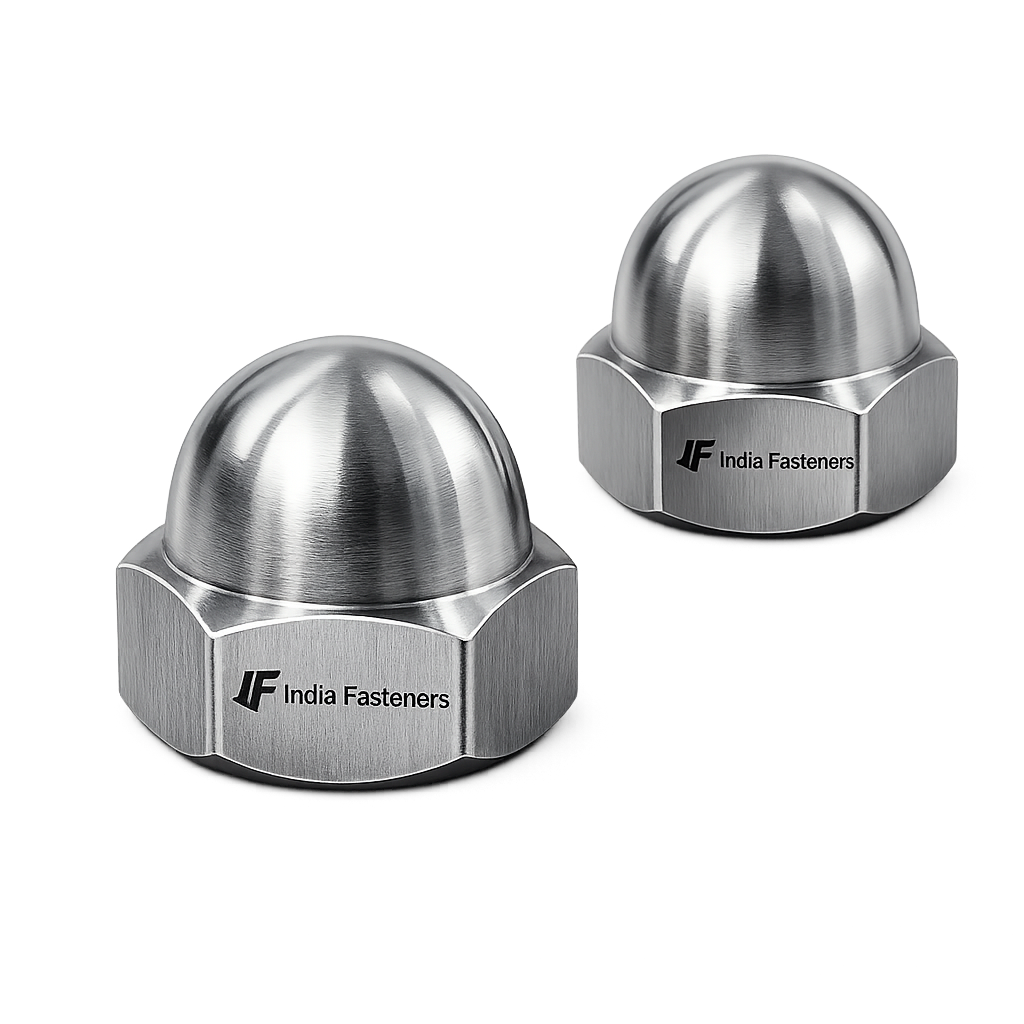
1.1 GCC Industrial Infrastructure Exposure Conditions
Typical operating environments include:
Oil & Gas Production Facilities
- Onshore Saudi Arabian oil fields
- Offshore UAE production platforms
- Wellhead structures
- Pipe racks and modular skid assemblies
- Mechanical guarding around rotating equipment
Exposure characteristics:
- Wind-borne desert sand
- Hydrocarbon contamination
- Temperature fluctuation exceeding 50°C surface exposure
- UV degradation risks
- Salt aerosol in offshore locations
Unprotected bolt projections rapidly accumulate debris, corrosion products, and mechanical damage.
Petrochemical Complexes — Jubail & Ruwais Type Facilities
Applications include:
- Structural walkways
- Pump bases
- Process equipment platforms
- Heat exchanger supports
- Valve stations
Engineering concern:
Exposed threaded ends create:
- Personnel snag hazards
- PPE damage risks
- Initiation points for corrosion creep
- Contaminant accumulation affecting maintenance access
Protective Cap Nuts eliminate exposed thread geometry while maintaining preload integrity.
LNG Terminals & Cryogenic Installations
Typical installations:
- Pipe supports
- Instrument brackets
- Cable trays
- Access ladders
Cryogenic environments introduce:
- Moisture condensation
- Ice formation around threads
- Thermal cycling stress
A closed-end dome nut prevents freezing contaminants inside threads, preserving removal capability during shutdown maintenance.
Desalination Plants
Environmental factors:
- Continuous saline mist
- Chloride exposure
- High humidity environments
Open thread ends act as capillary corrosion initiators. Protective cap nuts provide a barrier against moisture ingress.
Power Generation Facilities
Common uses:
- Turbine auxiliary structures
- Guard rail systems
- Equipment foundations
- Electrical panel support assemblies
Personnel movement density is high; injury prevention is mandatory under plant safety procedures.
Structural Steel Installations
Applications:
- Access platforms
- Stairways
- Conveyor frames
- Pipe bridges
Project safety audits routinely identify protruding threaded fasteners as unacceptable hazards.
Rotating Equipment Guards & Conveyor Systems
Mechanical hazards include:
- Clothing entanglement
- Skin injury during inspection
- Damage to protective covers
Protective Cap Nuts eliminate sharp thread exposure without affecting clamping performance.
1.2 Engineering Risks Created by Exposed Bolt Threads
Unprotected threaded ends introduce several operational risks:
| Risk Category | Engineering Impact |
|---|---|
| Personnel Injury | Cuts, abrasions, snagging |
| Corrosion Initiation | Thread crests trap moisture |
| Foreign Particle Ingress | Sand and dust contamination |
| Mechanical Damage | Impact deformation of threads |
| Maintenance Difficulty | Seized nuts during shutdown |
| Inspection Non-Compliance | Safety audit failures |
In GCC desert facilities, airborne sand behaves as an abrasive particulate, accelerating corrosion and wear on exposed threads.
1.3 Personnel Safety Requirements in GCC Facilities
Major operators impose strict mechanical safety expectations:
- Elimination of exposed sharp edges
- Protection of protruding hardware
- Maintenance accessibility assurance
- Long-term removal capability
Protective Cap Nuts function as safety termination devices within fastening systems.
They are commonly specified in:
- Structural specifications
- Mechanical completion checklists
- HSE compliance inspections
- Third-party audit reviews
1.4 Environmental Protection Function
A Protective Cap Nut provides multiple barriers:
Mechanical Barrier
- Prevents impact damage to bolt threads
Corrosion Barrier
- Limits electrolyte accumulation
Contamination Barrier
- Prevents sand, dust, and debris intrusion
Humidity Protection
- Reduces crevice corrosion initiation
Marine Exposure Resistance
- Minimizes salt crystallization inside threads
2. Technical Definition of Protective Cap Nut
A Protective Cap Nut (Dome Nut) is defined as:
A closed-end internally threaded hexagonal nut designed to secure bolted joints while fully covering the exposed threaded end of a bolt or stud.
It is simultaneously:
2.2 Applicable Dimensional Standards
Protective Cap Nuts commonly comply with:
DIN 1587
- International reference standard for cap nuts
- Defines dome geometry and dimensions
ISO Compatibility
- ISO 4032 / ISO 4033 hex nut references
- Metric thread conformity
ASME Compatibility
- ASME B18.2.2 dimensional compatibility
- UNC/UNF threading acceptance
Thread forms:
- ISO Metric coarse/fine
- UNC
- UNF
2.3 Difference Between Standard Hex Nut and Cap Nut
| Parameter | Hex Nut | Protective Cap Nut |
|---|---|---|
| Thread End | Open | Fully enclosed |
| Personnel Safety | Not protected | Protected |
| Corrosion Protection | Limited | Enhanced |
| Thread Contamination | Possible | Prevented |
| Appearance | Functional | Safety finished |
The load path remains through the threads and bearing surface; the dome does not participate in load transfer.
2.4 Protective Sealing Function
Although not pressure-tight, the dome provides:
- Physical isolation from environment
- Reduced oxygen exposure
- Reduced electrolyte retention
- Protection against mechanical damage
2.5 Thread Engagement Requirements
Engineering rules require:
Minimum thread engagement: 
Where:
 = engagement length
 = bolt diameter
Insufficient engagement results in thread stripping before bolt proof load.
2.6 Dome Height Considerations
Dome height must accommodate bolt projection without bottoming.
Key requirements:
- Bolt must not contact dome interior
- Full clamp load achieved before dome contact
- Clearance allowance maintained
Typical allowance: 
Where  = thread pitch.
3. Mechanical Function & Fastening Integrity
Protective Cap Nuts do not alter fundamental bolted joint mechanics. They function within established preload theory.
3.1 Axial Load Transfer
Load path:
Bolt Head → Clamped Components → Nut Threads → Bolt Threads
The dome has no structural load role.
3.2 Tensile Preload Concept
Preload ensures joint integrity.
Bolt preload equation:
Where:
 = preload force
 = applied torque
 = nut factor
- = nominal diameter
Typical nut factor:
- Dry: 0.20
- Lubricated: 0.15
3.3 Clamp Force Generation
Proper tightening converts torque into:
- Bolt tension
- Clamp compression
Protective Cap Nuts maintain identical clamp behavior as standard nuts when correctly installed.
3.4 Stress Distribution
Stress occurs primarily in:
- First engaged threads
- Bearing surface
- Bolt shank
Dome section experiences minimal mechanical stress.
3.5 Thread Galling Prevention
Galling risk exists especially in stainless steel fasteners.
Preventive methods:
- Controlled surface finish
- Lubrication
- Correct torque rate
- Material pairing selection
The enclosed dome protects threads from abrasive damage which can increase galling probability.
3.6 Prevention of Mechanical Damage
Exposed threads suffer:
- Impact deformation
- Burr formation
- Cross-threading during removal
Cap nuts eliminate these failure mechanisms.
3.7 Thread Shear Area Calculation

Where:
 = shear area
 = mean thread diameter
- = engagement length
Design ensures nut thread shear capacity exceeds bolt tensile capacity.
3.8 Proof Load Relationship
Proof load represents maximum elastic loading. 
Where:
 = tensile stress area
 = proof stress
Protective cap nuts must match bolt grade compatibility.
3.9 Safety Factor Logic in GCC Mechanical Assemblies
Typical EPC practice:
| Application | Safety Factor |
|---|---|
| Structural connections | 2.0–3.0 |
| Equipment mounting | 2.5 |
| Dynamic equipment | 3.0+ |
| Safety guarding | Conservative preload limits |
Protective Cap Nuts contribute to long-term reliability by preserving thread integrity across maintenance cycles.
4. Applicable Materials — Engineering Selection for GCC Conditions
Material selection for protective cap nuts is determined by:
- Environmental exposure
- Temperature range
- Corrosion risk
- Mechanical load demand
- Maintenance accessibility
- Operator specification requirements
The GCC operating environment introduces simultaneous exposure to:
- High temperature
- Chloride contamination
- Sand abrasion
- Marine humidity
- Chemical vapor exposure
Material selection must therefore prevent premature corrosion initiation at fastener terminations.
4.1 Carbon Steel Protective Cap Nuts
(ASTM A563 Series)
Carbon steel remains widely used where structural strength dominates over corrosion resistance.
Typical grades:
- ASTM A563 Grade A
- ASTM A563 Grade DH
- ASTM A563 Grade C
Engineering Characteristics
- High load capacity
- Good machinability
- Suitable for coated systems
- Economical for large structural assemblies
GCC Applications
- Structural steel platforms
- Pipe supports
- Equipment frames
- Conveyor installations
- Non-corrosive indoor mechanical systems
Limitations
Uncoated carbon steel is unsuitable for:
- Offshore installations
- Coastal power plants
- Desalination environments
Protective coatings become mandatory.
4.2 ASTM A194 Alloy Steel Grades
Applied where elevated strength or temperature capability is required.
Common grades:
- A194 Grade 2H
- A194 Grade 7
- A194 Grade 8 (stainless)
Engineering Purpose
- Higher proof load compatibility
- Improved mechanical reliability
- Resistance to preload relaxation
Typical Use
- Pressure equipment supports
- Rotating equipment mounting
- High-temperature piping assemblies
4.3 Stainless Steel Protective Cap Nuts
(AISI 304 / AISI 316)
Stainless steel cap nuts are extensively used across GCC facilities where corrosion protection and maintenance longevity are critical.
AISI 304
Suitable for:
- General outdoor installations
- Equipment guarding
- Structural assemblies inland
Limitations:
- Moderate chloride resistance only.
AISI 316 (Preferred GCC Grade)
Enhanced properties:
- Molybdenum alloy addition
- Superior chloride resistance
- Marine atmosphere durability
Typical applications:
- Offshore platforms
- Desalination plants
- Coastal refineries
- LNG facilities
Protective dome design prevents chloride concentration inside threads.
4.4 Duplex Stainless Steel
Used in aggressive environments where conventional stainless steels may suffer pitting corrosion.
Advantages:
- High strength
- Superior pitting resistance
- Excellent stress corrosion resistance
Typical GCC use:
- Offshore topsides
- Splash-zone structures
- Chemical processing units
4.5 Brass & Non-Sparking Alloys
Specialized applications include:
- Hazardous zones
- Instrument mounting
- Explosion-risk environments
Engineering reason:
Brass minimizes spark generation during accidental impact.
4.6 Alloy Steel Protective Cap Nuts
Applied where:
- High preload requirements exist
- Dynamic loading occurs
- Thermal cycling is expected
Used in:
- Power plant structures
- Heavy equipment frames
- Turbine auxiliary systems
4.7 Material Selection vs GCC Exposure Mapping
| Exposure Environment | Recommended Material |
|---|---|
| Desert Inland | Carbon Steel + Coating |
| Coastal Industrial | SS316 |
| Offshore Platform | Duplex Stainless |
| Desalination Facility | SS316 / Duplex |
| Chemical Plant | Stainless / Alloy Steel |
| High Temperature | Alloy Steel |
4.8 Standards Mapping
Protective Cap Nuts supplied for EPC projects align with:
Dimensional Standard
- DIN 1587 — Cap Nut
Thread Standards
- ISO Metric Threads
- UNC / UNF Threads
Material Standards
- ASTM A563
- ASTM A194
- ASTM F594 / F593 (Stainless)
- ISO Fastener Material Standards
4.9 NACE Considerations
Where sour service exists:
- Material hardness limits apply
- Hydrogen embrittlement risk increases
- Controlled heat treatment required
Protective Cap Nuts may be supplied compliant with:
- NACE material requirements when specified.
5. Material Comparison Table (Mandatory Engineering Reference)
| Material Grade | Yield Strength (MPa) | Tensile Strength (MPa) | Corrosion Resistance | Temperature Capability | Typical GCC Application |
|---|---|---|---|---|---|
| ASTM A563 Carbon Steel | 240–380 | 400–600 | Low | −20°C to 300°C | Structural steel |
| A194 Grade 2H | ≥ 450 | ≥ 860 | Moderate (coated) | Up to 425°C | Pressure equipment |
| Stainless Steel 304 | ≥ 205 | ≥ 515 | Good | −196°C to 425°C | General outdoor |
| Stainless Steel 316 | ≥ 205 | ≥ 515 | Excellent | −196°C to 500°C | Marine & desalination |
| Duplex Stainless Steel | ≥ 450 | ≥ 620 | Superior | −50°C to 300°C | Offshore |
| Brass Alloy | ~200 | ~350 | Excellent | −50°C to 200°C | Hazardous zones |
Values represent typical ranges; project specifications govern acceptance.
6. Heat Treatment & Metallurgical Control
Metallurgical stability determines long-term fastener performance.
Protective Cap Nuts supplied to GCC EPC projects require controlled heat treatment documentation.
6.1 Normalizing
Applied to carbon steel components.
Purpose:
- Refines grain structure
- Improves uniform mechanical properties
- Reduces internal stress
6.2 Quenching & Tempering
Applied to alloy steels and high-strength grades.
Process:
- Austenitizing
- Rapid quenching
- Controlled tempering
Results:
- Increased strength
- Controlled hardness
- Improved toughness
6.3 Solution Annealing — Stainless Steel
Essential for stainless materials.
Purpose:
- Restores corrosion resistance
- Dissolves carbide precipitation
- Prevents intergranular corrosion
Cooling must be rapid to maintain austenitic structure.
6.4 Stress Relief Processing
Performed after forming or machining operations.
Benefits:
- Dimensional stability
- Reduced distortion
- Improved fatigue resistance
6.5 Hydrogen Embrittlement Prevention
Critical for plated carbon steel fasteners.
Controls include:
- Post-plating baking
- Controlled electroplating processes
- Hardness limitation monitoring
Failure to control hydrogen embrittlement can result in delayed brittle fracture.
6.6 Hardness Control Limits
Typical acceptance ranges:
| Material | Hardness Range |
|---|---|
| Carbon Steel | 150–300 HB |
| Alloy Steel | Controlled per grade |
| Stainless Steel | ≤ 95 HRB typical |
Hardness verification is mandatory for EPC inspection release.
6.7 Metallurgical Reliability Expectations
GCC consultants typically require:
- Heat number traceability
- Mill Test Certificates
- Mechanical property verification
- Heat treatment records
- Batch-level control
Protective Cap Nuts must demonstrate repeatable metallurgical consistency across production lots.
7. Manufacturing Process Flow — Documentation-Level Description
Protective Cap Nut manufacturing follows controlled industrial fastener production discipline.
7.1 Raw Material Verification
Incoming material inspection includes:
- Mill certificate verification
- Chemical composition review
- Heat number allocation
- Visual inspection
- Dimensional bar verification
Material is rejected if traceability is incomplete.
7.2 Heat Number Traceability
Each production batch maintains:
- Heat identification
- Production batch number
- Inspection linkage
- Documentation traceability
Traceability is maintained through final shipment.
7.3 Cold Forming / Hot Forging
Selection depends on size and material.
Cold Forming
- High dimensional accuracy
- Improved grain flow
- Higher productivity
Hot Forging
- Applied to large sizes
- Reduced forming stress
Forging aligns grain structure with load direction.
7.4 Nut Blank Formation
Operations include:
- Hex shaping
- Head formation
- Initial dome pre-forming
Dimensional tolerances are controlled at forging stage.
7.5 Internal Threading Process
Threading methods:
- Tapping
- Roll forming (where applicable)
Controls:
- Pitch accuracy
- Thread flank angle
- Surface finish
- Go/No-Go gauge verification
Thread accuracy directly affects preload reliability.
7.6 Dome Forming Operation
The dome is formed through controlled deformation.
Engineering requirements:
- Uniform wall thickness
- No thinning at apex
- No microcracking
- Controlled internal clearance
Improper dome forming can introduce stress concentration zones.
7.7 CNC Finishing Operations
Secondary machining ensures:
- Accurate seating face
- Dimensional tolerance compliance
- Surface quality improvement
Critical for achieving proper bearing contact.
7.8 Deburring & Surface Finishing
Operations remove:
- Sharp edges
- Burrs
- Thread contamination
Personnel safety requirements prohibit burr presence.
7.9 Heat Treatment Stage
Performed according to material specification.
Documentation includes:
- Furnace records
- Temperature charts
- Soaking duration
- Cooling method
7.10 Surface Coating / Passivation
Common treatments:
Carbon Steel:
- Zinc plating
- Hot dip galvanizing
- Mechanical galvanizing
- Fluoropolymer coatings (project-specific)
Stainless Steel:
- Chemical passivation
- Pickling
Objective:
- Corrosion resistance enhancement.
7.11 Final Inspection
Inspection stages include:
- Dimensional verification
- Thread gauging
- Dome integrity inspection
- Surface condition check
- Hardness testing
- Coating thickness measurement
7.12 Marking & Traceability
Where required:
- Manufacturer identification
- Material grade marking
- Batch traceability coding
Marking must not weaken dome integrity.
7.13 Dimensional Tolerance Control
Controlled parameters:
- Across flats dimension
- Thread class tolerance
- Dome height tolerance
- Seating face flatness
- Thread concentricity
Tolerance control ensures compatibility with EPC assembly procedures.
8. Dimensional Reference Tables — Protective Cap Nut (DIN 1587 Basis)
Protective Cap Nuts follow dimensional geometry ensuring:
- Proper wrench engagement
- Full thread engagement
- Adequate dome clearance
- Personnel safety protection
8.1 Metric Series — Dimensional Reference
| Thread Size | Across Flats (s) mm | Overall Height (h) mm | Dome Height (k) mm | Thread Depth (m) mm | Recommended Bolt Projection (max) mm |
|---|---|---|---|---|---|
| M6 | 10 | 12 | 6 | 5 | 4 |
| M8 | 13 | 15 | 7 | 6.5 | 5 |
| M10 | 17 | 18 | 9 | 8 | 6 |
| M12 | 19 | 22 | 11 | 10 | 7 |
| M16 | 24 | 28 | 14 | 13 | 9 |
| M20 | 30 | 34 | 17 | 16 | 11 |
| M24 | 36 | 40 | 20 | 19 | 13 |
| M30 | 46 | 50 | 25 | 24 | 16 |
8.2 Imperial Series — Reference Dimensions
| Thread Size | Across Flats (in) | Overall Height (in) | Dome Height (in) | Thread Depth (in) | Recommended Bolt Projection (in) |
|---|---|---|---|---|---|
| 1/4″ | 7/16 | 0.47 | 0.23 | 0.20 | 0.15 |
| 3/8″ | 9/16 | 0.59 | 0.28 | 0.24 | 0.18 |
| 1/2″ | 3/4 | 0.71 | 0.35 | 0.31 | 0.22 |
| 5/8″ | 15/16 | 0.86 | 0.43 | 0.39 | 0.27 |
| 3/4″ | 1-1/8 | 1.02 | 0.51 | 0.47 | 0.32 |
| 1″ | 1-1/2 | 1.34 | 0.67 | 0.63 | 0.45 |
Values follow DIN 1587 proportional geometry.
Engineering Note
Bolt projection must never contact dome interior before clamp load is achieved.
9. Strength & Load Capacity Table
Cap nuts must match bolt strength classification to avoid thread stripping.
| Thread Size | Proof Load (kN) | Recommended Torque (Nm) | Maximum Clamp Load (kN) | Minimum Thread Engagement |
|---|---|---|---|---|
| M6 | 8 | 9–11 | 6 | 1 × D |
| M8 | 15 | 22–27 | 11 | 1 × D |
| M10 | 25 | 45–55 | 18 | 1 × D |
| M12 | 36 | 75–90 | 26 | 1 × D |
| M16 | 70 | 180–210 | 52 | 1 × D |
| M20 | 110 | 350–400 | 80 | 1 × D |
| M24 | 160 | 600–700 | 115 | 1 × D |
9.1 Lubrication Influence
Preload variation due to friction:
| Condition | Typical Torque Factor |
|---|---|
| Dry | High friction |
| Zinc plated | Moderate friction |
| Lubricated | Reduced torque required |
| Stainless steel dry | High galling risk |
Torque values must always consider coating and lubrication.
10. Bolt Torque Chart (Mandatory Engineering Reference)
Torque must produce controlled preload without yielding bolt or nut threads.
Carbon Steel Fasteners
| Bolt Size | Dry Torque (Nm) | Lubricated Torque (Nm) |
|---|---|---|
| M6 | 11 | 8 |
| M8 | 27 | 20 |
| M10 | 54 | 40 |
| M12 | 95 | 70 |
| M16 | 230 | 170 |
| M20 | 460 | 340 |
| M24 | 800 | 600 |
Stainless Steel Fasteners
Lower torque applied to avoid galling.
| Bolt Size | Dry Torque (Nm) | Lubricated Torque (Nm) |
|---|---|---|
| M6 | 9 | 6 |
| M8 | 20 | 15 |
| M10 | 40 | 30 |
| M12 | 70 | 50 |
| M16 | 170 | 125 |
| M20 | 340 | 250 |
| M24 | 580 | 430 |
Engineering Practice
GCC EPC projects typically target: 
This ensures:
- Joint stability
- Fatigue resistance
- Maintainable disassembly
11. Thread Engagement Engineering Guide
Correct engagement ensures nut threads do not fail before bolt tensile capacity.
11.1 Minimum Thread Engagement Formula

Where:
- = engagement length
- = preload force
- = mean diameter
 = allowable shear stress
Simplified engineering rule: 
11.2 Bolt Projection Calculation

Requirement:
Bolt projection must be less than dome internal clearance.
11.3 Cap Clearance Allowance
Recommended clearance: 
Prevents:
- Dome bottoming
- False torque readings
- Loss of preload
11.4 Incorrect Installation Risks
| Installation Error | Result |
|---|---|
| Excess bolt projection | Dome deformation |
| Insufficient engagement | Thread stripping |
| Over-torque | Nut cracking |
| Dry stainless assembly | Galling seizure |
| Misaligned threads | Preload loss |
11.5 Sample Engineering Calculation
Example:
M16 bolt, lubricated condition.
Given:
- = 170 Nm
- Nut factor =0.15
- Diameter =16 mm
![\[F = \frac{170}{0.15 \times 0.016}\approx 70{,}000 \, \text{N}\]](https://indiafastners.com/wp-content/ql-cache/quicklatex.com-b43211e0029d115ed15b3cfe061d2729_l3.png "Rendered by QuickLaTeX.com")
Result:
Clamp force ≈ 70 kN.
Cap nut selected must provide sufficient thread depth to support this preload.
12. Mechanical Property Table
| Material | Yield Strength (MPa) | Proof Load | Hardness Range | Elongation | Service Limitation |
|---|---|---|---|---|---|
| Carbon Steel | 240–380 | Medium | 150–300 HB | Moderate | Requires coating |
| Alloy Steel | ≥450 | High | Controlled | Moderate | Heat treated |
| SS304 | ≥205 | Medium | ≤95 HRB | High | Chloride limits |
| SS316 | ≥205 | Medium | ≤95 HRB | High | Marine suitable |
| Duplex SS | ≥450 | High | Controlled | Moderate | Offshore service |
Mechanical compatibility between bolt and cap nut is mandatory.
13. Corrosion Resistance Comparison Table
| Material | Marine Atmosphere | High Humidity | Chemical Exposure | Outdoor Structural | Desert Sand Exposure |
|---|---|---|---|---|---|
| Carbon Steel | Poor | Poor | Poor | Acceptable coated | Moderate |
| Zinc Plated | Moderate | Moderate | Limited | Good indoor | Fair |
| Hot Dip Galvanized | Good | Good | Moderate | Very Good | Good |
| SS304 | Good | Very Good | Good | Excellent | Excellent |
| SS316 | Excellent | Excellent | Excellent | Excellent | Excellent |
| Duplex Stainless | Superior | Superior | Superior | Superior | Superior |
Protective dome geometry significantly delays corrosion onset compared to open-thread assemblies.
14. Inspection & Quality Assurance Requirements
Protective Cap Nuts intended for GCC projects undergo structured inspection regimes.
14.1 Thread Gauge Inspection
Performed using:
- GO gauge
- NO-GO gauge
Verifies:
- Pitch diameter
- Thread tolerance class
- Engagement accuracy
14.2 Dimensional Inspection
Checked parameters:
- Across flats
- Overall height
- Dome height
- Thread depth
- Seating face perpendicularity
Measured using calibrated instruments.
14.3 Coating Thickness Verification
Typical methods:
- Magnetic thickness gauge
- Micrometer measurement
- Coating adhesion checks
Ensures corrosion protection durability.
14.4 Positive Material Identification (PMI)
Applied for:
- Stainless steel
- Duplex stainless
- Alloy steel materials
Confirms chemical composition matches specification.
14.5 Salt Spray Testing
Common acceptance reference:
- 72 to 720 hours depending on coating system
Used to validate corrosion protection performance.
14.6 Hardness Testing
Methods:
- Rockwell
- Brinell
- Vickers
Ensures compliance with:
- Mechanical strength
- Hydrogen embrittlement prevention
14.7 Visual Dome Integrity Inspection
Inspection focuses on:
- Absence of cracks
- Uniform dome thickness
- No forming defects
- Smooth internal cavity
Dome integrity is critical for safety performance.
14.8 Documentation Certification
Typical EPC documentation includes:
- Mill Test Certificate
- Heat treatment record
- Inspection report
- Coating certificate
- Dimensional inspection record
Certification commonly aligned with:
EN 10204
- 3.1 Material Certification
- 3.2 Third-party witnessed certification
14.9 GCC Consultant Expectations
Inspection authorities typically evaluate:
- Traceability continuity
- Inspection procedure approval
- Gauge calibration records
- Batch identification control
- Compliance with approved vendor data sheets
Protective Cap Nuts supplied for project use must demonstrate inspection readiness equivalent to other structural fasteners.
15. Industries Served — Middle East Industrial Application Scope
Protective Cap Nuts are specified across multiple sectors where personnel safety, corrosion prevention, and fastening durability must coexist.
Their use is typically governed by mechanical specifications, HSE directives, and inspection close-out requirements.
15.1 Oil & Gas Facilities
Applications include:
- Pipe rack structural assemblies
- Equipment skid installations
- Valve platform supports
- Access stairways and handrails
- Cable tray support systems
- Safety guarding structures
Engineering drivers:
- Elimination of exposed threaded hazards
- Long-term corrosion mitigation
- Prevention of thread damage during maintenance operations
Protective cap nuts are frequently applied on non-pressure bolting where personnel interaction occurs.
In desert oil fields, sand accumulation inside exposed threads leads to seizure during shutdown activities. The dome enclosure prevents particulate ingress.
15.2 Refineries
Refinery environments expose fasteners to:
- Hydrocarbon vapors
- Chemical washdown fluids
- Elevated temperatures
- Continuous vibration
Typical applications:
- Pump bases
- Compressor auxiliaries
- Structural maintenance platforms
- Instrument mounting brackets
Protective Cap Nuts improve maintainability by preserving thread condition over multi-year operating cycles.
15.3 Petrochemical Plants
Petrochemical facilities demand strict housekeeping and safety standards.
Cap nut applications include:
- Structural steel assemblies
- Pipe supports
- Mechanical access platforms
- Guard rail systems
- Conveyor support frames
Engineering objective:
Prevent injury risk and maintain corrosion-resistant fastening terminations.
15.4 LNG Installations
Cryogenic plants require fasteners that remain serviceable after thermal cycling.
Protective Cap Nuts provide:
- Moisture exclusion
- Reduced ice formation around threads
- Improved disassembly after low-temperature exposure
Used on:
- Walkway systems
- Instrument supports
- Cable ladders
- Auxiliary equipment mounting
15.5 Desalination Plants
Operating conditions:
- Continuous saline humidity
- Chloride-rich atmosphere
- Splash exposure
Protective Cap Nuts manufactured from stainless steel or duplex materials are applied on:
- Pipe bridge supports
- Pump structures
- Electrical support frames
- Access platforms
The enclosed dome delays corrosion initiation at threaded ends.
15.6 Power Generation Plants
Typical installations:
- Turbine auxiliary structures
- Generator platform supports
- Cooling system walkways
- Electrical enclosure mounting
Safety audits routinely require removal of exposed threads in personnel-access zones.
Cap nuts assist compliance without altering mechanical design.
15.7 Structural Steel Infrastructure
Used extensively on:
- Bridges within industrial facilities
- Pipe racks
- Elevated walkways
- Maintenance access systems
Protective cap nuts function as final fastening termination devices following bolt tightening.
15.8 Renewable Energy Installations
Increasing GCC renewable deployments require corrosion-resistant fastening.
Applications:
- Solar mounting structures
- Wind turbine auxiliary platforms
- Electrical equipment supports
Environmental exposure includes sand abrasion and thermal cycling.
16. Export & GCC Supply Capability
Protective Cap Nuts supplied for Middle East projects must meet logistics and documentation expectations equivalent to critical industrial components.
16.1 Regional Supply Coverage
Export capability supports projects across:
- Saudi Arabia
- United Arab Emirates (Dubai / Abu Dhabi)
- Qatar
- Oman
- Kuwait
- Bahrain
Supply requirements typically include both project bulk orders and maintenance spares.
16.2 Export Packaging Discipline
Packaging must protect mechanical integrity during long-distance sea transport.
Typical packaging practices:
- Moisture-resistant inner packaging
- Vapor corrosion inhibitor (VCI) materials
- Batch-separated cartons
- Palletized shipment
- Heat-treated export pallets
- Shock-resistant stacking
Objective:
Prevent corrosion or mechanical damage before site receipt.
16.3 Moisture Protection Methods
Used particularly for carbon steel products:
- Oil film protection
- VCI paper wrapping
- Sealed polyethylene liners
- Desiccant inclusion for container shipments
Gulf shipping routes expose cargo to high humidity variation; preventive measures are required.
16.4 Material Test Reports (MTR)
Each shipment typically includes:
- Heat number traceability
- Chemical composition report
- Mechanical property verification
- Heat treatment confirmation
Documentation supports EPC material receiving inspection.
16.5 Inspection Release Documentation
Common documentation packages:
- Inspection & Test Plan (ITP)
- Dimensional inspection report
- Coating inspection report
- Hardness verification report
- Packing list traceability
- Certificate of conformity
Inspection release may be witnessed by independent inspection agencies depending on project requirements.
16.6 Traceability Systems
Traceability links:
Raw Material → Production Batch → Inspection Record → Shipment
Traceability ensures:
- Replacement compatibility
- Failure investigation capability
- Long-term asset documentation compliance
16.7 Container Loading Control
Engineering logistics practices include:
- Weight distribution control
- Moisture monitoring
- Physical segregation of material grades
- Damage prevention during handling
Incorrect loading can compromise coating integrity before arrival.
17. Procurement & Installation Engineering View
Protective Cap Nuts are often reviewed during EPC procurement from a practical installation standpoint.
17.1 Correct Bolt Projection
Installer must verify:
- Bolt end fully enclosed
- No dome contact prior to tightening
- Adequate thread engagement maintained
Incorrect projection invalidates safety function.
17.2 Torque Application Sequence
Recommended practice:
- Install standard hex nut (if double-nut design used) or cap nut directly.
- Apply preliminary torque.
- Perform cross-pattern tightening where applicable.
- Apply final torque value.
- Verify dome clearance.
Torque must never be increased to compensate for incorrect bolt length.
17.3 Lubrication Selection
Typical lubricants:
- Molybdenum disulfide compounds
- Anti-seize compounds
- Nickel-based lubricant for stainless steel
Purpose:
- Prevent galling
- Achieve consistent preload
- Enable future removal
17.4 Corrosion Protection Strategy
Selection depends on environment:
| Environment | Recommended Protection |
|---|---|
| Desert inland | Zinc plated carbon steel |
| Coastal facility | SS316 |
| Offshore | Duplex stainless |
| Chemical plant | Alloy steel or stainless |
| Desalination | SS316 minimum |
Protective Cap Nuts enhance overall corrosion management of bolted assemblies.
17.5 Field Inspection Checklist
Site inspectors typically verify:
- Correct material grade
- Thread engagement depth
- Absence of dome deformation
- Coating integrity
- Torque marking completion
- Traceability marking visibility
Non-conforming installations may require replacement during mechanical completion.
17.6 Replacement & Maintenance Guidance
During shutdown maintenance:
- Inspect dome integrity
- Check corrosion accumulation
- Replace damaged cap nuts
- Avoid reuse if threads are worn
Protective cap nuts are low-cost components but play a significant role in long-term maintainability.
17.7 Storage Requirements for Gulf Climate
Warehouse storage should ensure:
- Covered storage area
- Dry environment
- Elevated pallet placement
- Original packaging retention
- Segregation by material grade
Improper storage can compromise coating prior to installation.
18. Custom Engineering Capabilities
Industrial projects frequently require deviations from standard catalog geometry.
Protective Cap Nuts may be engineered to project-specific requirements.
18.1 Special Dome Heights
Used where:
- Extended bolt projection exists
- Additional thread protection required
- Retrofit applications occur
Custom dome geometry maintains safety compliance.
18.2 Extended Protection Designs
Applications include:
- Heavy structural assemblies
- High vibration equipment
- Exposed maintenance zones
Extended dome provides increased environmental shielding.
18.3 Decorative Stainless Finishing for Exposed Equipment
Applied in visible industrial zones:
- Stainless brushed finish
- Polished finish
- Architectural exposure installations
Purpose remains corrosion resistance rather than aesthetics.
18.4 NACE-Compliant Material Supply
Available for:
- Sour service environments
- Hydrogen sulfide exposure areas
Material hardness and metallurgy controlled to prevent cracking.
18.5 Custom Coating Systems for Offshore Environments
Examples:
- PTFE-based coatings
- Fluoropolymer systems
- High-performance marine coatings
Selected based on project corrosion philosophy.
18.6 Project-Specific Marking & Traceability
Capabilities include:
- Batch coding
- Heat number identification
- Project identification marking
- Inspection traceability engraving
Supports EPC documentation lifecycle management.
Concluding Engineering Statement
Protective Cap Nuts function as integral safety and protection components within industrial fastening systems operating in GCC environments.
Their engineering role extends beyond fastening:
- Preservation of bolt thread integrity
- Reduction of corrosion initiation points
- Enhancement of personnel safety compliance
- Improvement of maintenance accessibility
- Support of long-term asset reliability
A manufacturer supplying Protective Cap Nuts for Middle East EPC projects must demonstrate:
- Understanding of fastening mechanics
- Compliance with international standards
- Metallurgical control discipline
- Inspection readiness
- Environmental suitability for Gulf conditions
- Export documentation capability
When evaluated under consultant review criteria typical of major regional operators, a technically disciplined supply approach confirms suitability for project qualification and industrial application assessment.