
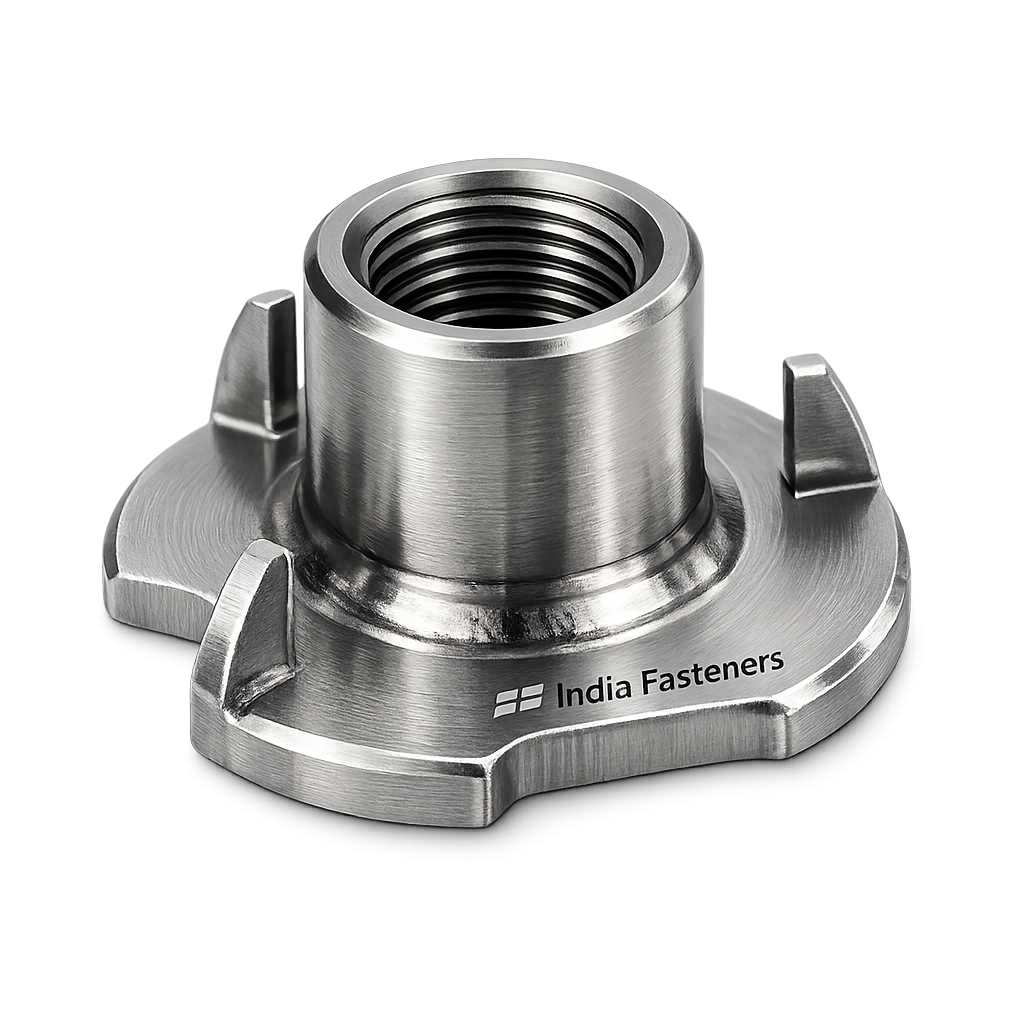
T-NUT INSERT
1. Regional Industry Context — Middle East Industrial Application Environment
Industrial fastening systems deployed across Gulf Cooperation Council (GCC) projects operate under engineering conditions fundamentally different from standard commercial environments. Equipment mounting interfaces must withstand transportation stresses, aggressive corrosion exposure, repeated maintenance intervention, and strict consultant verification processes.
Within this context, the T-Nut Insert functions as a controlled internal threaded anchoring solution enabling repeatable bolted assembly across modular construction systems widely used in Saudi Arabia, UAE, Qatar, Oman, Kuwait, and Bahrain.
EPC contractors operating under Saudi Aramco, ADNOC, and QatarEnergy project frameworks prioritize fastening solutions that support:
- Controlled installation procedures
- Predictable load transfer behavior
- Replaceable threaded interfaces
- Fabrication yard efficiency
- Long-term maintainability
T-nut inserts address these requirements by converting base materials into engineered threaded mounting interfaces without repeated tapping operations.
1.1 Oil & Gas Equipment Skids
Oil and gas facilities across the Middle East increasingly rely on modular skid-mounted systems fabricated offsite and transported to project locations.
Typical skid-mounted equipment includes:
- Pump assemblies
- Filtration packages
- Chemical dosing units
- Instrumentation skids
- Compressor auxiliary modules
During transportation from fabrication yards to desert installation sites, structures experience:
- Vibration loading
- Impact forces
- Dynamic transport acceleration
- Thermal cycling between day and night temperatures
A welded or embedded T-nut insert provides:
- Permanent internal threads
- Reduced installation time onsite
- Controlled torque application
- Replacement capability without structural modification
Unlike tapped plate threads that degrade after maintenance cycles, inserts preserve thread integrity during repeated disassembly.
1.2 Modular Plant Construction
GCC EPC execution models emphasize modularization to reduce field labor exposure and schedule risk.
Modules fabricated in controlled workshops require:
- Repeatable fastening interfaces
- Alignment tolerance accommodation
- Rapid equipment integration
- Consistent bolt engagement depth
T-nut inserts enable fabrication teams to pre-engineer mounting locations without post-install machining.
Benefits include:
- Elimination of re-tapping operations
- Reduced fabrication rework
- Controlled dimensional accuracy
- Improved installation productivity
1.3 Control Panel & Instrumentation Mounting
Instrumentation racks, analyzer shelters, and electrical control panels depend on precise mounting interfaces capable of supporting sensitive equipment.
Engineering requirements include:
- Minimal distortion of panel substrates
- Controlled clamping forces
- Resistance to vibration loosening
- Maintainable internal threading
T-nut inserts distribute load across a flange base, preventing localized deformation commonly observed with direct screw fastening into thin structural sections.
1.4 Pipe Rack Auxiliary Supports
Pipe racks across refineries and petrochemical facilities incorporate auxiliary support systems such as:
- Cable trays
- Instrument tubing supports
- Access platforms
- Lighting fixtures
- Safety equipment mounts
These systems undergo continuous maintenance modifications throughout plant lifecycle.
T-nut inserts allow:
- Addition or relocation of supports
- Standardized bolt installation
- Preservation of structural members without repeated drilling or tapping
1.5 Cable Tray Systems
Cable tray installations in power plants and industrial complexes require large volumes of threaded mounting points.
Engineering considerations include:
- Shear loading from cable weight
- Thermal expansion movement
- Installation speed across extended runs
T-nut inserts provide embedded thread interfaces enabling installers to secure trays efficiently while maintaining alignment accuracy.
1.6 HVAC & District Cooling Infrastructure
District cooling plants and HVAC mechanical rooms expose fastening systems to:
- High humidity environments
- Condensation cycles
- Temperature variation
- Maintenance access frequency
Thread degradation from corrosion presents a common operational issue.
Stainless steel T-nut inserts mitigate thread wear and corrosion, ensuring serviceability during long operational lifecycles typical of GCC infrastructure assets.
1.7 Solar Mounting Structures
Renewable energy projects across Saudi Arabia and UAE require modular mounting systems for photovoltaic structures.
Operational conditions include:
- UV exposure
- Wind-induced vibration
- Sand abrasion
- Thermal expansion exceeding 50°C surface variation
T-nut inserts provide consistent mechanical interfaces enabling rapid installation of mounting rails while maintaining structural stability.
1.8 Desalination Facility Equipment Frames
Desalination plants present one of the most aggressive corrosion environments due to:
- Chloride exposure
- High humidity
- Continuous saline atmosphere
T-nut inserts manufactured from stainless or duplex materials ensure threaded integrity within marine-exposed equipment frames.
1.9 Power Plant Maintenance Platforms
Maintenance platforms require removable components for inspection access.
T-nut inserts allow repeated fastening removal without structural degradation, supporting lifecycle maintenance philosophy adopted across GCC utilities.
2. Technical Definition of T-Nut Insert
A T-Nut Insert is an internally threaded anchoring component designed to create a permanent or semi-permanent threaded interface within a base material.
It functions as a mechanical intermediary transferring load from a bolt into the supporting substrate.
2.1 Fundamental Engineering Definition
A T-nut insert is:
- An internally threaded fastening element
- Installed from one side of a substrate
- Designed to resist rotation and pull-out
- Capable of transmitting axial and shear loads
It converts non-threaded structural surfaces into engineered mounting interfaces.
2.2 Functional Role in Industrial Assemblies
Within EPC fabrication practice, the insert serves as:
- Mechanical load transfer interface
- Thread reinforcement mechanism
- Replaceable fastening receiver
- Alignment-controlled mounting point
2.3 Configuration Types
Four-Prong T-Nut
Stainless Steel Industrial T-Nut Inserts
Manufactured for corrosion-critical environments including:
- Offshore facilities
- Desalination plants
- Coastal infrastructure
2.4 Standards Relevance
T-nut inserts must integrate seamlessly with global fastening systems.
Relevant technical frameworks include:
- ISO metric thread standards
- DIN fastening design practices
- ASME B1.1 thread compatibility
- EPC equipment mounting requirements
Thread compatibility ensures interchangeability with internationally standardized bolts.
2.5 Load Transfer Mechanism
Load transmission follows a defined mechanical pathway:
- Bolt preload generates clamping force.
- Force transfers through internal threads.
- Load distributes across insert flange.
- Substrate absorbs applied stresses.
Correct geometry prevents localized stress concentration.
2.6 Pull-Out Resistance Mechanism
Resistance arises from:
- Mechanical interlock of prongs or weld
- Bearing surface friction
- Substrate compression resistance
- Thread engagement length
2.7 Anti-Rotation Design Logic
Rotation prevention is achieved through:
- Multi-prong penetration
- Weld fusion
- Serrated flange surfaces
- Mechanical interference fit
Anti-rotation capability is critical to maintaining torque control during installation.
2.8 Bearing Surface Distribution
Flange diameter influences load distribution.
Larger bearing surfaces:
- Reduce substrate stress
- Increase allowable loads
- Improve fatigue resistance
3. Load Transfer Theory & Mechanical Behavior
Understanding mechanical performance is essential for EPC consultant approval.
3.1 Axial Tensile Loading
Axial loads act parallel to bolt axis.
Primary resistance mechanisms:
- Thread shear strength
- Insert flange bearing
- Substrate compressive strength
Failure occurs if pull-out force exceeds substrate resistance.
3.2 Shear Load Transfer
Shear forces act perpendicular to bolt axis.
Load distribution occurs through:
- Bolt shank bearing
- Insert body shear resistance
- Substrate bearing capacity
3.3 Bearing Stress Distribution
Bearing stress is calculated as:
Where:
 = Applied load
 = Bearing area
Increasing flange diameter reduces bearing stress.
3.4 Bolt Preload Equation
Bolt preload determines joint integrity: 
Where:
 = preload force
 = installation torque
 = torque coefficient
 = nominal bolt diameter
Proper preload prevents joint separation.
3.5 Shear Load Calculation

Where:
- = shear force
 = shear area
3.6 Pull-Out Resistance Concept
Pull-out capacity depends on:
- Embedment depth
- Substrate strength
- Insert geometry
- Installation quality
Generalized relationship: 
3.7 Frictional Resistance Equation

Where:
 = friction coefficient
- = normal force
Friction contributes to rotational resistance.
3.8 Failure Modes of Threaded Inserts
Common engineering failure scenarios:
- Thread stripping
- Insert rotation
- Pull-out failure
- Substrate crushing
- Bolt fracture
- Loss of preload due to vibration
3.9 Substrate Material Influence
Performance varies depending on installation material:
- Structural steel
- Aluminum profiles
- Composite panels
- Equipment base plates
Engineering verification must consider substrate properties.
3.10 Safety Factors in EPC Structural Mounting
Typical EPC practice applies safety factors ranging from:
- 2.0 to 4.0 for static equipment
- Higher factors for vibration-sensitive installations
Consultants require documented load verification supporting insert selection.
4. Applicable Materials — Engineered for GCC Operating Conditions
Material selection for T-Nut inserts used in Middle East industrial projects is governed by structural load requirements, corrosion exposure classification, installation environment, and lifecycle maintenance expectations.
GCC projects impose simultaneous mechanical and environmental stresses:
- Coastal chloride exposure
- Desert temperature variation
- Sand abrasion
- Industrial chemical atmosphere
- High humidity mechanical rooms
- Offshore or desalination environments
Accordingly, insert materials must be evaluated as engineered fastening components, not general hardware items.
4.1 Carbon Steel T-Nut Inserts
Carbon steel remains widely used for controlled indoor or protected installations.
Engineering Characteristics
- High strength-to-cost ratio
- Suitable for structural mounting applications
- Good machinability
- Stable thread integrity under preload
Typical Applications
- Equipment skids (painted systems)
- Indoor mechanical assemblies
- Control cabinets
- Fabrication yard pre-assembly
Limitations
- Requires surface protection
- Susceptible to corrosion without coating
- Not suitable for marine exposure
4.2 Alloy Steel T-Nut Inserts
Alloy steel inserts are selected where increased mechanical performance is required.
Mechanical Advantages
- Higher yield strength
- Improved fatigue resistance
- Enhanced load capacity
- Better performance under vibration
GCC Usage
- Heavy rotating equipment mounting
- Structural modules subject to transport loading
- Dynamic mechanical assemblies
Heat treatment control becomes critical to maintain ductility and prevent brittle failure.
4.3 Stainless Steel Grade 304
Austenitic stainless steel 304 provides balanced corrosion resistance for many industrial environments.
Performance Characteristics
- Good atmospheric corrosion resistance
- Non-magnetic structure
- Stable mechanical properties across temperature range
Suitable Locations
- Indoor plant areas
- HVAC equipment rooms
- Utility buildings
- Moderate humidity environments
Limitations
- Reduced resistance in chloride-rich coastal zones compared to SS316.
4.4 Stainless Steel Grade 316
Stainless steel 316 is widely specified for GCC projects exposed to saline or coastal environments.
Engineering Benefits
- Molybdenum addition improves chloride resistance
- Reduced risk of pitting corrosion
- Improved long-term thread reliability
Typical Applications
- Desalination plants
- Offshore modules
- Coastal infrastructure
- Marine-adjacent equipment frames
Often specified by EPC consultants for long lifecycle installations.
4.5 Duplex Stainless Steel Inserts
Duplex stainless steels combine ferritic and austenitic microstructures.
Advantages
- High mechanical strength
- Excellent resistance to stress corrosion cracking
- Superior performance in aggressive chloride environments
Industrial Usage
- Offshore oil & gas installations
- Seawater handling systems
- Chemical processing units
- High-criticality structural connections
Duplex materials allow reduced component size while maintaining load capacity.
4.6 Zinc-Plated Steel Inserts
Electroplated zinc coatings provide economical corrosion protection.
Characteristics
- Thin protective layer
- Good appearance
- Suitable for indoor service
Engineering Considerations
- Requires hydrogen embrittlement control
- Not recommended for outdoor GCC exposure without additional protection
4.7 Hot-Dip Galvanized (HDG) Steel Inserts
Hot-dip galvanizing provides thicker sacrificial corrosion protection.
Advantages
- Enhanced durability in outdoor desert climates
- Protection against humidity and sand exposure
- Extended service life compared to electroplating
Applications
- Pipe racks
- Solar mounting structures
- Outdoor cable tray supports
- Infrastructure fabrication
Thread tolerance compensation must be controlled due to coating thickness.
4.8 Material Selection Relative to GCC Exposure Zones
| Environment | Recommended Material |
|---|---|
| Indoor industrial | Carbon Steel / Zinc Plated |
| Outdoor desert | HDG Steel |
| Coastal | SS316 |
| Marine splash zone | Duplex Stainless |
| HVAC humidity zones | SS304 / SS316 |
| Chemical exposure | SS316 / Duplex |
Material choice must align with project corrosion philosophy and lifecycle maintenance expectations.
5. Material Comparison Table (Engineering Reference)
| Material Grade | Yield Strength (MPa) | Tensile Strength (MPa) | Corrosion Resistance Level | Surface Protection | Typical GCC Application |
|---|---|---|---|---|---|
| Carbon Steel | 250–350 | 400–550 | Low | Painting / Coating | Indoor skids |
| Alloy Steel | 600–900 | 800–1100 | Low | Coated | Heavy equipment mounting |
| Zinc-Plated Steel | 250–350 | 400–550 | Moderate | Electroplating | Indoor assemblies |
| Hot-Dip Galvanized Steel | 250–350 | 400–550 | High | HDG coating | Outdoor structures |
| Stainless Steel 304 | ~215 | ~505 | High | Passive oxide layer | HVAC / utilities |
| Stainless Steel 316 | ~205 | ~515 | Very High | Passive oxide layer | Coastal plants |
| Duplex Stainless Steel | 450–550 | 620–800 | Excellent | Passive structure | Offshore / desalination |
Values represent typical ranges; project specifications govern final selection.
6. Heat Treatment & Metallurgical Control
Metallurgical stability directly influences the long-term performance of T-Nut inserts.
6.1 Cold Forming vs Hot Forging
Cold Forming
- Refines grain flow
- Improves fatigue strength
- Enhances thread durability
- Maintains dimensional accuracy
Preferred for high-volume precision inserts.
Hot Forging
- Used for heavy-duty structural inserts
- Allows thicker sections
- Improves structural continuity
6.2 Stress Relief Processes
Residual stresses introduced during forming or machining may cause distortion or cracking.
Stress relief heat treatment:
- Stabilizes geometry
- Reduces distortion risk
- Improves dimensional consistency
6.3 Case Hardening (Where Applicable)
Selective surface hardening improves:
- Wear resistance
- Thread life under repeated installation
- Resistance to galling
Core material remains ductile to absorb load without brittle fracture.
6.4 Surface Hardness Control
Excessive hardness increases brittleness risk.
Controlled hardness ensures:
- Proper thread engagement
- Controlled deformation behavior
- Resistance to stripping failure
6.5 Grain Structure Refinement
Uniform grain structure contributes to:
- Consistent load transfer
- Improved fatigue performance
- Reduced crack propagation risk
6.6 Hydrogen Embrittlement Prevention
Electroplated components require strict process control.
Preventive measures include:
- Post-plating baking
- Controlled plating chemistry
- Inspection verification
Critical for high-strength inserts used in EPC structural applications.
7. Manufacturing Process Flow — Documentation-Level Discipline
Industrial T-Nut insert manufacturing for GCC export projects follows controlled production sequences aligned with inspection and traceability expectations.
7.1 Raw Material Certification
Incoming material verification includes:
- Mill test certificate review
- Chemical composition confirmation
- Mechanical property validation
- Heat number traceability
7.2 Incoming Inspection
Inspection checks:
- Material dimensions
- Surface condition
- Identification marking
Non-conforming materials are segregated before production.
7.3 Blank Forming / Stamping
Initial geometry produced through:
- Precision stamping
- Cold forming operations
- Forging for heavy-duty variants
Dimensional repeatability is critical for automated fabrication environments.
7.4 Thread Tapping or Thread Rolling
Thread creation methods:
Thread Rolling
- Improved fatigue strength
- Work-hardened thread surface
- Preferred for high-performance inserts
Thread Tapping
- Applied where geometry requires cutting operations
Thread accuracy verified according to ISO tolerance classes.
7.5 Prong Forming Process
For pronged T-nuts:
- Controlled penetration geometry
- Uniform prong height
- Balanced load distribution
Prong alignment directly affects anti-rotation performance.
7.6 Flange Machining
Flange surfaces are machined to ensure:
- Flat seating surface
- Proper bearing distribution
- Controlled thickness tolerance
7.7 Heat Treatment
Where specified:
- Hardening
- Tempering
- Stress relieving
Parameters recorded for traceability.
7.8 Surface Coating or Passivation
Surface finishing options include:
- Zinc plating
- Hot-dip galvanizing
- Stainless passivation
- Special corrosion-resistant coatings
Coating thickness verified according to project requirements.
7.9 Deburring & Finishing
Deburring prevents:
- Installation damage
- Thread interference
- Safety hazards during assembly
7.10 Dimensional Inspection
Critical dimensions checked:
- Thread concentricity
- Flange diameter
- Height tolerance
- Prong geometry
Measured using calibrated instruments.
7.11 Thread Gauge Verification
Threads inspected using:
- GO gauges
- NO-GO gauges
- Pitch diameter verification
Ensures compatibility with ISO/DIN fasteners.
7.12 Batch Traceability Marking
Each production batch linked to:
- Raw material heat number
- Production date
- Inspection records
- Surface treatment batch
Traceability supports EPC documentation submission and third-party inspection requirements.
7.13 Tolerance Control & Thread Accuracy
Manufacturing tolerance discipline ensures:
- Reliable bolt engagement
- Consistent preload generation
- Prevention of cross-threading
- Predictable mechanical performance
Thread class selection typically follows ISO metric tolerance systems aligned with EPC specifications.
8. Dimensional Reference Tables
Dimensional consistency is essential for EPC fabrication environments where interchangeability, automation compatibility, and installation repeatability are mandatory.
The following reference dimensions represent typical industrial T-Nut insert geometries used for equipment mounting, structural interfaces, and modular construction assemblies.
Final project dimensions remain subject to engineering drawings and approved vendor data sheets.
8.1 Standard Metric T-Nut Insert Dimensions (Reference)
| Thread Size | Flange Diameter (mm) | Base Thickness (mm) | Prong Length (mm) | Overall Height (mm) | Recommended Hole Size (mm) | Installation Depth (mm) |
|---|---|---|---|---|---|---|
| M4 | 10 | 1.5 | 2.0 | 5.0 | 6.0 | 4–5 |
| M5 | 12 | 1.8 | 2.5 | 6.0 | 7.0 | 5–6 |
| M6 | 14 | 2.0 | 3.0 | 7.0 | 8.0 | 6–7 |
| M8 | 18 | 2.5 | 3.5 | 9.0 | 10.0 | 8–9 |
| M10 | 22 | 3.0 | 4.0 | 11.0 | 12.0 | 10–11 |
| M12 | 26 | 3.5 | 5.0 | 14.0 | 14.0 | 12–14 |
| M16 | 34 | 5.0 | 6.0 | 18.0 | 18.0 | 16–18 |
Engineering Notes
- Flange diameter governs bearing stress distribution.
- Installation depth must ensure full prong engagement.
- Hole sizing tolerance directly influences anti-rotation performance.
- Oversized holes reduce pull-out resistance.
8.2 Imperial Thread Reference (Industrial Equipment Compatibility)
| Thread Size | Flange Diameter (in) | Base Thickness (in) | Overall Height (in) |
|---|---|---|---|
| 1/4″-20 | 0.50 | 0.060 | 0.25 |
| 5/16″-18 | 0.60 | 0.075 | 0.30 |
| 3/8″-16 | 0.70 | 0.090 | 0.35 |
| 1/2″-13 | 0.90 | 0.120 | 0.45 |
Used where ASME-based equipment interfaces are specified.
9. Load Capacity Reference Table
Load capacity of a T-Nut insert depends on:
- Insert material strength
- Thread engagement length
- Substrate material
- Installation quality
- Applied safety factor
Values below represent engineering reference ranges assuming installation into structural steel or dense engineered substrate.
9.1 Allowable Load Reference
| Thread Size | Approx. Pull-Out Strength (kN) | Approx. Shear Strength (kN) | Recommended Safety Factor | Typical Industrial Use |
|---|---|---|---|---|
| M4 | 2.0 | 1.5 | 3.0 | Instrument mounting |
| M5 | 3.0 | 2.2 | 3.0 | Panel assemblies |
| M6 | 5.0 | 3.5 | 3.0 | Cable trays |
| M8 | 8.0 | 6.0 | 2.5 | Equipment brackets |
| M10 | 12.0 | 9.0 | 2.5 | Structural attachments |
| M12 | 18.0 | 14.0 | 2.0 | Skid equipment mounting |
| M16 | 30.0 | 22.0 | 2.0 | Heavy industrial supports |
Important Engineering Statement
Actual allowable load must always be verified against substrate strength and project design calculations.
9.2 Substrate Dependency
Insert performance varies significantly depending on base material:
| Substrate | Relative Pull-Out Capacity |
|---|---|
| Structural Steel | Very High |
| Aluminum | Medium |
| Composite Panels | Moderate |
| Thin Sheet Metal | Low–Moderate |
| Wood-Based Panels | Variable |
EPC consultants normally request confirmation calculations during technical submittals.
10. Installation Torque Chart (MANDATORY)
Correct torque application establishes required bolt preload while preventing thread damage or insert rotation.
10.1 Recommended Installation Torque
| Thread Size | Recommended Torque (Nm) | Maximum Torque (Nm) | Lubricated Condition (Nm) | Dry Installation (Nm) |
|---|---|---|---|---|
| M4 | 2.5 | 3.5 | 2.0 | 2.5 |
| M5 | 5 | 7 | 4 | 5 |
| M6 | 9 | 12 | 7 | 9 |
| M8 | 22 | 30 | 18 | 22 |
| M10 | 45 | 60 | 36 | 45 |
| M12 | 80 | 110 | 65 | 80 |
| M16 | 200 | 260 | 160 | 200 |
10.2 Torque Engineering Explanation
Torque generates preload according to:
Where:
- = clamping force
- = torque
- = friction factor
 = bolt diameter
Lubrication reduces friction coefficient, increasing preload for the same torque.
10.3 EPC Installation Considerations
Consultants verify:
- Controlled torque application tools
- Calibration certificates
- Installation procedures
- Prevention of over-torque damage
Improper torque is a leading cause of insert failure.
11. Pull-Out Resistance Calculation Guide (MANDATORY)
Engineering verification of pull-out capacity forms part of EPC technical submission documentation.
11.1 Basic Pull-Out Formula Concept
General relationship: 
Where:
- = insert diameter
 = embedment length
 = allowable shear strength of substrate
11.2 Sample Engineering Calculation
Example
- Insert size: M10
- Effective embedment depth: 10 mm
- Substrate allowable shear strength: 140 MPa

Applying safety factor 2.5: 
11.3 Substrate Thickness Verification
Minimum substrate thickness should exceed: 
Ensures:
- Adequate load distribution
- Prevention of substrate breakout
11.4 EPC Documentation Logic
During project submission, engineering packages typically include:
- Load calculation sheets
- Installation drawings
- Material certificates
- Torque specifications
- Inspection plan references
T-Nut insert selection must align with approved equipment load data.
12. Mechanical Property Table
Mechanical properties define allowable loading limits and thread durability.
| Property | Carbon Steel | Alloy Steel | SS304 | SS316 | Duplex Stainless |
|---|---|---|---|---|---|
| Yield Strength (MPa) | 250–350 | 600–900 | ~215 | ~205 | 450–550 |
| Tensile Strength (MPa) | 400–550 | 800–1100 | ~505 | ~515 | 620–800 |
| Hardness (HB) | 120–180 | 200–320 | 150 | 150 | 230–290 |
| Proof Load Strength | Moderate | High | Moderate | Moderate | High |
| Thread Engagement Strength | Good | Excellent | Good | Good | Excellent |
Engineering selection must balance strength with corrosion resistance requirements.
13. Corrosion Resistance Comparison Table
Environmental exposure classification is essential for GCC projects.
| Material | Marine Atmosphere | High Humidity | Chemical Exposure | Outdoor Desert Climate | Industrial Plant Environment |
|---|---|---|---|---|---|
| Carbon Steel | Poor | Poor | Poor | Moderate (coated) | Moderate |
| Zinc Plated | Limited | Moderate | Limited | Moderate | Moderate |
| HDG Steel | Good | Good | Moderate | Very Good | Good |
| Stainless Steel 304 | Good | Very Good | Moderate | Very Good | Very Good |
| Stainless Steel 316 | Excellent | Excellent | Good | Excellent | Excellent |
| Duplex Stainless | Outstanding | Outstanding | Excellent | Excellent | Outstanding |
Material selection should align with project corrosion management philosophy.
14. Inspection & Quality Assurance
Quality assurance for industrial T-Nut inserts follows documentation-driven inspection discipline expected by Middle East EPC contractors and third-party inspectors.
14.1 Thread Gauge Inspection
Verification performed using:
- GO gauge acceptance
- NO-GO rejection criteria
- Pitch diameter confirmation
Ensures compatibility with ISO and ASME threaded fasteners.
14.2 Dimensional Inspection
Measured characteristics:
- Flange diameter
- Insert height
- Thread depth
- Prong geometry
- Concentricity
Inspection records retained for traceability.
14.3 Coating Thickness Testing
For coated inserts:
- Zinc plating thickness measurement
- Galvanizing verification
- Passivation validation
Typical inspection methods:
- Magnetic thickness gauge
- Microscopic verification
14.4 Hardness Testing
Hardness verification ensures correct metallurgical condition.
Common methods:
- Rockwell testing
- Brinell testing
- Microhardness testing (when required)
14.5 Salt Spray Testing (Where Applicable)
Performed for corrosion-protected inserts.
Purpose:
- Validate coating performance
- Confirm resistance to atmospheric corrosion
Testing aligns with recognized international corrosion evaluation practices.
14.6 Batch Traceability Control
Each batch linked to:
- Raw material heat number
- Production lot
- Heat treatment cycle
- Coating batch reference
- Inspection report
Traceability supports lifecycle quality verification.
14.7 Third-Party Inspection Readiness
Industrial projects commonly involve independent inspection agencies.
Inspection scope may include:
- Visual inspection
- Dimensional verification
- Documentation audit
- Witness testing
Manufacturing documentation must remain audit-ready.
14.8 EN 10204 3.1 Certification
Typical documentation package includes:
- Material test certificate
- Mechanical property confirmation
- Chemical composition report
- Manufacturing traceability linkage
Certification supports EPC and consultant approval processes.
14.9 GCC Consultant Expectations
Consultant review focuses on:
- Demonstrated understanding of load transfer
- Controlled manufacturing discipline
- Corrosion suitability
- Verified installation procedures
- Inspection transparency
Approval depends on technical clarity rather than commercial presentation.
15. Industries Served — Middle East Industrial Applications
T-Nut inserts supplied for GCC projects function as engineered mounting interfaces integrated into industrial equipment, structural systems, and modular construction assemblies. Their relevance extends across multiple heavy industries where removable threaded anchoring points are required without compromising structural integrity.
Industrial acceptance depends on mechanical reliability, corrosion suitability, inspection traceability, and installation repeatability.
15.1 Oil & Gas Equipment Skids
Oil and gas processing facilities across Saudi Arabia, UAE, Qatar, Oman, and Kuwait rely heavily on skid-mounted modular systems.
Typical mounting requirements include:
- Pump base assemblies
- Valve manifolds
- Instrument junction boxes
- Analyzer shelters
- Chemical injection packages
T-Nut inserts are integrated into skid base frames or equipment mounting plates to provide controlled internal threads capable of repeated assembly cycles.
Engineering Function
- Maintains thread integrity during maintenance removal
- Eliminates repeated tapping of structural members
- Allows torque-controlled bolt installation
- Supports vibration-resistant fastening
During transportation from fabrication yard to site, skid structures experience dynamic loading. Inserts distribute fastening stresses across flange bearing surfaces, reducing localized distortion.
15.2 Refineries
Refinery environments introduce combined exposure factors:
- Elevated temperatures
- Hydrocarbon vapor presence
- Continuous vibration
- Maintenance-intensive operations
Applications include:
- Access platform components
- Lighting supports
- Cable management systems
- Small equipment mounting interfaces
T-Nut inserts allow retrofit installation without structural rework, supporting plant modification programs common during refinery upgrades.
15.3 Petrochemical Complexes
Petrochemical facilities require fastening systems compatible with corrosion management programs.
T-Nut inserts support:
- Instrument racks
- Process monitoring assemblies
- Maintenance walkways
- Auxiliary piping supports
Material selection typically favors stainless steel or hot-dip galvanized configurations depending on plant corrosion classification zones.
15.4 LNG Plants
Liquefied Natural Gas facilities impose strict reliability expectations due to operational criticality.
Engineering considerations include:
- Thermal contraction and expansion
- Vibration from rotating machinery
- Precision alignment requirements
T-Nut inserts provide stable mounting references allowing controlled bolt preload while permitting maintenance removal without damage to supporting structures.
15.5 Power Generation Stations
Thermal, combined-cycle, and renewable power facilities require extensive mechanical mounting interfaces.
Typical applications:
- Control panel anchoring
- Cable tray installation
- Maintenance platform construction
- Instrumentation mounting
In power plants, lifecycle serviceability is a primary requirement. Inserts preserve threaded interfaces across long operational periods involving repeated inspections.
15.6 Desalination Facilities
Desalination plants represent high-corrosion environments due to continuous exposure to saline atmosphere.
Engineering challenges include:
- Chloride attack
- Condensation cycles
- Elevated humidity
Stainless steel or duplex T-Nut inserts maintain thread functionality where coated carbon steel solutions would degrade over time.
15.7 Renewable Energy Structures
Solar energy expansion across GCC countries introduces large modular mounting systems.
T-Nut inserts support:
- Solar panel rail systems
- Inverter mounting frames
- Cable routing assemblies
- Maintenance structures
Modular installation benefits from standardized threaded anchoring points allowing rapid field assembly.
15.8 Infrastructure Fabrication Yards
Large fabrication yards producing modules for export projects require fastening solutions compatible with automated production.
Benefits provided by inserts include:
- Repeatable installation geometry
- Reduced machining operations
- Standardized hole preparation
- Efficient assembly workflow
16. Export & GCC Supply Capability
Industrial fasteners supplied to GCC EPC projects must meet export documentation and logistics expectations equivalent to pressure equipment supply chains.
India Fasteners operates as a manufacturer and global exporter of industrial T-Nut inserts, supplying engineered fastening components prepared for international project acceptance.
16.1 Regional Supply Coverage
Export supply aligns with project demand across:
- Saudi Arabia
- United Arab Emirates (Dubai / Abu Dhabi industrial zones)
- Qatar
- Oman
- Kuwait
- Bahrain
Shipment planning considers EPC procurement schedules, consolidation logistics, and inspection hold points.
16.2 Export Packaging Standards
Industrial fasteners for Middle East delivery require packaging that protects dimensional accuracy and corrosion condition during long-distance transport.
Typical export packaging includes:
- Moisture-resistant inner packing
- Batch-separated cartons
- Corrosion protection materials
- Palletized shipment units
- Containerized loading discipline
Packaging prevents contamination from humidity during sea transport.
16.3 Fastener Labeling Systems
Each shipment incorporates identification labeling including:
- Product description
- Thread size
- Material grade
- Heat number or batch reference
- Quantity traceability
- Purchase order reference
Labeling supports warehouse identification and site inspection verification.
16.4 Inspection Documentation Package
GCC EPC procurement typically requires structured documentation submission.
Standard documentation may include:
- Material Test Certificates (MTC)
- Dimensional inspection reports
- Coating verification records
- Heat treatment confirmation (where applicable)
- Batch traceability records
- Certificate of conformity
Documentation formatting supports consultant and third-party inspection review.
16.5 Mill Test Certificates
Material certification verifies:
- Chemical composition
- Mechanical properties
- Heat number traceability
Certificates aligned with EN 10204 3.1 requirements are commonly requested.
16.6 Material Traceability Records
Traceability ensures every insert batch can be linked back to:
- Raw material origin
- Manufacturing lot
- Inspection results
- Surface treatment process
Traceability remains a core requirement under Middle East EPC quality systems.
16.7 Container Loading Practices
Industrial export shipments follow controlled loading procedures:
- Weight distribution control
- Moisture barrier application
- Secure pallet fixing
- Documentation segregation
Proper loading prevents mechanical damage and coating degradation during transport.
17. Procurement & Installation Engineering View
From an EPC procurement and construction perspective, T-Nut inserts are evaluated based on installation predictability and lifecycle maintenance performance.
17.1 Installation Preparation
Prior to installation:
- Hole diameter verified against engineering drawings
- Substrate thickness confirmed
- Surface cleanliness ensured
- Protective coatings inspected
Incorrect preparation reduces pull-out capacity.
17.2 Hole Sizing Discipline
Hole diameter tolerance directly influences insert performance.
Engineering practice requires:
- Controlled drilling operations
- Avoidance of oversized holes
- Burr removal before installation
Proper fit ensures anti-rotation functionality.
17.3 Insert Seating Verification
Installers verify:
- Full flange contact with substrate
- Proper prong engagement
- Insert alignment with bolt axis
Incomplete seating leads to uneven load transfer.
17.4 Torque Application Sequence
Recommended procedure:
- Position insert correctly.
- Insert bolt and engage threads manually.
- Apply calibrated torque tool.
- Achieve specified preload gradually.
Torque application must follow approved installation procedures.
17.5 Bolt Engagement Rules
Engineering guidelines typically require:
- Minimum engagement length ≥ bolt diameter
- Full thread engagement without bottoming
- Compatible bolt strength class
Adequate engagement prevents thread stripping.
17.6 Anti-Loosening Considerations
GCC installations frequently experience vibration from rotating equipment and wind loading.
Mitigation methods include:
- Proper preload generation
- Lock washers or prevailing torque nuts
- Thread locking compounds (where permitted)
- Periodic inspection programs
Insert design supports stable clamping performance.
17.7 Maintenance Removal Procedures
T-Nut inserts enable repeated maintenance removal without damaging structural members.
Best practices include:
- Controlled torque removal
- Inspection of threads before reinstallation
- Replacement of damaged bolts rather than inserts when possible
This approach supports lifecycle asset management philosophy adopted in regional industrial facilities.
17.8 Storage Requirements — Gulf Climate
Prior to installation, inserts should be stored under controlled conditions:
- Dry indoor storage
- Protection from condensation
- Separation of stainless and carbon steel materials
- Avoidance of sand contamination
Proper storage preserves coating integrity and thread accuracy.
18. Custom Engineering Capabilities
Industrial projects frequently require non-standard fastening solutions beyond catalogue dimensions.
India Fasteners supports engineered customization aligned with EPC project specifications.
18.1 Non-Standard Thread Sizes
Custom production may include:
- Special metric threads
- UNC/UNF threads
- Project-specific engagement lengths
Required where equipment OEM interfaces differ from standard sizing.
18.2 Heavy-Load T-Nut Inserts
Designed for:
- Structural equipment anchoring
- High preload applications
- Dynamic loading environments
Engineering adjustments include increased flange thickness and enhanced thread depth.
18.3 Special Coatings for Offshore Environments
Where corrosion risk exceeds conventional environments, specialized surface treatments may be applied:
- Marine-grade passivation
- Enhanced galvanizing systems
- Project-specified protective coatings
Selection depends on corrosion management philosophy defined by EPC specifications.
18.4 High-Temperature Applications
Certain industrial environments require inserts capable of operating under elevated temperatures.
Engineering considerations include:
- Material stability
- Reduction of coating degradation
- Thermal expansion compatibility
Material selection becomes the governing design parameter.
18.5 Project-Specific Marking
For traceability and inspection purposes, inserts may incorporate:
- Batch identification marking
- Project code stamping
- Size identification
Marking assists warehouse control and third-party verification.
18.6 Custom Flange Geometry
Custom flange designs may be required to achieve:
- Increased bearing surface
- Unique mounting constraints
- Load distribution optimization
Engineering drawings govern final geometry.
18.7 OEM-Specific Fastening Solutions
Equipment manufacturers often request dedicated insert designs compatible with proprietary mounting systems.
Customization may address:
- Restricted installation access
- Automated assembly processes
- Specialized load paths
Engineering collaboration ensures compatibility with equipment interfaces.
Engineering Conclusion — EPC Evaluation Perspective
From a GCC consultant or third-party inspection viewpoint, an industrial T-Nut insert manufacturer is evaluated based on demonstrated understanding of:
- Threaded load transfer mechanics
- Installation discipline and torque control
- Corrosion behavior in Gulf environments
- Material selection aligned with exposure classification
- Manufacturing traceability and inspection readiness
- Export documentation compliance
- Lifecycle maintenance considerations
When these criteria are addressed within technical documentation and manufacturing practice, the fastening system transitions from a commodity item to an engineered mounting component suitable for Middle East EPC projects.