
barrel nuts
1. Regional Industrial Context — Middle East Engineering Environment
1.1 Industrial Assembly Philosophy in GCC Projects
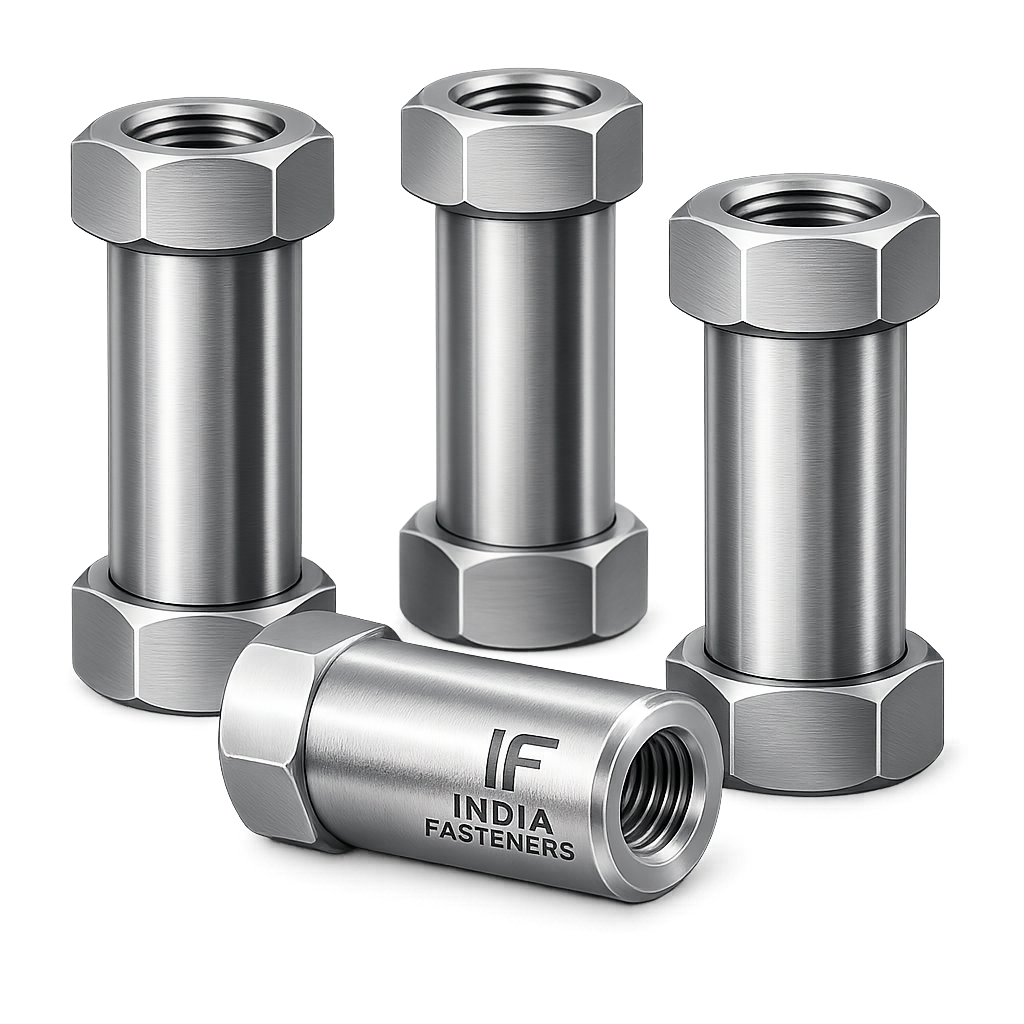
Mechanical fastening selection within Middle East EPC projects is driven primarily by:
- confined structural geometries,
- high reliability expectations,
- inspection transparency,
- maintainability during long operational cycles,
- resistance to extreme environmental conditions.
Unlike open structural bolting systems, many assemblies used across GCC infrastructure require concealed transverse fastening solutions capable of transmitting load without external protrusion.
Barrel nuts are widely adopted where traditional hex nut arrangements become impractical due to spatial or operational constraints.
Typical GCC industrial construction emphasizes:
- modular fabrication,
- pre-assembled skids,
- transportable plant units,
- offshore installation readiness,
- rapid field erection with controlled alignment tolerances.
These conditions directly support the use of cross-dowel fastening technology.
1.2 Oil & Gas Equipment Skids
Process skids used in upstream and downstream facilities integrate:
- pumps,
- valves,
- analyzers,
- piping manifolds,
- instrumentation support frames.
Within these assemblies:
- equipment mounting rails intersect at perpendicular angles,
- structural access is restricted after piping installation,
- exposed nut projections interfere with insulation systems.
Barrel nuts enable:
- transverse bolt engagement through structural members,
- internalized fastening without external obstruction,
- controlled clamp load distribution across fabricated frames.
They are frequently incorporated into:
- chemical injection skids,
- metering packages,
- filtration units,
- compressor auxiliary modules.
1.3 Control Panels & Instrumentation Frames
Electrical and instrumentation enclosures deployed across Saudi Arabia, UAE, Qatar, and offshore platforms must satisfy:
- vibration resistance,
- electrical clearance requirements,
- maintenance accessibility.
Panel frameworks often contain hollow structural members or fabricated channels where rear access is impossible once wiring is installed.
Barrel nuts provide:
- blind assembly capability,
- internal load anchoring,
- minimal interference with cable routing paths,
- repeatable service removal without structural damage.
1.4 Modular Plant Construction
Modern GCC EPC projects increasingly utilize modular construction strategies:
- prefabricated process modules,
- transportation-ready assemblies,
- offshore living quarters,
- packaged power units.
Structural members intersect orthogonally within confined geometries. Conventional nut access is eliminated once modules are enclosed.
Barrel nut fastening allows:
- perpendicular bolt insertion,
- pre-aligned structural locking,
- assembly prior to module closure,
- controlled dismantling during maintenance or relocation.
1.5 Offshore Accommodation Modules
Offshore installations impose additional requirements:
- corrosion exposure from saline atmosphere,
- vibration induced by rotating machinery,
- strict safety and inspection protocols.
Fasteners must remain protected from accidental contact and environmental degradation.
Barrel nuts support concealed fastening in:
- wall panel support frames,
- bed mounting structures,
- equipment racks,
- internal structural reinforcements.
Hidden installation reduces corrosion initiation points and protects threads from direct marine exposure.
1.6 Generator & Compressor Base Frames
Rotating equipment introduces dynamic loads including:
- cyclic vibration,
- torsional movement,
- thermal expansion variations.
Fasteners must resist loosening while maintaining uniform clamping force.
Barrel nuts provide:
- improved shear load distribution across transverse interfaces,
- minimized eccentric loading,
- reduced risk of thread damage during maintenance cycles.
Their cylindrical geometry distributes bearing stresses more evenly than localized hex nut seating surfaces.
1.7 Data Center Rack Infrastructure
GCC data center expansion has introduced high-density mechanical and electrical infrastructure.
Requirements include:
- flush internal surfaces,
- repeatable equipment mounting,
- non-protruding fastener systems,
- predictable torque control.
Barrel nuts are used within:
- rack reinforcement structures,
- cooling system frames,
- cable tray supports,
- equipment mounting rails.
They allow rapid installation within narrow rack envelopes without secondary access tools.
1.8 Desalination Equipment Assemblies
Desalination plants operating along coastal regions expose equipment to:
- continuous humidity,
- salt aerosols,
- elevated temperatures.
Structural fastening must limit corrosion crevices and allow periodic inspection.
Barrel nuts assist by:
- relocating threaded engagement away from exposed surfaces,
- enabling stainless or duplex material selection,
- minimizing external corrosion accumulation zones.
1.9 Steel Enclosures & Machine Guarding Systems
Industrial guarding systems must remain:
- rigid,
- serviceable,
- compliant with safety inspection requirements.
Conventional bolting often creates snag hazards or protrusions.
Cross-dowel systems allow flush external surfaces while maintaining structural rigidity.
2. Technical Definition of Barrel Nut
2.1 Engineering Definition
A Barrel Nut is defined as:
A cylindrical internally threaded transverse nut designed to receive a bolt perpendicular to its longitudinal axis, functioning as a load-transfer element within orthogonal joint assemblies.
Common technical terminology includes:
- cross dowel nut,
- transverse nut,
- cylindrical cross-dowel fastener.
2.2 Fundamental Geometry
The component consists of:
- cylindrical outer body,
- centrally located internal thread,
- cross-hole alignment feature,
- optional drive slot or hex recess.
The barrel nut is installed inside a pre-drilled transverse bore.
A mating bolt enters from a perpendicular direction and engages the internal thread.
2.3 Cross-Dowel Fastening Principle
Unlike traditional nut-and-bolt systems where the nut sits externally, barrel nuts operate within the joint itself.
Key characteristics:
- orthogonal bolt engagement,
- concealed fastening location,
- distributed bearing contact along cylindrical surface,
- alignment through cross drilling.
This design transforms the joint into a mechanically integrated connection rather than an externally clamped assembly.
2.4 Alignment Through Cross Drilling
Proper installation requires two intersecting holes:
- Longitudinal bolt hole.
- Transverse barrel nut housing bore.
The barrel nut rotates within the transverse bore until:
- the internal thread aligns with bolt axis,
- engagement occurs without thread cross-loading.
Drive slots permit alignment prior to tightening.
2.5 Internal Thread Engagement Mechanics
Load transfer occurs through:
- bolt tensile preload,
- thread flank contact,
- bearing pressure between barrel body and surrounding material.
The cylindrical shape distributes stresses over a larger contact area compared with conventional nut seating surfaces.
2.6 Load Transfer Behavior
Barrel nuts simultaneously handle:
- tensile loading from bolt preload,
- shear loading across joint interface,
- bearing loads transferred into surrounding structural members.
This multi-directional load capability makes them suitable for compact equipment assemblies.
2.7 Hidden Fastening Applications
Barrel nuts are intentionally used where external nuts cannot be installed due to:
- access limitations,
- insulation coverage,
- safety clearance requirements,
- aesthetic or aerodynamic constraints,
- enclosed structural cavities.
2.8 Standards Relevance
Although barrel nuts are application-driven components rather than single-standard items, their engineering design references established international principles.
ISO Metric Threading
Internal threads typically comply with:
- ISO metric thread profiles,
- standard tolerance classes ensuring interchangeability with industrial bolts.
Mechanical Property Reference
Material strength classifications align with mechanical property concepts equivalent to:
- ISO mechanical property frameworks for steel fasteners,
- proof load verification requirements used in EPC approval procedures.
DIN Cross-Dowel Geometry Concepts
Many barrel nut dimensions historically reference European cross-dowel geometries that standardize:
- hole positioning,
- alignment tolerances,
- engagement depth relationships.
Machinery Directive Fastening Philosophy
Industrial machinery design emphasizes:
- service accessibility,
- predictable load transfer,
- safe disassembly procedures.
Barrel nuts support these principles by enabling internal fastening without destructive removal methods.
3. Fastening Mechanics & Load Distribution Theory
3.1 Bolt Tension Generation
When tightening torque is applied, bolt rotation produces axial elongation.
Preload force develops according to: 
Where:
 = preload force
 = applied torque
 = torque coefficient
 = nominal bolt diameter
The barrel nut serves as the reaction element converting torque into axial clamp load.
3.2 Thread Engagement Stress
Threads transfer load via shear along the engaged flank surfaces.
Thread shear area: 
Where:
 = mean thread diameter
 = engagement length
Adequate engagement length prevents thread stripping before bolt tensile failure.
3.3 Bearing Stress on Joint Members
The cylindrical outer surface transmits compressive bearing forces into the surrounding material.
Bearing stress: 
Where:
 = applied load
 = barrel diameter
 = contact length
Large bearing area reduces localized deformation compared to standard nuts.
3.4 Shear Resistance Behavior
Shear loads act perpendicular to bolt axis.
Resistance arises from:
- friction generated by clamp load,
- direct shear transfer through bolt shank,
- support provided by barrel body against bore walls.
Design practice assumes friction carries primary service loads while bolt shear acts as secondary resistance.
3.5 Clamp Load Development
Proper torque application produces:
- joint compression,
- increased friction coefficient,
- vibration resistance.
Insufficient preload results in:
- joint slip,
- fatigue loading,
- premature loosening.
3.6 Joint Stiffness Principles
Joint stiffness is influenced by:
- bolt elasticity,
- material compressibility,
- engagement length,
- barrel nut seating geometry.
A balanced stiffness ratio improves fatigue performance under cyclic loading.
3.7 Torque-to-Tension Relationship
Torque applied during installation divides into:
- overcoming thread friction,
- overcoming bearing friction,
- generating useful preload.
Approximate distribution:
- 50% thread friction
- 40% bearing friction
- 10% useful tension generation
Lubrication conditions significantly influence achieved preload.
3.8 Safety Factor Practices in EPC Mechanical Assemblies
GCC EPC engineering typically applies:
- preload safety factor ≥ 1.5,
- thread stripping safety factor ≥ 2,
- fatigue design consideration for rotating equipment,
- corrosion allowance for long-term exposure.
Inspection authorities expect documented justification for fastener selection based on mechanical load calculations rather than nominal size alone.
3.9 Failure Mode Considerations
Primary failure risks evaluated by consultants include:
- bolt tensile rupture,
- thread stripping within barrel nut,
- bearing deformation of host material,
- loosening due to vibration,
- corrosion-induced loss of preload.
Correct material selection and torque control mitigate these risks.
4. Applicable Materials for Industrial Barrel Nuts
Material selection for barrel nuts in GCC industrial environments is determined by:
- mechanical load requirements
- corrosion exposure classification
- operating temperature range
- inspection authority expectations
- compatibility with mating bolt material
- service life projection
Barrel nuts supplied for EPC applications are not selected based on general availability. They are specified through engineering calculation and environmental assessment.
4.1 Carbon Steel — C45 / EN8
Material Classification: Medium carbon steel
Equivalent Standards: EN8 / C45
Mechanical Relevance
- Suitable for moderate to high mechanical loads
- Good machinability for precision internal threading
- Compatible with quench and temper heat treatment
Yield Strength (Typical Q&T Condition)
≈ 550 – 700 MPa
Applications in GCC Projects
- Indoor equipment frames
- Skid assemblies in non-corrosive zones
- Control panel internal support structures
- Machinery base frames inside sheltered plants
Limitations
- Requires protective coating in humid or coastal areas
- Not recommended for offshore exposed structural use without advanced coating system
4.2 Alloy Steel — 4140 / 42CrMo4
Material Classification: Chromium-molybdenum alloy steel
Typical Heat Treatment: Quenched & tempered
Mechanical Relevance
- Higher tensile and yield strength
- Improved fatigue resistance
- Enhanced load capacity compared to medium carbon steel
Yield Strength (Q&T Condition)
≈ 850 – 1000 MPa
Industrial Use in Middle East
- Rotating equipment base frames
- Compressor modules
- Heavy structural skids
- High-preload assemblies
Temperature Capability
Suitable for elevated temperature service up to approximately 400°C depending on temper condition.
Offshore Suitability
Requires corrosion-resistant coating system unless used in protected interior environments.
4.3 Stainless Steel 304 (A2)
Material Classification: Austenitic stainless steel
Key Characteristics
- Good corrosion resistance in non-chloride environments
- Non-magnetic in annealed condition
- Good formability and machinability
Yield Strength
≈ 215 – 250 MPa
Typical GCC Applications
- Indoor instrumentation supports
- Data center rack structures
- Electrical panel assemblies
- Non-critical outdoor structures
Limitations
- Reduced performance in chloride-rich marine environments
- Not preferred for continuous offshore exposure
4.4 Stainless Steel 316 (A4)
Material Classification: Austenitic stainless steel with molybdenum
Key Characteristics
- Improved pitting resistance over 304
- Better marine atmosphere tolerance
- Suitable for coastal and desalination installations
Yield Strength
≈ 220 – 260 MPa
Middle East Application Areas
- Desalination plants
- Coastal industrial facilities
- Offshore interior structural members
- Outdoor exposed assemblies in UAE and Saudi coastal zones
Chloride Resistance
Superior to 304 but not equivalent to duplex stainless grades.
4.5 Duplex Stainless Steel
Material Classification: Austenitic-Ferritic dual phase
Engineering Characteristics
- High yield strength
- Improved resistance to stress corrosion cracking
- Suitable for aggressive chloride exposure
Yield Strength
≈ 450 – 550 MPa
Applications
- Offshore platforms
- Marine structural supports
- Chemical plants
- Sour service areas (subject to project specification)
Duplex grades are frequently specified where mechanical strength and corrosion resistance must both be elevated.
4.6 Brass (Special Electrical Applications)
Material Classification: Copper-zinc alloy
Characteristics
- Good electrical conductivity
- Corrosion resistance in dry environments
- Non-sparking properties
Application
- Electrical grounding assemblies
- Specialized panel installations
Not intended for high mechanical load-bearing structures.
5. Material Comparison Table (Engineering Reference)
| Material Grade | Yield Strength (MPa) | Tensile Strength (MPa) | Hardness (HRC) | Corrosion Resistance | Typical GCC Application |
|---|---|---|---|---|---|
| C45 / EN8 (Q&T) | 550 – 700 | 700 – 850 | 18 – 28 | Low (requires coating) | Indoor skid frames |
| 4140 / 42CrMo4 | 850 – 1000 | 1000 – 1200 | 25 – 35 | Low (requires coating) | Heavy equipment modules |
| SS304 | 215 – 250 | 500 – 700 | HRB 70 – 90 | Moderate | Electrical enclosures |
| SS316 | 220 – 260 | 520 – 720 | HRB 70 – 95 | High (marine capable) | Coastal facilities |
| Duplex SS | 450 – 550 | 650 – 800 | 22 – 30 HRC | Very High | Offshore platforms |
| Brass | 100 – 250 | 300 – 500 | HRB 50 – 80 | Moderate | Electrical hardware |
Values represent typical ranges and require project-specific confirmation.
6. Heat Treatment & Metallurgical Control
Heat treatment is essential for achieving target mechanical properties in carbon and alloy steel barrel nuts.
6.1 Quenching & Tempering
Applicable to:
- C45
- 4140 / 42CrMo4
Process:
- Austenitizing at controlled temperature
- Rapid quenching
- Tempering to achieve desired hardness
Objectives:
- Improve tensile strength
- Control brittleness
- Enhance fatigue resistance
Hardness is maintained within a controlled window to prevent:
- thread cracking
- brittle fracture
- hydrogen embrittlement susceptibility
6.2 Case Hardening
Used where:
- Surface wear resistance required
- Core ductility must be maintained
Applicable for certain specialized mechanical installations.
6.3 Carburizing (When Specified)
Provides:
- Hardened external surface
- Tough internal core
Not standard for general barrel nuts but applicable for high wear installations.
6.4 Stress Relieving
Post-machining stress relief prevents:
- dimensional distortion
- thread misalignment
- long-term instability under preload
6.5 Solution Annealing (Stainless Grades)
Required for:
- SS304
- SS316
- Duplex stainless
Purpose:
- Restore corrosion resistance
- Remove residual stresses
- Maintain microstructural integrity
6.6 Grain Refinement Importance
Fine grain structure contributes to:
- improved fatigue performance
- better impact resistance
- uniform mechanical behavior
Metallurgical control is validated through:
- hardness testing
- mechanical property testing
- microstructure examination (when required by specification)
6.7 Hydrogen Embrittlement Prevention
High-strength alloy steel fasteners are susceptible to hydrogen-induced cracking if improperly processed.
Preventive measures include:
- controlled electroplating procedures
- baking after plating
- avoidance of uncontrolled acid pickling
- strict coating process qualification
This is critical for EPC approval in oil & gas projects.
7. Manufacturing Process Flow — Documentation Level Control
Barrel nuts supplied for EPC projects must follow traceable and controlled production procedures.
7.1 Raw Material Certification
Each production batch begins with:
- mill test certificate (MTC)
- heat number traceability
- chemical composition verification
Documentation aligns with EN 10204 3.1 minimum, 3.2 when project required.
7.2 Bar Stock Preparation
Incoming round bar is:
- cut to predetermined blank length
- inspected for surface defects
- verified for diameter tolerance
7.3 CNC Turning of Cylindrical Body
Operations include:
- outer diameter machining
- length control
- chamfer creation
Concentricity tolerance is controlled to prevent imbalance during load transfer.
7.4 Cross-Hole Drilling Accuracy Control
Precision drilling ensures:
- perpendicularity between bolt axis and barrel axis
- positional tolerance compliance
- correct thread alignment
Misalignment can result in:
- cross-threading
- uneven load distribution
- premature failure
7.5 Internal Thread Tapping
Threads are cut or formed according to:
- ISO metric standards
- project-specific tolerance class
Thread quality verified using:
- GO/NO-GO gauges
- visual inspection
- pitch diameter confirmation
7.6 Slot or Drive Feature Machining
Drive slot enables alignment prior to bolt engagement.
Manufacturing controls:
- slot width tolerance
- slot depth control
- avoidance of burr formation
7.7 Deburring & Surface Finishing
All sharp edges removed to prevent:
- thread damage
- handling injury
- coating irregularities
Surface finish supports proper coating adhesion.
7.8 Heat Treatment (If Applicable)
Performed in:
- calibrated furnaces
- documented cycles
- controlled atmosphere
Hardness verification performed post-treatment.
7.9 Surface Coating Application
Possible coatings include:
- Zinc plating
- Hot-dip galvanizing (where geometry allows)
- Mechanical galvanizing
- Phosphate coating
- PTFE-based corrosion protection
- Custom project-specified coating
Coating thickness verified via calibrated measurement devices.
7.10 Final Inspection
Includes:
- dimensional inspection
- thread gauge testing
- hardness testing
- coating thickness verification
- visual examination
Inspection records maintained for traceability.
7.11 Laser Marking / Stamping Traceability
Where required:
- heat number marking
- grade identification
- batch code
Marking must not compromise structural integrity.
7.12 Dimensional Tolerance Considerations
Critical tolerances:
- outer diameter tolerance for proper bore fit
- perpendicularity between cross hole and body axis
- thread alignment tolerance
- overall length tolerance
- fatigue concentration
- eccentric loading
- uneven clamp force
Improper concentricity can introduce:
8. Dimensional Reference Tables — Industrial Barrel Nuts
Barrel nut dimensional control is fundamental to achieving predictable load transfer and installation reliability. Dimensions must remain compatible with standard ISO metric fasteners while maintaining adequate bearing surface and thread engagement.
The following tables represent industrial reference dimensions typically used in equipment fabrication, enclosure manufacturing, and structural module construction.
Final dimensions remain subject to project drawings, OEM interface requirements, and EPC specifications.
8.1 Metric Barrel Nut Dimensional Reference
| Barrel Diameter (D) | Barrel Length (L) | Internal Thread | Cross Hole Diameter | Slot Width | Drive Type | Recommended Bolt | Minimum Engagement Depth |
|---|---|---|---|---|---|---|---|
| 8 mm | 10 mm | M5 | 5.2 mm | 1.5 mm | Slot | M5 Bolt | 6 mm |
| 10 mm | 12 mm | M6 | 6.2 mm | 1.8 mm | Slot/Hex | M6 Bolt | 8 mm |
| 12 mm | 14 mm | M8 | 8.2 mm | 2.0 mm | Slot/Hex | M8 Bolt | 10 mm |
| 14 mm | 16 mm | M10 | 10.2 mm | 2.5 mm | Slot/Hex | M10 Bolt | 12 mm |
| 16 mm | 18 mm | M12 | 12.2 mm | 3.0 mm | Slot/Internal Hex | M12 Bolt | 15 mm |
| 20 mm | 22 mm | M16 | 16.2 mm | 4.0 mm | Hex/Custom | M16 Bolt | 20 mm |
| 25 mm | 28 mm | M20 | 20.2 mm | 5.0 mm | Hex/Custom | M20 Bolt | 24 mm |
8.2 Imperial Barrel Nut Reference Dimensions
| Barrel Diameter | Length | Internal Thread | Cross Hole | Drive Type | Recommended Bolt | Engagement Depth |
|---|---|---|---|---|---|---|
| 3/8 in | 1/2 in | 1/4-20 UNC | 0.257 in | Slot | 1/4 in Bolt | 0.30 in |
| 1/2 in | 5/8 in | 5/16-18 UNC | 0.323 in | Slot | 5/16 in Bolt | 0.40 in |
| 5/8 in | 3/4 in | 3/8-16 UNC | 0.390 in | Hex | 3/8 in Bolt | 0.50 in |
| 3/4 in | 7/8 in | 1/2-13 UNC | 0.515 in | Hex | 1/2 in Bolt | 0.65 in |
| 1 in | 1-1/8 in | 5/8-11 UNC | 0.640 in | Hex | 5/8 in Bolt | 0.80 in |
8.3 Dimensional Engineering Considerations
Critical relationships include:
- Barrel diameter must maintain sufficient bearing area.
- Cross hole must remain concentric with internal thread axis.
- Engagement depth must exceed minimum thread shear requirements.
- Slot design must not reduce structural integrity.
Tight dimensional control ensures compatibility with automated fabrication and CNC structural preparation.
9. Load Capacity & Torque Reference Table
Torque values depend on:
- bolt grade,
- lubrication condition,
- material pairing,
- coating friction coefficient.
Values below represent engineering guidance assuming clean, lightly lubricated threads.
9.1 Recommended Tightening Torque (Metric)
| Thread Size | Bolt Grade | Tightening Torque (Nm) | Proof Load (kN) | Estimated Shear Capacity (kN) |
|---|---|---|---|---|
| M5 | 8.8 | 5 | 8 | 4 |
| M6 | 8.8 | 9 | 11 | 6 |
| M8 | 8.8 | 22 | 20 | 10 |
| M10 | 8.8 | 45 | 32 | 16 |
| M12 | 8.8 | 78 | 46 | 23 |
| M16 | 8.8 | 190 | 85 | 42 |
| M20 | 8.8 | 370 | 133 | 65 |
9.2 Torque Coefficient Assumptions
Typical torque coefficient: 
Influenced by:
- zinc plating,
- stainless steel galling risk,
- lubrication presence,
- surface roughness.
Incorrect torque coefficient assumptions are a common cause of preload deviation during EPC installations.
9.3 Lubrication Effects
Lubricated threads may increase preload by 15–25% at identical torque values.
Engineering practice requires:
- defined lubrication condition in installation procedure,
- consistent torque application across assembly.
10. Installation Engineering Guide (MANDATORY)
Correct installation governs joint reliability more than component strength alone.
10.1 Cross Drilling Alignment Requirements
Two intersecting holes must satisfy:
- perpendicularity tolerance ≤ 0.5°,
- positional tolerance within ±0.1 mm for precision assemblies,
- burr-free edges.
Misalignment causes:
- thread damage,
- eccentric loading,
- incomplete engagement.
10.2 Assembly Sequence
- Drill transverse barrel housing bore.
- Insert barrel nut into cross hole.
- Align internal thread using slot or hex drive.
- Insert bolt through longitudinal hole.
- Hand engage threads before torque application.
- Apply controlled tightening torque.
10.3 Bolt Insertion Orientation
Recommended practice:
- bolt installed from accessible inspection side,
- barrel nut positioned in protected internal cavity.
This simplifies maintenance removal.
10.4 Torque Tightening Procedure
Torque shall be applied using:
- calibrated torque wrench,
- hydraulic torque system for large diameters,
- defined tightening sequence where multiple fasteners exist.
Avoid impact tools for final torque control.
10.5 Misalignment Prevention
Engineering checks include:
- visual alignment confirmation,
- free bolt rotation prior to tightening,
- verification of flush seating.
Resistance during hand threading indicates improper alignment.
10.6 Field Assembly Inspection Steps
Inspectors typically verify:
- full thread engagement,
- correct torque value,
- absence of thread damage,
- coating integrity,
- correct material identification.
10.7 Torque-Control Philosophy
EPC projects increasingly require documented torque procedures.
Methods include:
- torque control,
- torque-angle method,
- tension indicating washers (project dependent).
Barrel nuts are compatible with all controlled tightening methodologies.
11. Thread Engagement Calculation Guide (MANDATORY)
Thread engagement length directly determines joint strength.
11.1 Minimum Engagement Formula
Recommended engagement: 
Where:
- = engagement length
- = nominal bolt diameter
For softer materials:
11.2 Example Calculation
Bolt size: M12
Nominal diameter: 12 mm
Minimum engagement: 
Preferred industrial engagement: 
11.3 Bolt Diameter vs Engagement Depth
| Bolt Diameter | Minimum Engagement | Preferred EPC Engagement |
|---|---|---|
| M6 | 6 mm | 8–10 mm |
| M8 | 8 mm | 10–12 mm |
| M10 | 10 mm | 12–15 mm |
| M12 | 12 mm | 15–18 mm |
| M16 | 16 mm | 20–24 mm |
| M20 | 20 mm | 24–30 mm |
11.4 Failure Mode Comparison
Thread Stripping
Occurs when engagement insufficient or material hardness inadequate.
Bolt Tensile Failure
Preferred engineered failure mode because it provides predictable behavior.
Bearing Deformation
Occurs if surrounding material thickness is insufficient.
Design objective:
Bolt failure should occur before thread stripping.
11.5 EPC Compliance Justification
Consultants typically require confirmation that:
- engagement length verified,
- bolt grade compatible with barrel nut material,
- calculated load below proof load capacity.
Documentation supporting calculations is expected during vendor approval.
12. Mechanical Property Table
Typical mechanical property values for industrial barrel nuts.
| Material | Yield Strength (MPa) | Ultimate Tensile Strength (MPa) | Hardness | Proof Load | Fatigue Resistance |
|---|---|---|---|---|---|
| C45 Q&T | 600 | 800 | 22–28 HRC | High | Moderate |
| 4140 Q&T | 900 | 1100 | 28–35 HRC | Very High | High |
| SS304 | 215 | 520 | HRB 80 | Moderate | Good |
| SS316 | 230 | 550 | HRB 85 | Moderate | Good |
| Duplex SS | 480 | 700 | 25 HRC | High | Very High |
| Brass | 150 | 350 | HRB 60 | Low | Low |
Values represent typical ranges only.
13. Corrosion Resistance Comparison Table
Environmental exposure classification is critical within GCC climates.
| Material | Coastal Exposure | Offshore Platform | High Humidity | Chemical Plants | Desert Outdoor |
|---|---|---|---|---|---|
| Carbon Steel (Uncoated) | Not Suitable | Not Suitable | Low | Low | Moderate |
| Zinc Plated Steel | Limited | Not Recommended | Moderate | Low | Good |
| SS304 | Moderate | Limited | Good | Moderate | Excellent |
| SS316 | Excellent | Good | Excellent | Good | Excellent |
| Duplex Stainless | Excellent | Excellent | Excellent | Excellent | Excellent |
Material approval is typically linked to project corrosion management philosophy.
14. Inspection & Quality Assurance
Industrial barrel nuts supplied to EPC projects undergo systematic verification prior to acceptance.
14.1 Thread Gauge Inspection
Verification using:
- GO gauge,
- NO-GO gauge,
- pitch diameter inspection.
Ensures bolt compatibility and proper load transfer.
14.2 Dimensional Verification
Measured parameters include:
- barrel diameter,
- length tolerance,
- cross hole alignment,
- thread concentricity.
Performed using calibrated inspection equipment.
14.3 Hardness Testing
Methods:
- Rockwell testing,
- portable hardness verification,
- batch sampling.
Confirms successful heat treatment.
14.4 Coating Thickness Verification
Measured using magnetic thickness gauges.
Typical coating ranges:
- zinc plating: 8–25 µm,
- galvanizing: project specified,
- specialty coatings per client requirement.
14.5 Salt Spray Testing
Conducted according to standardized corrosion testing practices to verify coating durability for coastal installations.
14.6 Positive Material Identification (PMI)
Required for:
- stainless steel grades,
- duplex materials,
- critical offshore applications.
Confirms alloy composition prior to shipment.
14.7 Third-Party Inspection Readiness
Inspection agencies may include independent verification bodies acting on behalf of EPC contractors.
Typical inspection scope:
- documentation review,
- dimensional inspection,
- witnessing tests,
- traceability verification.
14.8 Certification Documentation
Common deliverables include:
- EN 10204 3.1 Material Certificate
- Heat number traceability
- Inspection reports
- Hardness reports
- Coating verification records
Higher criticality projects may require EN 10204 3.2 certification with independent validation.
14.9 Consultant Expectations for Fastener Approval
Approval authorities evaluate:
- material suitability,
- manufacturing discipline,
- inspection traceability,
- installation compatibility,
- long-term service reliability.
Fasteners lacking documented engineering basis are typically rejected during vendor evaluation stages.
15. Industries Served — Middle East Industrial Applications
Barrel nuts are applied across multiple GCC industrial sectors where concealed transverse fastening enables controlled load transfer within confined fabricated assemblies.
Unlike conventional nut-and-bolt arrangements, cross-dowel fastening systems allow structural joining where rear access is restricted, maintenance accessibility must be preserved, and structural alignment must remain repeatable during equipment servicing.
15.1 Oil & Gas Equipment Fabrication
Typical installations include:
- process equipment skids
- instrumentation mounting frames
- analyzer shelters
- pipe rack auxiliary structures
- compressor and pump base assemblies
Functional Role
Barrel nuts enable perpendicular bolt engagement inside structural tubing and fabricated members where welding after alignment is not permitted.
Advantages for oil & gas facilities:
- controlled mechanical disassembly during shutdowns
- avoidance of field hot work
- predictable preload retention under vibration
- compatibility with modular skid transportation requirements
Rotating equipment introduces cyclic loading. Cross-dowel systems distribute loads through the cylindrical body, reducing localized stress concentration common in welded attachments.
15.2 Petrochemical Module Construction
Petrochemical EPC projects rely heavily on prefabricated modules assembled offsite and transported to installation locations.
Barrel nuts are used for:
- structural access platforms
- removable equipment panels
- exchanger support assemblies
- secondary structural interfaces
Engineering requirement:
Fasteners must allow repeatable assembly and disassembly without degradation of parent structure.
Cross-dowel systems permit:
- high clamp force without distortion of thin-wall structural members
- installation in enclosed box sections
- maintenance replacement without structural modification
15.3 Power Generation Systems
Applications include:
- turbine auxiliary structures
- generator enclosures
- cable tray support frames
- HVAC equipment mounting
- acoustic enclosure panels
Power plants operate under thermal cycling conditions. Barrel nuts accommodate differential expansion between joined members by maintaining controlled preload rather than rigid welded connections.
15.4 Water & Desalination Facilities
GCC desalination environments present combined risks:
- chloride exposure
- continuous humidity
- thermal cycling
- maintenance washdown operations
Typical installations:
- RO unit frames
- pump skid assemblies
- stainless steel equipment enclosures
- access ladder systems
Material selection commonly favors:
- SS316
- duplex stainless steel
Barrel nuts allow internal fastening without exposing threads directly to corrosive spray zones.
15.5 Telecommunication Structures
Used in:
- outdoor equipment cabinets
- antenna mounting systems
- structural equipment racks
- control shelters
Requirement:
Fastening must resist vibration and wind loading while enabling periodic equipment upgrades.
Cross-dowel systems enable replacement of mounted components without structural rework.
15.6 Data Center Infrastructure
Data centers within the Middle East increasingly require modular construction.
Barrel nuts support:
- server rack frame assemblies
- raised floor substructures
- cable management systems
- cooling equipment mounting frames
Engineering benefits:
- concealed fastening improves cable routing clearance
- controlled torque ensures frame alignment accuracy
- repeatable installation for scalable expansion
15.7 Industrial Machinery OEM Applications
OEM manufacturers utilize barrel nuts for:
- machine guarding systems
- equipment access panels
- modular machine frames
- transportation packaging frames
Mechanical advantages:
- internal load transfer through structural members
- reduced protruding hardware
- improved operator safety
15.8 Transportation Infrastructure
Applications may include:
- rail equipment housings
- signaling cabinet frames
- infrastructure control panels
- maintenance platform structures
Requirement:
Fasteners must tolerate vibration, transport shock, and repeated maintenance cycles.
16. Export & GCC Supply Capability
Industrial fastening supply to GCC projects requires controlled export discipline aligned with EPC procurement expectations.
India Fasteners operates as a manufacturer and global exporter of industrial barrel nuts, supporting project-based shipments rather than retail distribution.
16.1 Regional Export Destinations
Primary supply regions include:
- Saudi Arabia
- United Arab Emirates (Dubai / Abu Dhabi)
- Qatar
- Oman
- Kuwait
- Bahrain
Export supply aligns with EPC contractor procurement channels, OEM sourcing agreements, and approved vendor frameworks.
16.2 Export Packaging Methodology
Packaging design considers long transit durations and Gulf climate exposure.
Typical practices:
- moisture-resistant packaging materials
- sealed polyethylene inner protection
- corrosion inhibitor inclusion when required
- segregated batch packing
- reinforced export cartons or wooden crates
Large project quantities may be palletized or containerized based on logistics planning.
16.3 Batch Traceability Documentation
Each shipment maintains traceability through:
- heat number identification
- manufacturing batch records
- inspection release notes
- packing list linkage
Traceability enables downstream verification during site inspection or installation audits.
16.4 Mill Test Reports
Delivered documentation typically includes:
- chemical composition verification
- mechanical property confirmation
- heat treatment status
- material grade identification
Provided according to EN 10204 3.1 as standard supply level.
16.5 Inspection Release Documentation
Where project specification requires, shipments may include:
- inspection release note (IRN)
- dimensional inspection report
- hardness verification report
- coating inspection report
Documentation structure aligns with EPC vendor data book expectations.
16.6 Container Loading Discipline
Export containers are prepared considering:
- load stability during sea transport
- segregation by size and grade
- accessibility for customs inspection
- prevention of mechanical damage
Incorrect container loading can compromise coating integrity and dimensional accuracy.
16.7 Humidity Protection Measures
GCC environments combine high temperature with marine humidity.
Protection measures include:
- vapor phase corrosion inhibitors
- desiccant installation
- sealed packaging
- controlled warehouse storage prior to shipment
These practices reduce corrosion initiation prior to installation.
17. Procurement & Installation Engineering View
EPC procurement teams evaluate fastening hardware using structured technical review rather than commercial comparison alone.
17.1 Specification Review Process
Procurement engineers verify:
- material grade compliance
- dimensional compatibility
- coating specification alignment
- mechanical property adequacy
Deviation from project specification typically requires formal technical approval.
17.2 Bolt Compatibility Verification
Barrel nut performance depends on mating bolt characteristics.
Checks include:
- thread class compatibility
- strength class matching
- galvanic compatibility between materials
- lubrication requirements
Improper pairing may lead to galling or uneven preload.
17.3 Material Approval Workflow
Typical approval sequence:
- Vendor technical submission
- Material data sheet review
- Certificate verification
- Consultant technical approval
- Inclusion in approved vendor list
Barrel nuts supplied without engineering documentation rarely pass this workflow.
17.4 Installation Torque Control
Procurement specifications increasingly require defined installation procedures.
Engineering considerations:
- torque values aligned with bolt grade
- defined lubrication condition
- calibrated tightening equipment
- documented installation method statement
Controlled torque ensures repeatable clamp force across large assemblies.
17.5 Maintenance Accessibility Considerations
Barrel nut systems are selected when equipment maintenance access is limited.
Advantages include:
- single-sided disassembly capability
- internal nut retention during bolt removal
- minimized downtime during component replacement
These factors directly influence lifecycle maintenance cost.
17.6 Replacement Strategy in Field Service
Engineering best practice recommends:
- identical material replacement
- verification of thread condition prior to reuse
- torque revalidation after servicing
Barrel nuts showing thread deformation should not be reused in critical load applications.
17.7 Storage Recommendations for Gulf Climate
Before installation, fasteners should be stored:
- indoors or covered areas
- away from direct sand exposure
- above floor level
- within original packaging until use
Extended exposure to humid coastal air may initiate corrosion even prior to commissioning.
18. Custom Engineering Capabilities
Industrial projects frequently require deviations from standard catalog dimensions.
Custom engineering support forms part of EPC supply capability.
18.1 Non-Standard Lengths
Manufacturing capability allows adjustment of:
- barrel length
- engagement depth
- interface geometry
Based on equipment design requirements.
18.2 Special Thread Forms
Available configurations may include:
- fine metric threads
- UNC / UNF imperial threads
- project-specific thread classes
- high-precision tolerance threads for alignment-critical assemblies
18.3 High-Strength Alloy Variants
For high-load installations:
- alloy steel heat-treated grades
- increased hardness control
- enhanced fatigue resistance
Used in rotating equipment structures and heavy mechanical interfaces.
18.4 Anti-Corrosion Coating Systems
Project-driven coating options may include:
- zinc flake systems
- mechanical galvanizing
- phosphate coatings
- specialty corrosion protection layers
Coating selection depends on environmental classification defined by EPC specifications.
18.5 NACE-Compatible Supply (When Required)
Where sour service exposure exists, materials and processes may be aligned with project corrosion control philosophies subject to specification requirements.
18.6 Custom Slot & Drive Designs
Drive features may be engineered to support:
- restricted installation spaces
- automated assembly tools
- high-torque applications
Drive geometry must maintain structural integrity of cylindrical body.
18.7 Project-Specific Marking Systems
Identification may include:
- project code marking
- material grade identification
- traceability batch numbers
Marking ensures audit compliance throughout project lifecycle.
18.8 OEM Design Collaboration
Engineering collaboration may include:
- dimensional optimization
- load-path review
- material recommendation
- installation procedure development
Such collaboration supports integration of barrel nuts into proprietary equipment designs.
Technical Conclusion — EPC Evaluation Perspective
Barrel nuts function as engineered load-transfer components rather than general-purpose hardware. Successful application depends on:
- controlled material selection
- accurate machining discipline
- verified thread engagement
- documented inspection procedures
- defined installation methodology
- environmental compatibility with GCC operating conditions
A manufacturer demonstrating traceable production, mechanical understanding, dimensional control, and inspection readiness meets the technical expectations typically applied during EPC vendor evaluation processes.