
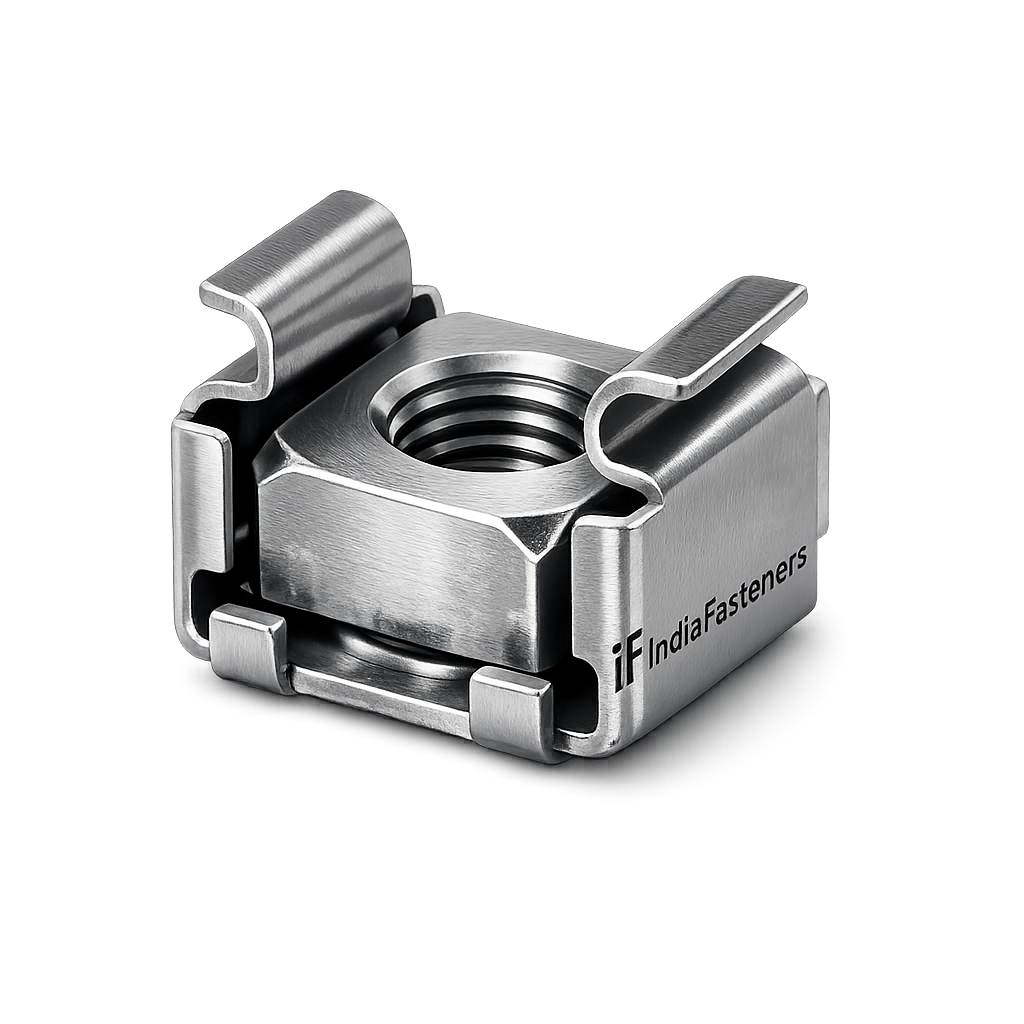
Cage nut
1. Regional Industry Context — Middle East Engineering Environment
Across the Gulf Cooperation Council (GCC), enclosure-based infrastructure represents a critical engineering backbone supporting energy production, digital infrastructure, transportation, and utilities operation. Mechanical fastening systems used inside equipment racks and electrical cabinets must comply with stringent operational expectations defined by EPC contractors, consultants, and asset operators.
Cage nuts form a fundamental fastening interface within these systems.
1.1 Infrastructure Expansion Driving Cage Nut Demand
Large-scale industrial growth in the Middle East has accelerated deployment of standardized rack-mounted equipment systems.
Primary sectors include:
- Oil & Gas control rooms
- Offshore platform instrumentation
- Electrical substations
- Industrial automation facilities
- Telecom shelters
- Hyperscale data centers
- Airport communication networks
- Metro and railway signaling cabinets
- Desalination plant automation systems
- Power generation monitoring systems
Modern facilities in Riyadh, Dubai, Abu Dhabi, and Doha increasingly rely on modular equipment mounting strategies designed for continuous operation and rapid maintenance access.
Rack-mounted architecture has become dominant because:
- Equipment density continues to increase.
- Maintenance shutdown windows are minimized.
- Modular replacement reduces operational downtime.
- Standardization improves global procurement compatibility.
Within these installations, cage nuts provide the removable threaded interface enabling controlled mounting of equipment to square-hole rack frames.
1.2 Oil & Gas Control Rooms
Oil & gas facilities across Saudi Arabia and the UAE deploy large numbers of:
- Distributed Control Systems (DCS)
- Safety Instrumented Systems (SIS)
- SCADA monitoring racks
- Communication servers
- Remote telemetry hardware
Control cabinets must allow rapid replacement of electronic modules without structural modification.
Cage nuts enable:
- Thread replacement without rack damage
- Field maintenance without welding or drilling
- Compatibility across multinational vendor equipment
Maintenance philosophy in GCC hydrocarbon facilities prioritizes removability and repeatability, making captive fastening solutions mandatory.
1.3 Substation Control Panels
Electrical substations supporting transmission and distribution networks contain:
- Protection relays
- Metering devices
- Communication routers
- Control processors
- Fiber optic termination systems
Square-hole mounting rails allow installers to position equipment at adjustable elevations.
Cage nuts provide:
- Adjustable threaded mounting locations
- Electrical isolation capability where required
- Standardized mechanical interfaces aligned with IEC enclosure practices
1.4 Telecom Infrastructure & Remote Shelters
Telecommunication operators across the Middle East deploy outdoor and semi-outdoor equipment shelters exposed to:
- High ambient temperatures
- Dust ingress
- Coastal humidity
- Salt-laden air
Rack-mounted hardware must be serviceable under limited access conditions.
Cage nuts support:
- Fast equipment upgrades
- Replacement without structural disassembly
- Standardized mounting across multiple OEM vendors
1.5 Hyperscale Data Center Expansion
Rapid hyperscale data center growth in the GCC region requires strict adherence to international rack mounting standards.
Typical characteristics include:
- High-density server racks
- Cable management systems
- Power distribution units
- Cooling monitoring systems
- Storage infrastructure
Data centers demand fastening systems capable of:
- Frequent installation cycles
- Accurate alignment tolerance
- Controlled torque application
- Reliable grounding continuity
Cage nuts fulfill these requirements through floating thread alignment and replaceable fastening interfaces.
1.6 Maintenance-Driven Engineering Philosophy
GCC facilities operate under maintenance frameworks emphasizing:
- Predictable servicing
- Modular replacement
- Minimal outage duration
- Reduced structural modification risk
Permanent threaded solutions such as weld nuts or tapped holes introduce limitations:
- Thread wear leads to rack replacement.
- Corrosion damages fixed threads.
- Repair operations increase downtime.
Cage nuts eliminate these risks by allowing thread renewal independent of rack structure.
1.7 Environmental Conditions Affecting Fastening Systems
Gulf environments impose mechanical and material challenges rarely encountered simultaneously elsewhere.
Thermal Expansion
Cabinet interior temperatures may exceed 60°C.
Metal expansion causes alignment variation between:
- Rack rails
- Equipment chassis
- Fastening points
Floating cage nut designs compensate for dimensional variation.
Vibration Exposure
Offshore platforms and power generation facilities introduce:
- Continuous low-frequency vibration
- Equipment start-stop cycles
- Mechanical resonance conditions
Spring-retained cage systems absorb minor movement while maintaining preload integrity.
Sand & Dust Contamination
Fine desert dust infiltrates enclosure systems, increasing risk of:
- Thread seizure
- Abrasive wear
- Surface corrosion initiation
Replaceable cage nuts allow periodic renewal without replacing racks.
Humidity & Marine Corrosion
Coastal GCC installations encounter aggressive corrosion environments.
Material selection becomes critical, particularly for:
- Stainless steel cage assemblies
- Protective plating systems
- Offshore-compatible hardware
2. Technical Definition of Cage Nut
A cage nut is a spring steel captive fastening assembly consisting of:
- A threaded nut element.
- A formed metal cage providing elastic retention.
- Spring wings allowing snap-fit installation into square mounting holes.
It functions as a removable threaded interface for equipment mounting.
2.1 Structural Composition
Threaded Nut
- Precision-machined or cold-formed nut.
- ISO metric threading.
- Load-bearing component.
Spring Steel Cage
- Formed from hardened spring steel.
- Provides retention force.
- Enables snap insertion and removal.
2.2 Functional Characteristics
Key mechanical functions:
- Snap-in installation into square holes.
- Floating thread alignment.
- Replaceable threaded interface.
- Load transfer into rack frame.
The cage retains the nut while allowing limited lateral movement.
This floating tolerance compensates for:
- Manufacturing tolerances
- Rack deformation
- Equipment misalignment
2.3 Square-Hole Rack System Compatibility
Square-hole mounting systems dominate EPC installations because they provide:
- Universal mounting compatibility
- Flexible equipment positioning
- Rapid installation without specialized machining
Cage nuts transform square holes into threaded mounting locations without permanent modification.
2.4 Difference Between Cage Nuts and Alternative Fasteners
| Fastener Type | Characteristics | Limitation |
|---|---|---|
| Cage Nut | Replaceable floating thread | Requires square hole |
| clip nut | Edge-mounted | Limited load capacity |
| Weld Nut | Permanent | Non-replaceable |
| Rivet Nut | Permanent installation | Requires tooling |
| Tapped Hole | Fixed thread | Wear leads to replacement |
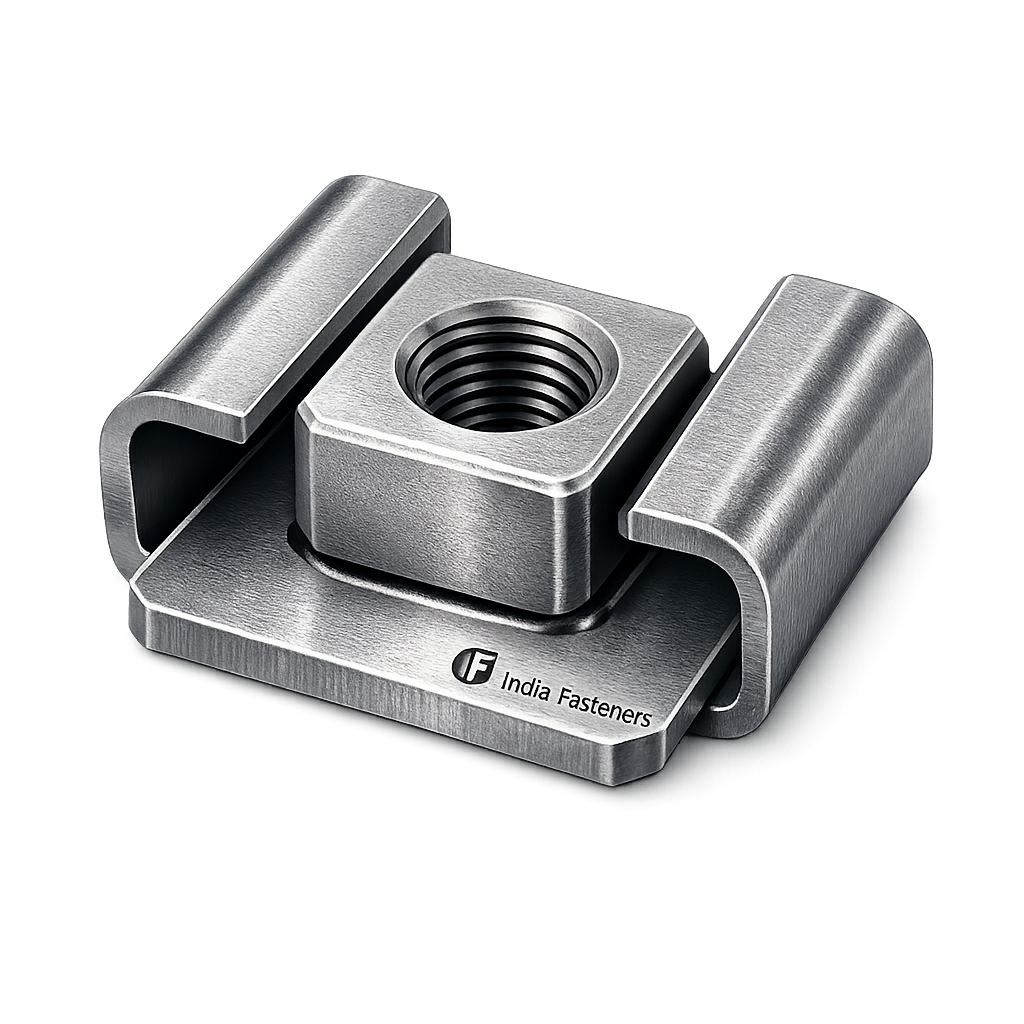
Cage nuts remain preferred in EPC-controlled infrastructure due to maintainability.
2.5 Applicable Standards & Practices
Cage nuts operate within established international mechanical frameworks:
- IEC enclosure mounting practices
- EIA-310 equipment rack standards
- ISO metric threading systems
- DIN fastening design principles
These standards ensure cross-manufacturer compatibility.
2.6 Common Thread Configurations
Industrial cage nuts supplied for GCC installations typically include:
- M5 — light instrumentation mounting
- M6 — standard server rack applications
- M8 — heavy equipment installations
2.7 Material Variants
Two primary categories exist:
Carbon Steel Cage Nuts
- Zinc plated
- Phosphate coated
- Suitable for indoor environments
Stainless Steel Cage Nuts
- SS304
- SS316
- Required for coastal or offshore environments
3. Mechanical Load Behaviour & Fastening Theory
Understanding cage nut performance requires evaluation of fastening mechanics rather than component geometry alone.
3.1 Bolt Preload Fundamentals
When a bolt is tightened into a cage nut, torque converts into axial tension.
Bolt Preload Equation 
Where:
 = preload force
 = applied torque
 = torque coefficient
 = nominal bolt diameter
Preload creates clamping force holding equipment against rack rails.
3.2 Clamping Force Generation
Effective clamping prevents:
- Equipment vibration
- Micro-movement
- Fatigue loading

Proper torque application is essential for maintaining system integrity.
3.3 Thread Engagement Theory
Load distribution occurs across multiple engaged threads.
Guidelines:
- Minimum engagement ≈ bolt diameter.
- Over-engagement provides minimal additional strength.
- Under-engagement risks stripping.
3.4 Shear vs Tensile Loading
Cage nuts experience combined loading modes.
Tensile Load
- Generated by bolt preload.
Shear Load
- Generated by equipment weight.
Shear load equation: 
Where:
 = applied force
 = shear area
Rack systems transfer load into frame members rather than the cage alone.
3.5 Thread Stress Area

Where:
 = nominal diameter
 = thread pitch
Used for evaluating allowable tensile stress.
3.6 Equipment Load Transfer
Load path:
Equipment → Bolt → Cage Nut → Rack Rail → Frame Structure
Proper design ensures:
- Cage provides retention.
- Nut carries thread load.
- Rack structure absorbs equipment weight.
3.7 Safety Factors for EPC Installations
Typical engineering safety factors:
- Static loads: ≥ 3
- Dynamic loads: ≥ 4
- Offshore vibration: ≥ 5
These factors account for operational uncertainty.
3.8 Vibration Resistance Principles
In GCC offshore and power environments:
- Continuous vibration reduces preload.
- Micro-slip initiates loosening.
Cage nut systems resist vibration through:
Floating alignment minimizing stress concentration
Elastic spring retention
Controlled preload
4. Applicable Materials — Engineering Selection for GCC Environmental Conditions
Material selection for cage nuts used in EPC projects across Saudi Arabia, UAE, Qatar, and wider GCC environments is governed primarily by environmental exposure, mechanical loading requirements, corrosion risk, and inspection compliance expectations.
Cage nut assemblies consist of two mechanically different components:
- Threaded Nut Element — load-bearing component
- Spring Cage Element — elastic retention mechanism
Each component requires controlled metallurgical properties to ensure long-term operational reliability.
4.1 Engineering Requirements Imposed by GCC Conditions
Gulf operating environments simultaneously introduce:
- High ambient temperature exposure
- Condensation inside sealed enclosures
- Marine chloride contamination
- Desert dust abrasion
- Cyclic vibration
- Long equipment service life expectations
Therefore, cage nut materials must satisfy:
- Adequate yield strength
- Stable elastic recovery
- Corrosion resistance
- Coating adhesion reliability
- Dimensional stability after heat treatment
4.2 Spring Steel Materials (C67 / C75)
Spring cages are typically manufactured from high-carbon spring steels equivalent to:
- C67
- C75
Mechanical Purpose
The cage must:
- Flex during insertion
- Provide retention force
- Recover elastically after deformation
- Maintain long-term spring performance
Engineering Characteristics
- High elastic limit
- Excellent fatigue resistance
- Repeatable snap-fit performance
- Resistance to plastic deformation
GCC Suitability
| Condition | Performance |
|---|---|
| Indoor control panels | Suitable |
| Data centers | Suitable |
| Offshore installations | Requires protective coating |
| Coastal humidity | Plating required |
| High temperature cabinets | Stable after tempering |
4.3 Carbon Steel Cage Nuts (Zinc Plated)
Carbon steel threaded nuts remain widely used in controlled indoor environments.
Typical grades comply with ISO mechanical property classifications.
Advantages
- High load capacity
- Cost-controlled large-scale EPC supply
- Stable thread performance
- Compatibility with standard metric bolts
Surface Protection
Common finishes include:
- Electro zinc plating
- Clear passivation
- Yellow chromate conversion coatings
GCC Application Mapping
- Electrical substations (indoor)
- SCADA cabinets
- Control room racks
- Telecom indoor equipment
Not recommended for direct marine exposure without additional protection.
4.4 Stainless Steel 304 Cage Nuts
SS304 cage nuts are selected where corrosion resistance becomes operationally significant.
Characteristics
- Austenitic stainless structure
- Good oxidation resistance
- Non-magnetic properties after forming
- Stable mechanical performance across temperature ranges
GCC Suitability
| Environment | Suitability |
|---|---|
| Data centers | High |
| Airports | High |
| Humid coastal installations | Acceptable |
| Desalination control rooms | Recommended |
| Offshore splash zones | Limited (upgrade to SS316 preferred) |
4.5 Stainless Steel 316 Cage Nuts
SS316 represents the preferred material for aggressive GCC environments.
Addition of molybdenum significantly improves resistance to chloride corrosion.
Engineering Advantages
- Superior pitting resistance
- Marine atmosphere compatibility
- Long-term corrosion stability
- Reduced maintenance replacement cycles
Typical Use Cases
- Offshore oil platforms
- Coastal substations
- Marine telecom towers
- Desalination facilities
- Outdoor infrastructure cabinets
4.6 Phosphate Coated Steel Variants
Black phosphate coatings provide controlled friction characteristics.
Used primarily where:
- Electrical grounding continuity is required
- Low reflectivity surfaces are preferred
- Indoor controlled environments exist
Not intended for humidity or marine exposure.
4.7 Nickel Plated Cage Nuts
Nickel plating provides enhanced corrosion resistance compared to standard zinc.
Applications include:
- High-humidity data halls
- Industrial automation cabinets
- HVAC control racks
Provides improved wear resistance during repeated installation cycles.
4.8 Electrical Grounding Considerations
Fastening systems inside electrical enclosures must consider grounding continuity.
Material selection affects:
- Electrical conductivity
- Contact resistance
- Surface oxide formation
Carbon steel zinc-plated systems commonly maintain reliable grounding interfaces when properly torqued.
Stainless steel systems may require grounding washers depending on installation design.
4.9 Applicable International Standards
Material and manufacturing practices align with international expectations used across EPC documentation review.
Mechanical Property Standards
- ISO 898 — mechanical properties of fasteners
- DIN fastening principles for threaded components
Stainless Material Reference
- ASTM A240 — stainless steel plate and sheet material reference framework
Environmental & Compliance Requirements
- RoHS compliance expectations
- IEC enclosure installation requirements
These frameworks support third-party inspection acceptance.
5. Material Comparison Table
| Material Grade | Yield Strength (MPa) | Hardness Range | Corrosion Resistance | Temperature Range | Typical GCC Application |
|---|---|---|---|---|---|
| Spring Steel C67/C75 | 900–1200 | 40–50 HRC | Requires coating | -40°C to 120°C | Cage retention spring |
| Carbon Steel Zinc Plated | 240–350 | 20–30 HRC | Moderate | -20°C to 120°C | Indoor racks |
| Carbon Steel Phosphate | 240–350 | 20–30 HRC | Low | -20°C to 100°C | Control cabinets |
| Stainless Steel 304 | 215 | 70–90 HRB | High | -196°C to 400°C | Data centers |
| Stainless Steel 316 | 205 | 70–95 HRB | Very High | -196°C to 425°C | Offshore / coastal |
| Nickel Plated Steel | 240–350 | 20–30 HRC | Improved | -20°C to 150°C | Humid facilities |
Values represent typical engineering ranges used for specification reference.
6. Heat Treatment & Metallurgical Control
Heat treatment defines the functional reliability of cage nut assemblies.
Improper metallurgical control directly affects:
- Retention strength
- Spring fatigue life
- Installation reliability
6.1 Spring Hardening Process
Spring cages undergo controlled hardening cycles:
- Austenitizing
- Rapid quenching
- Tempering
Objective:
Achieve high elastic recovery while preventing brittleness.
6.2 Quenching & Tempering
Quenching increases hardness but introduces internal stress.
Tempering:
- Reduces brittleness
- Improves fatigue resistance
- Stabilizes microstructure
Correct tempering temperature ensures long-term elastic performance.
6.3 Stress Relief Treatment
After forming operations, residual stresses remain within the cage geometry.
Stress relief treatment:
- Prevents distortion
- Maintains dimensional stability
- Improves cyclic durability
Essential for repeated installation cycles typical in data centers and telecom facilities.
6.4 Surface Hardening Control
Threaded nuts require controlled hardness levels.
Excess hardness leads to:
- Thread cracking
- Reduced toughness
Insufficient hardness leads to:
- Thread deformation
- Loss of preload
Manufacturing control balances hardness with ductility.
6.5 Hydrogen Embrittlement Prevention
Electroplated components risk hydrogen absorption.
Preventive measures include:
- Controlled plating chemistry
- Post-plating bake-out procedures
- Time-controlled thermal treatment
Bake-out reduces hydrogen content and prevents delayed fracture.
6.6 Plating Bake-Out Procedures
Typical bake-out parameters:
- 190°C–230°C temperature range
- Controlled duration after plating
- Batch monitoring records
Required for EPC inspection acceptance.
6.7 Long-Term Elastic Recovery
Proper metallurgical processing ensures:
- Cage wings return to original geometry after removal
- Retention force remains stable over lifecycle
- Snap-fit reliability during maintenance operations
7. Manufacturing Process Flow — Documentation Level Control
Industrial cage nut production follows controlled manufacturing discipline aligned with EPC documentation expectations.
7.1 Raw Material Inspection
Incoming materials verified through:
- Chemical composition analysis
- Mechanical property certification
- Supplier traceability records
Material Test Certificates reviewed before release.
7.2 Material Certification Verification
Verification includes:
- Heat number traceability
- Compliance with specified material grade
- Certification alignment with purchase order requirements
7.3 Progressive Stamping of Cage Body
Spring steel coils processed through progressive dies:
- Precision blanking
- Piercing operations
- Form initiation
Dimensional repeatability ensured through tool maintenance control.
7.4 Spring Forming Operations
Forming stages create:
- Retention wings
- Cage geometry
- Flexural spring characteristics
Elastic performance validated through forming tolerances.
7.5 Threaded Nut Manufacturing
Nut production methods include:
- Cold forming
- CNC machining (special variants)
- Controlled tapping
Threads manufactured according to ISO metric profiles.
7.6 Tapping Process Control
Thread tapping monitored using:
- Go/No-Go gauges
- Thread pitch verification
- Surface finish inspection
Ensures bolt compatibility during installation.
7.7 Surface Finishing & Plating
Finishing options:
- Zinc electroplating
- Nickel plating
- Phosphate coating
- Stainless passivation
Coating thickness controlled according to specification.
7.8 Heat Treatment Validation
Post-treatment inspection verifies:
- Hardness range
- Metallurgical structure
- Dimensional stability
Heat treatment batch records maintained for traceability.
7.9 Assembly of Cage & Nut System
Final assembly integrates:
- Threaded nut insertion
- Cage locking geometry
- Retention force verification
Assembly performed under controlled handling conditions to prevent deformation.
7.10 Functional Snap-Fit Testing
Each production batch evaluated for:
- Insertion force
- Retention strength
- Removal capability
- Elastic recovery
Testing simulates installation conditions encountered in EPC projects.
7.11 Dimensional Tolerance Control
Critical parameters monitored:
- Cage width
- Wing deflection tolerance
- Nut alignment position
- Thread concentricity
Maintains compatibility with standardized rack systems.
7.12 Spring Elasticity Verification
Elasticity testing confirms:
- Proper retention force
- Resistance to permanent deformation
- Long-term operational reliability
7.13 Final Inspection & Traceability Marking
Final QA process includes:
- Batch identification
- Inspection release documentation
- Packaging traceability labeling
Supports third-party inspection readiness.
8. Dimensional Reference Tables — Cage Nut Engineering Standards
Dimensional accuracy determines whether cage nuts function reliably within standardized rack systems used across EPC-controlled infrastructure.
Square-hole mounting rails installed in:
- data center server racks
- telecom cabinets
- electrical control panels
- SCADA enclosures
- substation automation racks
are manufactured according to internationally harmonized dimensional practices derived from EIA-310 and IEC enclosure frameworks.
Cage nuts must therefore maintain strict dimensional conformity to guarantee:
- correct snap-fit retention
- thread alignment accuracy
- predictable installation force
- repeatable equipment mounting
8.1 Standard Square Hole Geometry
Typical square-hole racks utilize:
- 9.5 mm × 9.5 mm square opening
- Controlled edge radius
- Sheet thickness compatibility range
The cage wings must flex during insertion and recover elastically to maintain retention force against the panel wall.
8.2 Cage Nut Dimensional Reference Table
| Thread Size | Square Hole Size | Cage Width | Cage Height | Nut Thickness | Panel Thickness Range | Compatible Rack Standard |
|---|---|---|---|---|---|---|
| M5 | 9.5 mm | 13.5 mm | 13.5 mm | 4.2 mm | 1.2–2.5 mm | EIA-310 |
| M6 | 9.5 mm | 13.5 mm | 13.5 mm | 5.0 mm | 1.2–2.5 mm | EIA-310 |
| M8 | 9.5 mm | 14.8 mm | 14.8 mm | 6.5 mm | 1.5–3.0 mm | Heavy Rack Systems |
Values represent engineering reference ranges used for EPC specification review.
8.3 Floating Nut Alignment Tolerance
Cage nuts intentionally allow lateral movement.
Typical float tolerance:
- ±0.5 mm to ±1.0 mm
Engineering benefit:
- compensates rack manufacturing tolerances
- allows equipment positioning without cross-threading
- reduces installation force during field mounting
8.4 Panel Thickness Compatibility
Retention springs are designed for defined panel thickness ranges.
Incorrect thickness may result in:
- insufficient retention force
- cage deformation
- vibration-induced disengagement
Engineering verification during procurement is recommended.
9. Load Capacity Table — Engineering Load Evaluation
Cage nuts are not independent load-bearing structures.
Load capacity depends on combined performance of:
- bolt strength
- nut thread engagement
- rack structural rigidity
- installation torque control
The cage primarily provides positioning and retention.
9.1 Allowable Load Reference Table
| Thread Size | Static Allowable Load (N) | Dynamic Load (N) | Recommended Equipment Weight per Fixing Point |
|---|---|---|---|
| M5 | 1,200 N | 600 N | Up to 12 kg |
| M6 | 2,000 N | 1,000 N | Up to 20 kg |
| M8 | 4,500 N | 2,200 N | Up to 45 kg |
Values assume:
- correct torque application
- ISO property class bolts
- safety factor ≥3
9.2 Static vs Dynamic Conditions
Static Loading
- stationary equipment
- indoor racks
- stable temperature environment
Dynamic Loading
- vibration environments
- transport-installed racks
- offshore platforms
- generator control cabinets
Dynamic conditions require higher safety margins.
9.3 EPC Safety Factor Philosophy
Typical consultant expectations:
| Installation Type | Minimum Safety Factor |
|---|---|
| Indoor data center | 3 |
| Telecom shelter | 4 |
| Power generation | 4 |
| Offshore installation | 5 |
Safety factor accounts for:
- torque variability
- environmental degradation
- maintenance handling loads
10. Recommended Bolt Torque Chart (MANDATORY)
Proper torque application is the most critical variable affecting cage nut performance.
Incorrect torque results in:
- insufficient clamping force
- thread stripping
- cage deformation
- vibration loosening
10.1 Torque vs Preload Relationship
Torque converts into bolt tension.
Approximate relationship: 
Where:
 = Torque
 = friction factor
 = preload force
 = bolt diameter
10.2 Recommended Torque Values
| Bolt Size | Dry Condition Torque | Lubricated Torque | Approx. Preload (%) |
|---|---|---|---|
| M5 | 4–5 Nm | 3–4 Nm | 70–75% |
| M6 | 8–10 Nm | 6–8 Nm | 70–75% |
| M8 | 20–25 Nm | 16–20 Nm | 70–75% |
Values represent typical rack mounting practice.
10.3 Lubricated vs Dry Installation
Dry Installation
- higher friction
- higher torque required
- greater torque scatter
Lubricated Installation
- improved preload accuracy
- reduced thread wear
- consistent clamping force
Consultant specifications may define installation condition.
10.4 Preload Percentage Explanation
Engineering best practice applies approximately 70–75% of bolt yield strength.
Benefits:
- prevents bolt relaxation
- maintains joint integrity
- avoids plastic deformation
11. Installation Engineering Guide (MANDATORY)
Correct installation directly affects long-term fastening reliability.
11.1 Cage Nut Insertion Method
- Align cage with square hole.
- Insert one wing into hole edge.
- Compress opposite wing.
- Snap cage fully into position.
- Verify cage sits flush against panel.
No hammering permitted.
11.2 Installation Tool Usage
Recommended tools:
- cage nut insertion pliers
- controlled compression tools
Benefits:
- reduces installer injury
- prevents spring over-deflection
- protects coating integrity
11.3 Hand Installation Safety
Manual installation acceptable when:
- gloves are worn
- controlled pressure applied
- cage alignment maintained
Sharp spring edges require caution.
11.4 Equipment Mounting Procedure
- Position equipment.
- Align mounting holes.
- Insert bolt manually.
- Confirm thread engagement.
- Apply torque using calibrated wrench.
Power drivers should use torque-limited settings.
11.5 Removal Procedure
- Unscrew bolt completely.
- Compress cage wing.
- Remove without twisting.
Avoid prying forces that deform spring geometry.
11.6 Alignment Verification
Before tightening:
- verify bolt enters perpendicular
- confirm free thread rotation
- prevent cross-threading
Floating nut design assists alignment but does not compensate for misinstallation.
11.7 Avoidance of Cage Deformation
Common field errors:
- overtightening
- angled insertion
- use of incorrect square hole size
- reuse after permanent deformation
Deformed cages must be replaced.
11.8 EPC Installation Best Practices
- Use calibrated torque tools.
- Maintain batch traceability.
- Replace damaged cage nuts immediately.
- Avoid mixing thread standards.
- Maintain spare stock at site.
12. Mechanical Property Table
| Property | Spring Steel Cage | Carbon Steel Nut | SS304 Nut | SS316 Nut |
|---|---|---|---|---|
| Yield Strength | 900–1200 MPa | 240–350 MPa | 215 MPa | 205 MPa |
| Hardness | 40–50 HRC | 20–30 HRC | 70–90 HRB | 70–95 HRB |
| Spring Retention Force | 80–120 N | — | — | — |
| Thread Strength | — | High | Medium | Medium |
| Cycle Life Expectancy | >100 Installations | >200 Installations | >200 Installations | >200 Installations |
Cycle life depends on installation discipline and environment.
13. Corrosion Resistance Comparison Table
Environmental durability is a primary concern in Gulf installations.
| Material Finish | Indoor Data Center | Coastal Humidity | Offshore Exposure | High Temperature Panels | Desert Dust Environment |
|---|---|---|---|---|---|
| Zinc Plated Steel | Suitable | Moderate | Limited | Suitable | Good |
| Black Phosphate | Suitable | Low | Not Recommended | Moderate | Moderate |
| Stainless Steel 304 | Excellent | Good | Moderate | Excellent | Excellent |
| Stainless Steel 316 | Excellent | Excellent | Recommended | Excellent | Excellent |
Material selection should follow project environmental classification.
14. Inspection & Quality Assurance
GCC EPC projects require fastening components to pass structured inspection regimes before approval.
14.1 Dimensional Inspection
Verification includes:
- cage width tolerance
- wing geometry
- square-hole engagement accuracy
- nut alignment position
Measured using calibrated gauges.
14.2 Thread Gauge Verification
Threads verified using:
- GO gauge
- NO-GO gauge
- pitch inspection tools
Ensures compatibility with ISO metric bolts supplied globally.
14.3 Spring Force Testing
Retention performance evaluated through:
- insertion force measurement
- retention pull-out testing
- elastic recovery verification
Confirms cage maintains secure positioning during vibration exposure.
14.4 Salt Spray Testing
Protective coatings validated using neutral salt spray testing.
Typical evaluation periods:
- 72 hours
- 120 hours
- 240 hours (project dependent)
Used to simulate coastal GCC environments.
14.5 Coating Thickness Verification
Measured through:
- magnetic thickness gauges
- coating adhesion testing
- visual inspection
Ensures corrosion protection consistency.
14.6 Functional Fit Testing
Production samples installed into reference rack panels to verify:
- snap-fit performance
- bolt engagement
- alignment tolerance
Replicates field installation conditions.
14.7 Batch Traceability
Each production lot documented through:
- material heat numbers
- manufacturing batch codes
- inspection release records
Supports EPC audit requirements.
14.8 Certification Documentation
Typical documentation provided for project supply:
- Inspection reports
- Dimensional verification records
- Coating test reports
- EN 10204 3.1 material certification
Documentation readiness aligns with third-party inspection expectations commonly applied by international inspection agencies.
15. Industries Served — Functional Role of Cage Nuts in Middle East Infrastructure
Cage nuts are not treated as general hardware within EPC-controlled projects.
They are classified as system-critical fastening interfaces supporting maintainability, equipment accessibility, and long operational lifecycle requirements.
Across GCC infrastructure, enclosure systems form the operational control layer of industrial facilities. The reliability of removable threaded mounting systems directly affects maintenance downtime, inspection accessibility, and equipment upgrade capability.
15.1 Data Centers
Data center expansion across Saudi Arabia, UAE, and Qatar has introduced large-scale deployment of standardized 19-inch rack systems.
Typical rack-mounted equipment includes:
- Server chassis
- Network switches
- Storage arrays
- Power distribution units (PDUs)
- Cooling monitoring systems
- Fiber patch panels
Cage Nut Function
- Converts square rack holes into threaded mounting points.
- Allows rapid equipment installation and removal.
- Prevents damage to rack structure during repeated maintenance.
- Maintains alignment tolerance for high-density installations.
Data centers experience frequent hardware replacement cycles. Fixed threaded systems would lead to cumulative thread damage. Cage nuts allow thread renewal without structural replacement.
15.2 Oil & Gas Control Systems
Oil and gas facilities across the Gulf utilize extensive cabinet-based automation systems:
- Distributed Control Systems (DCS)
- Emergency shutdown panels
- Gas detection systems
- Remote telemetry equipment
- Communication gateways
Engineering Requirement
Facilities operate continuously with limited shutdown opportunities.
Cage nuts enable:
- replacement of failed modules without cabinet modification
- safe installation inside energized control rooms
- standardized mounting across multi-vendor equipment
Offshore installations additionally benefit from spring-retained fastening that tolerates vibration exposure.
15.3 Power Substations
Transmission and distribution substations contain high-density control cabinets integrating protection and monitoring systems.
Mounted equipment typically includes:
- relay protection devices
- energy meters
- SCADA interfaces
- communication routers
- control processors
Cage Nut Role
- Provides adjustable mounting height.
- Supports modular panel configuration.
- Allows future retrofit upgrades without drilling or welding.
Square-hole rack architecture combined with cage nuts enables long service life exceeding typical equipment replacement cycles.
15.4 Telecom Infrastructure
Telecommunication networks across GCC countries deploy equipment inside:
- roadside telecom shelters
- rooftop cabinets
- fiber optic distribution nodes
- 5G base station control racks
Environmental challenges include:
- elevated temperatures
- dust infiltration
- humidity variation
Cage nuts provide removable fastening allowing field technicians to replace equipment quickly under restricted working conditions.
15.5 Airport Communication Systems
Airport infrastructure requires uninterrupted operation of:
- radar communication systems
- security networks
- baggage handling control units
- flight information systems
Maintenance must occur without operational disruption.
Cage nuts support:
- rapid module exchange
- standardized mounting for international equipment vendors
- predictable torque installation verified during inspections
15.6 Rail & Metro Signaling Cabinets
Rail signaling and metro automation depend on rack-mounted control electronics installed along extended transportation corridors.
Engineering priorities include:
- vibration resistance
- serviceability
- standardized spare parts
Cage nuts enable replacement of signaling hardware without structural modification to cabinets installed in tunnels or elevated track environments.
15.7 Desalination Plant Automation
Desalination facilities operate within aggressive marine atmospheres characterized by:
- salt aerosol exposure
- high humidity
- continuous equipment operation
Stainless steel cage nuts are typically specified to maintain long-term corrosion resistance.
Fastener reliability directly supports uninterrupted water production infrastructure.
15.8 Industrial Automation Facilities
Manufacturing plants and process industries rely on control cabinets housing:
- PLC systems
- drives and controllers
- network switches
- operator interface modules
Frequent equipment upgrades require removable threaded mounting systems.
Cage nuts provide flexibility while preserving enclosure integrity.
16. Export & GCC Supply Capability
Industrial fastening supply to Middle East EPC projects requires disciplined export practices extending beyond manufacturing capability.
India Fasteners supplies cage nuts under structured export controls aligned with project documentation requirements.
16.1 GCC Supply Regions
Supply capability includes project shipments to:
- Saudi Arabia
- United Arab Emirates (Dubai and Abu Dhabi)
- Qatar
- Oman
- Kuwait
- Bahrain
Logistics planning considers project schedules, inspection release timelines, and contractor installation sequencing.
16.2 Export Packaging Standards
Packaging is engineered to protect mechanical integrity and surface finish during extended transport.
Typical measures include:
- moisture-resistant packaging materials
- sealed polyethylene liners
- desiccant inclusion
- corrosion inhibitor protection where required
Packaging prevents condensation damage during marine shipment.
16.3 Batch Labeling Systems
Each shipment maintains traceability through:
- batch identification numbers
- production date coding
- material grade identification
- quantity verification labels
Traceability supports EPC documentation audits and site material control systems.
16.4 Material Test Documentation
Documentation commonly provided includes:
- material test certificates
- coating verification records
- dimensional inspection reports
- compliance declarations
Documentation format aligns with consultant and third-party inspection expectations.
16.5 Inspection Release Documentation
Before shipment, inspection release may include:
- visual inspection acceptance
- dimensional verification approval
- coating inspection confirmation
- packing verification records
Supports inspection agencies operating under EPC contracts.
16.6 Container Loading Discipline
Loading procedures prioritize:
- prevention of mechanical deformation
- segregation by material grade
- pallet stability during transport
- moisture ingress prevention
Improper stacking can deform spring cages; therefore loading configuration is controlled.
17. Procurement & Installation Engineering View
From an EPC procurement perspective, cage nuts are evaluated as engineered fastening components rather than commodity hardware.
17.1 Specification Review Requirements
Procurement engineers typically verify:
- thread size compatibility
- material grade compliance
- corrosion resistance suitability
- rack standard compatibility
- certification availability
Mismatch between cage nut specification and rack system leads to installation delays.
17.2 Thread Size Standardization
Projects normally standardize thread sizes to simplify maintenance.
Common practices:
- M6 standard for data center racks
- M5 for instrumentation panels
- M8 for heavy equipment mounting
Standardization reduces spare inventory complexity.
17.3 Rack Compatibility Verification
Prior to procurement, engineers confirm:
- square hole dimensions
- panel thickness range
- mounting rail standard
- equipment weight classification
Cage nuts must match rack geometry precisely.
17.4 Installation Torque Discipline
Consultant specifications frequently require:
- calibrated torque tools
- torque verification records
- installation supervision
Proper torque ensures consistent preload and vibration resistance.
17.5 Maintenance Replacement Strategy
Cage nuts are intentionally replaceable components.
Recommended practice:
- replace damaged or corroded cage nuts during maintenance shutdowns
- maintain spare stock at facility level
- inspect during equipment removal operations
Thread replacement without rack replacement significantly reduces lifecycle cost.
17.6 Spare Stock Planning for EPC Projects
Typical spare philosophy includes:
- 2–5% additional cage nuts supplied with equipment
- segregation by thread size
- controlled storage to avoid spring deformation
Spare availability supports rapid field maintenance.
17.7 Storage Under Gulf Climate Conditions
Storage recommendations:
- dry indoor environment
- protection from condensation
- avoidance of stacked compression loads
- separation of stainless and carbon steel materials
Proper storage preserves coating integrity and spring elasticity.
18. Custom Engineering Capabilities
Large EPC projects frequently require fastening solutions adapted to specific equipment or environmental requirements.
India Fasteners supports engineering customization aligned with project documentation practices.
18.1 Custom Thread Sizes
Available configurations may include:
- non-standard metric threads
- project-specific mounting requirements
- heavy-load cage nut variants
Customization supports OEM equipment integration.
18.2 High-Strength Cage Nut Variants
Applications involving elevated loads or vibration exposure may require:
- reinforced cage geometry
- higher-strength nut materials
- controlled hardness profiles
Used in power generation and offshore installations.
18.3 Stainless Steel Marine-Grade Supply
Marine and coastal projects may specify:
- SS316 cage assemblies
- enhanced passivation treatment
- corrosion-resistant packaging
Supports desalination and offshore oil & gas environments.
18.4 Anti-Vibration Cage Designs
Special configurations may incorporate:
- increased spring retention force
- vibration-resistant geometry
- controlled floating tolerance
Applied in transportation and rotating equipment environments.
18.5 Specialized Surface Coatings
Project-specific coatings may include:
- enhanced zinc systems
- nickel plating variants
- customized corrosion protection layers
Selected according to environmental classification.
18.6 Project-Specific Labeling & Installation Kits
Supply may include:
- pre-counted installation kits
- labeled project packages
- segregated thread size kits
- installation-ready packaging
Improves site installation efficiency.
18.7 OEM Packaging Capability
For system integrators and enclosure manufacturers:
- private labeling
- kitting with rack hardware
- controlled packaging formats
- integration into equipment supply chains
Supports export-oriented OEM manufacturing programs.
Engineering Conclusion
Cage nuts function as a critical interface between equipment and enclosure infrastructure throughout GCC industrial projects.
Their performance influences:
- equipment installation reliability
- maintenance efficiency
- vibration resistance
- corrosion durability
- long-term operational continuity
A compliant cage nut manufacturer must demonstrate understanding of:
- mechanical fastening theory
- rack mounting engineering
- environmental challenges specific to Gulf installations
- dimensional control requirements
- inspection and documentation discipline
- EPC procurement expectations
India Fasteners manufactures cage nuts within a documentation-driven framework intended to support technical evaluation, consultant review, and international project supply requirements.