
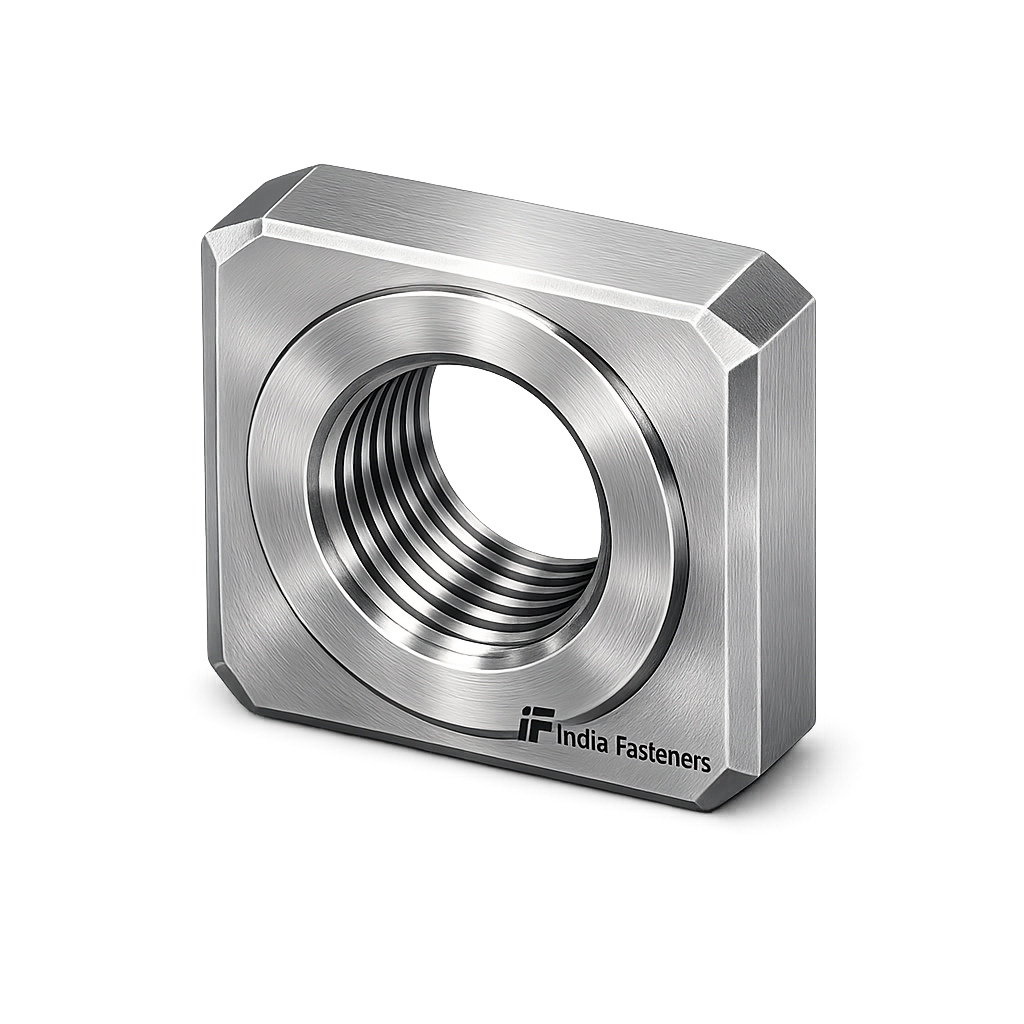
Panel Nut
1. Regional Industry Context — Middle East Industrial Environment
Electrical and instrumentation infrastructure across GCC industrial facilities relies heavily on removable enclosure access systems. Control panels, automation cabinets, and instrument housings require fastening solutions capable of maintaining structural integrity while allowing repeated maintenance access.
Panel nuts serve as a fundamental fastening interface between enclosure panels and threaded fasteners where base material thickness cannot support conventional threading.
Primary GCC Deployment Environments
Oil & Gas Control Panels — Onshore Saudi Fields
In Saudi upstream operations, electrical and instrumentation cabinets operate under:
- Continuous vibration from rotating equipment
- High ambient temperatures exceeding 55°C
- Fine desert dust infiltration
- Frequent maintenance inspection cycles
Panel nuts provide removable fastening without damaging thin sheet metal panel structures commonly used in junction boxes and PLC enclosures.
Key requirement:
- Repeatable fastening performance without thread degradation.
Offshore Platform Electrical Enclosures — UAE Offshore Installations
Offshore environments introduce combined mechanical and environmental stresses:
- Salt-laden marine atmosphere
- Structural vibration from platform motion
- Thermal cycling between day and night exposure
- High humidity corrosion acceleration
Panel nuts eliminate the need for welded attachment points, reducing coating damage and corrosion initiation zones.
Petrochemical Instrumentation Cabinets — Jubail & Ruwais Industrial Zones
Instrumentation panels in petrochemical plants require:
- Frequent calibration access
- Secure closure against hazardous area contamination
- Controlled grounding continuity
Panel nuts enable:
- Non-permanent fastening
- Service-friendly removal
- Consistent clamping force across repeated operations
LNG Automation Systems — Qatar Facilities
Liquefied natural gas facilities operate with strict reliability expectations:
- Continuous automation uptime
- Remote instrumentation monitoring
- Controlled enclosure sealing
Panel nuts support removable access panels without introducing welding distortion or heat-affected zones.
Power Generation Control Rooms
Power plant electrical infrastructure includes:
- MCC panels
- Relay cabinets
- Protection panels
- Distributed control systems
Maintenance accessibility remains mandatory under EPC operating philosophy. Panel nuts allow service technicians to remove panels without compromising enclosure geometry.
Desalination Plant Motor Control Centers
Desalination facilities experience:
- Chloride exposure
- Humidity saturation
- Temperature variation between indoor and outdoor installations
Stainless steel panel nuts are frequently specified for corrosion-resistant fastening retention.
Substation Panels & Switchgear Assemblies
Switchgear manufacturing demands:
- Dimensional repeatability
- Rapid assembly processes
- Non-destructive fastening installation
Panel nuts support standardized hole preparation while maintaining structural consistency.
District Cooling Automation Systems
District cooling plants utilize extensive control panels operating continuously in high humidity environments. Panel nuts ensure removable panel fastening without repeated tapping operations that weaken sheet metal.
Industrial HVAC Control Installations
HVAC automation panels installed across commercial and industrial infrastructure rely on captive fastening systems to prevent hardware loss during servicing.
Panel nuts reduce loose hardware risk inside energized enclosures.
Engineering Challenges in GCC Conditions
Vibration Environment
Rotating equipment, compressors, pumps, and turbines introduce cyclic loading into enclosure assemblies.
Fastening systems must resist:
- Loosening under dynamic excitation
- Micro-slip between panel interfaces
- Loss of preload over service life
Panel nut spring geometry contributes to vibration resistance.
Maintenance Access Requirements
GCC plants adopt preventive maintenance strategies requiring:
- Regular inspection
- Calibration access
- Component replacement
Panel nuts enable:
- Repeat installation cycles
- Controlled torque application
- Preservation of panel integrity.
Dust Ingress Risk — Desert Climate
Airborne silica dust causes:
- Thread contamination
- Surface abrasion
- Seal degradation
Panel nuts allow controlled clamping loads ensuring gasket compression remains consistent.
Coastal Corrosion Exposure
Facilities near Gulf coastlines experience accelerated corrosion mechanisms:
- Chloride-induced oxidation
- Galvanic interaction
- Coating degradation
Material selection of panel nuts directly influences enclosure service life.
Thermal Expansion Impact
Metal enclosures expand and contract under extreme temperature fluctuations.
Panel nut floating designs compensate for:
- Hole misalignment
- Thermal dimensional movement
- Assembly stress concentration.
Captive & Anti-Loss Fastening Requirement
EPC safety philosophy discourages loose hardware inside energized systems.
Panel nuts provide:
- Self-retaining positioning
- Captive fastening behavior
- Reduced foreign object risk.
2. Technical Definition of Panel Nut
A panel nut is a self-retaining threaded fastening component designed to provide a reusable threaded interface on thin sheet metal or enclosure panels where direct threading is impractical.
Functional Characteristics
- Installed onto sheet metal edge or prepared hole
- Provides internal thread engagement
- Transfers load across panel surface
- Enables removable screw fastening.
Primary Engineering Functions
- Creation of durable threads in thin materials
- Elimination of welding operations
- Prevention of sheet metal thread stripping
- Support for repeated maintenance cycles.
Typical Panel Nut Configurations
Clip-Type Panel Nut
- Slides over panel edge
- Provides rapid assembly
- Used in electrical cabinets and covers.
Spring Panel Nut
- Formed from spring steel
- Generates retention force through elastic deformation
- High vibration resistance.
U-Type Panel Nut
- U-shaped channel design
- Self-retaining during installation
- Common in panel doors and removable covers.
Snap-In Panel Nut
- Installed through punched hole
- Locking features prevent rotation
- Suitable for automated assembly lines.
Cage-Style Panel Nut
- Floating nut captured in cage structure
- Allows alignment tolerance
- Used where hole positioning varies.
Floating Panel Nut Designs
Permit limited lateral movement enabling:
- Assembly tolerance compensation
- Thermal expansion accommodation.
Thread Retention Principle
Panel nuts generate retention through:
- Elastic spring force
- Mechanical interlock
- Panel surface friction.
The screw load transfers through the nut body into the panel surface area rather than relying solely on thin sheet threads.
Load Transfer Mechanism
- Screw torque generates clamping force
- Nut distributes load across contact surface
- Panel experiences compressive bearing stress
- Retention geometry prevents displacement.
Prevention of Thread Stripping
Thin sheet metal cannot provide sufficient thread engagement length.
Panel nuts introduce full-depth threads independent of panel thickness, improving:
- Load capacity
- Service life
- Maintenance reliability.
Panel Nut vs Other Threaded Solutions
| Feature | Panel Nut | Welded Nut | Rivet Nut |
|---|---|---|---|
| Heat required | No | Yes | No |
| Coating damage | None | Possible | Minimal |
| Removable | Yes | Permanent | Semi-permanent |
| Installation speed | High | Low | Medium |
| Field replacement | Easy | Difficult | Limited |
3. Fastening Mechanics & Load Distribution
Clamping Force Generation
Torque applied to a screw converts rotational motion into axial preload.

Where:
- F = Clamping force
- T = Applied torque
- K = Torque coefficient
- d = Nominal diameter.
Proper preload ensures enclosure sealing and vibration resistance.
Thread Engagement Length
Minimum effective engagement: 
Panel nuts provide full engagement regardless of panel thickness.
Bearing Stress on Sheet Metal

Where:
 = bearing contact area between nut and panel.
Design objective:
Avoid localized yielding of enclosure sheet metal.
Pull-Through Resistance
Resistance depends on:
- Panel thickness
- Material strength
- Nut geometry
- Contact area.
Panel nuts increase resistance by enlarging load distribution footprint.
Torque–Tension Relationship
Improper torque application results in:
- Under-tightening → vibration loosening
- Over-tightening → panel deformation.
Controlled torque procedures are standard in GCC EPC electrical installation specifications.
Thread Shear Calculation

Where:
 = shear stress
 = engagement length.
Panel nuts maintain adequate shear capacity even in thin panels.
Vibration Resistance Behavior
Spring-based designs introduce:
- Elastic preload retention
- Micro-movement absorption
- Self-compensating clamping force.
Safety Factor Philosophy in GCC EPC Projects
Typical consultant expectations:
- Static load safety factor ≥ 2.5
- Vibration installations ≥ 3.0
- Critical enclosure applications ≥ 4.0.
Panel nut selection must align with project mechanical integrity philosophy.
4. Applicable Standards — Mapping to GCC Industrial Use
Panel nuts supplied for industrial enclosure fastening must align with internationally recognized mechanical, dimensional, and environmental standards acceptable to EPC contractors and third-party inspection agencies operating throughout Saudi Arabia, UAE, Qatar, Oman, Kuwait, and Bahrain.
The purpose of standards compliance is not regulatory formality; it ensures interchangeability, predictable mechanical behavior, and traceable manufacturing discipline suitable for long-term plant operation.
4.1 ISO Mechanical Property Framework
ISO 898 — Mechanical Properties of Fasteners
Although panel nuts are not always directly classified under conventional hex nut standards, ISO 898 mechanical property principles govern:
- Strength classification
- Load-bearing capability
- Material hardness limits
- Failure mode predictability
Relevance for GCC projects:
- Ensures compatibility with ISO-graded screws used in switchgear and control panels.
- Allows consultants to verify mechanical performance assumptions during technical evaluation.
4.2 DIN Fastening References
DIN 7965 / DIN 6796 Concepts (Functional Reference)
These standards influence spring retention design philosophy:
- Elastic preload retention
- Anti-loosening behavior
- Load distribution under cyclic vibration
Spring-type panel nuts follow equivalent engineering principles even where geometry differs.
Application relevance:
- MCC panels
- Instrument enclosures exposed to vibration
- Offshore electrical housings.
4.3 ISO 7089 — Washer Compatibility
Panel nut bearing surfaces must interface correctly with washers compliant with ISO 7089 dimensions.
Engineering significance:
- Prevents localized panel deformation
- Improves load distribution
- Maintains consistent torque-to-preload relationship.
4.4 ISO 4032 Thread Compatibility
Panel nut threads must match standard metric nut thread systems defined by ISO 4032.
Requirements include:
- Thread pitch accuracy
- Gauge verification
- Interchangeability with EPC-approved bolts.
GCC contractors expect full compatibility with standardized fastener inventories.
4.5 ASTM Sheet Metal Compatibility Standards
ASTM A1008 — Cold Rolled Steel Sheet
Panel nuts frequently interface with sheet materials manufactured to ASTM A1008.
Engineering considerations:
- Bearing strength of host panel
- Hole deformation resistance
- Retention force stability.
4.6 Stainless Steel Material Standards
ASTM A240 — Stainless Steel Plate & Sheet
Panel nuts produced from stainless grades must conform to chemical composition and corrosion resistance characteristics defined by ASTM A240.
Critical for:
- Coastal installations
- Desalination plants
- Offshore equipment rooms.
4.7 Environmental Compliance for Export
RoHS Compliance
Restriction of hazardous substances ensures:
- Electrical enclosure compatibility
- Acceptance within international projects.
REACH Compliance
Chemical traceability of coatings and materials supports European-origin equipment supplied into GCC projects.
4.8 GCC Consultant Expectations
Typical project documentation review verifies:
- Mechanical standard alignment
- Material origin traceability
- Coating compliance declarations
- Dimensional compatibility certification.
Panel nut suppliers must demonstrate readiness for third-party verification without requiring design justification during project execution.
5. Material Engineering — Panel Nut Material Selection
Material selection directly determines fastening reliability under GCC operating conditions.
Panel nuts must balance:
- Strength
- Elastic recovery
- Corrosion resistance
- Manufacturability
- Electrical compatibility.
Primary Material Categories
Carbon Steel
Characteristics:
- Good forming capability
- Cost-effective manufacturing
- Suitable for indoor electrical panels.
Typical Uses:
- Indoor switchboards
- HVAC control cabinets
- Dry industrial environments.
Limitations:
- Requires protective coating
- Not suitable for marine exposure without advanced plating.
Spring Steel
Characteristics:
- High elastic recovery
- Superior retention force
- Excellent vibration resistance.
Engineering Benefit:
Spring action maintains clamping force despite thermal expansion and operational vibration.
Common Use:
- Oil & gas control panels
- Offshore electrical enclosures
- Rotating equipment cabinets.
Stainless Steel 304
Properties:
- Corrosion-resistant
- Non-magnetic (annealed condition)
- Suitable for humid environments.
GCC Applications:
- Indoor petrochemical facilities
- Instrument cabinets
- HVAC automation panels.
Stainless Steel 316
Enhanced Characteristics:
- Molybdenum addition improves chloride resistance
- Superior marine durability.
Primary Applications:
- Offshore platforms
- Desalination plants
- Coastal substations.
Phosphor Bronze (Special Electrical Use)
Advantages:
- Electrical conductivity
- Corrosion resistance
- Anti-galling characteristics.
Used where grounding continuity or electrical compatibility is required.
Hardened Alloy Spring Steel
Used for high-retention applications demanding:
- Maximum spring force
- High fatigue endurance
- Long service life under vibration.
Material Comparison Table (MANDATORY)
| Material Grade | Yield Strength (MPa) | Hardness Range | Corrosion Resistance | Temperature Capability | Typical GCC Application |
|---|---|---|---|---|---|
| Carbon Steel | 250–350 | HRB 70–90 | Low (coated) | -20°C to 120°C | Indoor control panels |
| Spring Steel | 800–1200 | HRC 38–48 | Moderate (coated) | -40°C to 200°C | Vibrating equipment panels |
| Stainless Steel 304 | 215–505 | HRB 80–95 | High | -200°C to 400°C | Instrument cabinets |
| Stainless Steel 316 | 290–580 | HRB 80–95 | Very High | -200°C to 450°C | Offshore & desalination |
| Phosphor Bronze | 200–450 | HRB 60–85 | High | -100°C to 260°C | Electrical grounding panels |
| Alloy Spring Steel | 1000–1400 | HRC 42–52 | Moderate (coated) | -40°C to 250°C | Heavy vibration installations |
6. Heat Treatment & Metallurgical Control
Heat treatment determines whether a panel nut performs as a reliable retention device or fails prematurely under vibration.
6.1 Spring Tempering Process
Spring panel nuts require controlled tempering to achieve:
- Elastic deformation capability
- Shape recovery after installation
- Stable preload retention.
Process Steps:
- Austenitizing
- Rapid quenching
- Controlled tempering.
Incorrect tempering leads to brittle fracture or loss of retention force.
6.2 Hardening & Tempering
Purpose:
- Increase tensile strength
- Improve fatigue resistance
- Maintain controlled ductility.
Hardness must remain within specified limits to prevent cracking during installation.
6.3 Stress Relieving
Cold forming introduces residual stresses.
Stress relieving:
- Prevents distortion
- Stabilizes geometry
- Improves dimensional repeatability.
6.4 Cold Forming Metallurgy
Panel nuts are typically manufactured through progressive cold forming operations.
Metallurgical effects:
- Grain flow alignment
- Work hardening increase
- Improved mechanical strength without excessive material thickness.
6.5 Work Hardening Characteristics
Controlled work hardening enhances:
- Spring retention force
- Thread strength
- Fatigue life.
Excessive work hardening must be avoided to prevent brittleness.
6.6 Hydrogen Embrittlement Prevention
Electroplating processes introduce hydrogen into high-strength steels.
Preventive measures include:
- Post-plating baking
- Controlled plating chemistry
- Strength limitation monitoring.
Critical for:
- Spring steel panel nuts
- High-strength alloy grades.
6.7 Coating Adhesion Control
Surface preparation determines coating performance.
Required practices:
- Degreasing
- Acid pickling control
- Surface activation
- Uniform plating thickness.
Poor adhesion leads to coating flaking and corrosion initiation.
Metallurgical Importance for Vibration Resistance
Panel nut performance relies on elastic energy storage.
Proper metallurgy ensures:
- Sustained preload
- Resistance to cyclic loosening
- Long-term dimensional stability.
7. Manufacturing Process Flow — EPC Documentation Level
Manufacturing discipline must support full traceability and repeatability suitable for international EPC supply chains.
7.1 Raw Material Coil Traceability
Incoming material verification includes:
- Heat number identification
- Mill test certificate validation
- Chemical composition confirmation.
Traceability remains linked throughout production batches.
7.2 Mechanical Property Verification
Testing confirms:
- Yield strength
- Hardness limits
- Material consistency.
Performed prior to forming operations.
7.3 Stamping / Progressive Die Forming
Panel nuts are produced using precision progressive dies.
Engineering requirements:
- Controlled burr formation
- Accurate geometry
- Repeatable spring characteristics.
Tooling accuracy directly affects retention performance.
7.4 Thread Forming or Tapping
Threads may be:
- Rolled
- Formed
- Machine tapped.
Thread verification ensures:
- Gauge conformity
- Load-bearing reliability
- Interchangeability with standard fasteners.
7.5 Spring Geometry Forming
Critical operation defining:
- Retention force
- Clip tension
- Installation behavior.
Forming tolerances must remain tightly controlled.
7.6 Heat Treatment
Executed under monitored furnace conditions:
- Temperature uniformity control
- Atmosphere regulation
- Batch identification.
7.7 Surface Finishing Preparation
Includes:
- Cleaning
- Scale removal
- Surface activation.
Essential for coating durability.
7.8 Plating / Coating Application
Common finishes:
- Zinc plating
- Zinc-Nickel coating
- Phosphate coating
- Passivation for stainless steel.
Coating selection depends on GCC environmental exposure classification.
7.9 Dimensional Inspection
Inspection verifies:
- Thread accuracy
- Clip width
- Engagement geometry
- Hole alignment tolerance.
Measured using calibrated gauges.
7.10 Functional Fit Testing
Simulated installation testing confirms:
- Retention force
- Torque behavior
- Assembly compatibility.
7.11 Batch Traceability Marking
Each production lot maintains:
- Material source record
- Process parameters
- Inspection documentation.
Traceability supports EPC documentation packages.
Tolerance Discipline & Repeatability
For GCC projects, fastening components must demonstrate:
- Interchangeability across shipments
- Dimensional consistency
- Repeatable mechanical behavior.
Manufacturing variability directly impacts enclosure alignment, sealing, and long-term serviceability.
8. Dimensional Reference Tables — Panel Nut Engineering Data
Panel nuts used in industrial enclosure systems must comply with standardized dimensional relationships to ensure compatibility with global electrical panel manufacturing practices.
The following dimensional references represent engineering guidance commonly applied in GCC EPC electrical installations.
Dimensions must always be verified against project drawings, enclosure thickness, and screw specification.
8.1 Design Parameters Affecting Panel Nut Selection
Selection is governed by:
- Panel thickness
- Thread size
- Installation access condition
- Required retention force
- Maintenance frequency
- Environmental exposure classification.
Incorrect selection typically leads to:
- Panel deformation
- Thread misalignment
- Reduced preload retention
- Assembly delays during commissioning.
8.2 Standard Panel Nut Dimensional Reference Table
| Panel Thickness Range (mm) | Thread Size | Clip Width (mm) | Grip Range (mm) | Hole Size Requirement (mm) | Nut Height (mm) | Typical Retention Force (N) |
|---|---|---|---|---|---|---|
| 0.8 – 1.2 | M3 | 7.0 | 0.8–1.2 | 4.2 | 3.5 | 40–60 |
| 1.0 – 1.6 | M4 | 8.5 | 1.0–1.6 | 5.2 | 4.0 | 60–90 |
| 1.2 – 2.0 | M5 | 10.0 | 1.2–2.0 | 6.2 | 5.0 | 90–130 |
| 1.5 – 2.5 | M6 | 12.0 | 1.5–2.5 | 7.2 | 6.0 | 130–200 |
| 2.0 – 3.0 | M8 | 15.0 | 2.0–3.0 | 9.0 | 7.5 | 220–320 |
| 2.5 – 4.0 | M10 | 18.0 | 2.5–4.0 | 11.0 | 9.0 | 350–480 |
| 3.0 – 5.0 | M12 | 22.0 | 3.0–5.0 | 13.0 | 11.0 | 500–700 |
8.3 UNC Equivalent Reference
| Metric Thread | UNC Equivalent |
|---|---|
| M3 | #4-40 |
| M4 | #8-32 |
| M5 | #10-24 |
| M6 | 1/4″-20 |
| M8 | 5/16″-18 |
| M10 | 3/8″-16 |
| M12 | 1/2″-13 |
GCC EPC contractors frequently request dual metric–imperial compatibility due to mixed equipment origin.
8.4 Grip Range Engineering Principle
The grip range represents allowable panel thickness variation where the panel nut maintains adequate spring retention force.
Selection rule: 
- Under-grip → loose retention
- Over-grip → installation deformation.
9. Torque & Clamping Force Table (MANDATORY)
Proper torque application remains one of the most critical installation parameters in sheet metal fastening systems.
Panel nuts are designed to provide thread strength; however, the limiting component often becomes the panel material itself.
Recommended Torque Values
| Thread Size | Recommended Torque (Nm) | Proof Load (kN) | Approx. Clamping Force (N) | Lubricated Torque Reduction |
|---|---|---|---|---|
| M3 | 0.8 – 1.0 | 1.2 | 900 | -20% |
| M4 | 2.0 – 2.5 | 2.5 | 1800 | -20% |
| M5 | 4.0 – 5.0 | 4.0 | 3200 | -20% |
| M6 | 8.0 – 10.0 | 6.5 | 5200 | -20% |
| M8 | 18 – 22 | 12 | 9500 | -15% |
| M10 | 35 – 42 | 20 | 16000 | -15% |
| M12 | 60 – 75 | 30 | 25000 | -15% |
Lubricated vs Dry Torque
Lubricated threads reduce friction coefficient.
Result:
- Higher preload for same torque
- Increased risk of over-tightening.
Installation procedures must specify condition clearly.
Over-Torque Risks in Sheet Metal Installations
Common failure modes:
- Panel yielding
- Clip deformation
- Thread stripping
- Loss of spring retention.
EPC electrical installation manuals typically require calibrated torque tools.
10. Load Capacity & Pull-Out Resistance Guide
Panel nut performance depends on interaction between nut geometry and panel mechanical properties.
10.1 Pull-Through Resistance Formula

Where:
 = effective bearing diameter
 = panel thickness
 = panel yield strength.
10.2 Thread Stripping Limit
Thread failure occurs when: 
Panel nuts increase allowable load by providing full thread depth independent of panel thickness.
10.3 Minimum Panel Thickness Guidance
| Thread Size | Minimum Panel Thickness |
|---|---|
| M3 | 0.8 mm |
| M4 | 1.0 mm |
| M5 | 1.2 mm |
| M6 | 1.5 mm |
| M8 | 2.0 mm |
| M10 | 2.5 mm |
10.4 Vibration Load Considerations
Dynamic loading reduces effective preload over time.
Engineering mitigation:
- Spring panel nut designs
- Use of washers
- Controlled torque application.
10.5 Sample Engineering Calculation
Application: MCC panel door fastening
Panel Material: ASTM A1008 steel
Panel Thickness: 1.5 mm
Thread Size: M6
Assume:
- Yield strength = 210 MPa
- Bearing diameter = 10 mm.


Recommended working load (Safety Factor = 3): 
This satisfies typical electrical enclosure fastening requirements.
11. Mechanical Property Table
| Property | Carbon Steel | Spring Steel | SS304 | SS316 |
|---|---|---|---|---|
| Yield Strength (MPa) | 250–350 | 800–1200 | 215–505 | 290–580 |
| Hardness | HRB 70–90 | HRC 38–48 | HRB 80–95 | HRB 80–95 |
| Spring Force | Moderate | High | Low | Low |
| Elastic Recovery | Medium | Excellent | Moderate | Moderate |
| Fatigue Resistance | Medium | Excellent | High | High |
Spring steel remains preferred for vibration-sensitive GCC installations.
12. Corrosion Resistance Comparison Table
Environmental durability is a primary design consideration for Middle East infrastructure.
| Finish / Material | Desert Dust Exposure | Marine Atmosphere | Chemical Plant Environment | High Humidity Gulf Climate | Outdoor Electrical Use |
|---|---|---|---|---|---|
| Zinc Plated Steel | Moderate | Low | Low | Moderate | Limited |
| Zn-Ni Coated Steel | High | Moderate | Moderate | High | Suitable |
| Stainless Steel 304 | High | Moderate | High | High | Recommended |
| Stainless Steel 316 | Very High | Excellent | Excellent | Excellent | Preferred |
| Phosphate Coated Spring Steel | Moderate | Low | Moderate | Moderate | Indoor Only |
Coating Selection Logic
- Inland desert facilities → Zinc or Zn-Ni acceptable
- Coastal GCC facilities → Stainless steel preferred
- Desalination plants → SS316 recommended.
13. Inspection & Quality Assurance — EPC Compliance Perspective
Quality assurance for panel nuts extends beyond dimensional accuracy. GCC project approval requires demonstrable manufacturing control supported by inspection documentation.
13.1 Dimensional Inspection
Verification includes:
- Thread concentricity
- Clip geometry
- Grip range conformity
- Nut alignment.
Performed using calibrated gauges traceable to international standards.
13.2 Thread Gauge Verification
Inspection using:
- GO gauge
- NO-GO gauge.
Ensures compatibility with ISO and UNC fasteners supplied by EPC contractors.
13.3 Salt Spray Testing
Coated panel nuts undergo corrosion testing according to ASTM B117 principles.
Typical performance expectations:
- Zinc plating: 72–120 hours
- Zn-Ni coating: 500+ hours
- Stainless steel: no red rust.
13.4 Coating Thickness Testing
Measurement methods:
- Magnetic thickness gauge
- XRF verification.
Uniform coating prevents localized corrosion.
13.5 Spring Force Verification
Critical for retention performance.
Testing confirms:
- Minimum insertion force
- Retention force after cycling
- Elastic recovery capability.
13.6 Torque Testing
Confirms:
- Thread integrity
- Proof load capacity
- Absence of thread galling.
13.7 Batch Traceability
Each batch maintains traceability linking:
- Raw material heat number
- Production date
- Heat treatment cycle
- Inspection results.
Traceability documentation supports EPC audit requirements.
13.8 EN 10204 3.1 Certification
Typical documentation package includes:
- Material chemical composition
- Mechanical properties
- Heat treatment confirmation
- Inspection approval.
Required for project submittals across GCC oil & gas and power sectors.
13.9 Third-Party Inspection Readiness
Inspection agencies verify:
- Dimensional conformity
- Manufacturing control procedures
- Testing records
- Traceability continuity.
Panel nut supply must remain inspection-ready without production disruption.
GCC Consultant Documentation Expectation
During technical evaluation, consultants typically confirm:
- Engineering data availability
- Installation predictability
- Environmental suitability
- Long-term maintainability.
Panel nuts supplied under controlled manufacturing and documented quality systems meet enclosure fastening expectations for EPC qualification review.
14. Industries Served — Middle East Industrial Deployment
Panel nuts are integrated into enclosure and panel mounting systems across multiple industrial sectors throughout the GCC region. Their role extends beyond simple fastening; they support maintainability philosophy, operational reliability, and standardized equipment servicing practices required by EPC contractors and plant operators.
14.1 Oil & Gas Automation Systems
Automation infrastructure within upstream and downstream oil & gas facilities includes:
- Remote terminal units (RTUs)
- PLC control cabinets
- Analyzer shelters
- Junction boxes
- Field instrumentation enclosures
Operational Conditions:
- Continuous vibration from compressors and pumps
- Sand and dust exposure
- High ambient temperature cycles
- Hazardous area maintenance protocols
Panel Nut Function:
- Enables removable access covers without welded threads
- Maintains fastening integrity during repeated inspection cycles
- Prevents thread wear in thin enclosure materials.
Engineering Requirement:
Fasteners must maintain preload stability despite vibration and thermal movement.
14.2 Refinery Instrumentation Panels
Refinery environments impose combined mechanical and chemical exposure.
Typical installations include:
- Process control panels
- Analyzer cabinets
- DCS enclosures
- Local control stations
Panel nuts support:
- Frequent calibration access
- Non-destructive panel removal
- Consistent enclosure sealing pressure.
Design advantage:
No heat input during installation, preserving corrosion-resistant coatings applied to refinery enclosures.
14.3 Petrochemical Control Cabinets
Petrochemical facilities demand:
- High equipment uptime
- Rapid maintenance turnaround
- Component interchangeability
Panel nuts enable standardized assembly across large cabinet manufacturing programs.
Benefits include:
- Reduced fabrication time
- Uniform fastening geometry
- Replacement compatibility during plant expansion projects.
14.4 LNG Control Systems
LNG facilities operate under strict operational reliability expectations.
Panel nuts contribute to:
- Secure mounting of removable inspection panels
- Controlled torque application
- Protection of gasket compression systems.
Floating panel nut designs assist with alignment tolerance in large enclosure doors subjected to temperature variation.
14.5 Power Plant MCC Panels
Motor Control Centers contain multiple removable compartments requiring reliable fastening.
Panel nuts allow:
- Modular panel construction
- Non-permanent fastening
- Fast replacement of feeder units.
Installation consistency improves commissioning efficiency during EPC handover.
14.6 Desalination Electrical Enclosures
Desalination facilities present one of the most aggressive corrosion environments in the GCC.
Exposure includes:
- Chloride-rich atmosphere
- Continuous humidity
- Salt mist accumulation.
Material selection emphasis:
- Stainless Steel 316 panel nuts
- Passivated surfaces
- Corrosion-resistant coatings.
Panel nuts prevent coating damage associated with welding operations.
14.7 Rail & Metro Infrastructure Panels
Urban rail projects across GCC countries require:
- Long lifecycle components
- Low maintenance fastening
- Vibration-resistant enclosure retention.
Panel nuts maintain fastening reliability within signaling cabinets, communication panels, and control enclosures subjected to dynamic vibration.
14.8 Telecommunication Cabinets
Outdoor telecom infrastructure operates under:
- Solar heat exposure
- Sandstorms
- Moisture condensation.
Panel nuts enable sealed enclosure access while allowing maintenance technicians rapid removal and reinstallation without thread degradation.
14.9 Renewable Energy Inverter Panels
Solar and renewable installations increasingly utilize standardized inverter and monitoring cabinets.
Panel nut requirements include:
- Outdoor durability
- Maintenance accessibility
- Compatibility with aluminum and coated steel enclosures.
Spring panel nut variants compensate for thermal expansion common in exposed solar installations.
15. Export & GCC Supply Capability
India Fasteners operates as a manufacturing exporter supporting project-based procurement models common in Middle East EPC contracting.
15.1 GCC Export Regions Supported
Supply capability extends across:
- Saudi Arabia
- United Arab Emirates (Dubai & Abu Dhabi)
- Qatar
- Oman
- Kuwait
- Bahrain
Export supply aligns with project-driven procurement schedules rather than retail distribution.
15.2 Export Packaging Standards
Panel nuts supplied for international shipment follow industrial packing discipline:
- Moisture-resistant packaging
- Anti-corrosion VCI protection
- Batch-labeled cartons
- Palletized export loads.
Packaging objective:
Preserve coating integrity during long sea transit and storage at project warehouses.
15.3 Corrosion-Protected Packing
Applied methods include:
- VCI bags
- Desiccant inclusion
- Sealed polyethylene liners
- Humidity-controlled packing.
Particularly critical for zinc-plated or spring steel components.
15.4 Project Documentation Pack
Typical export documentation includes:
- Commercial invoice
- Packing list
- Material test certificates
- Dimensional compliance confirmation
- Surface coating declaration
- Certificate of conformity.
Documentation prepared to support EPC material submittal processes.
15.5 Material Test Certificates
Supply packages commonly include:
- Chemical composition verification
- Mechanical property confirmation
- Heat treatment record.
Documentation aligned with EN 10204 3.1 expectations.
15.6 Inspection Release Notes
Where project requirements apply, inspection readiness supports:
- Pre-shipment inspection
- Random sampling verification
- Lot approval prior to dispatch.
Inspection agencies operate without disruption to manufacturing workflow.
15.7 Traceability Records
Each shipment maintains traceability linking:
- Raw material heat number
- Production batch
- Inspection record
- Delivery documentation.
Traceability continuity is essential for EPC audit compliance.
15.8 Container Loading Discipline
Export handling practices include:
- Load segregation by batch
- Damage prevention stacking
- Shock protection during handling
- Label visibility for warehouse identification.
Objective: eliminate sorting delays at project logistics yards.
15.9 Bulk EPC Supply Capability
Manufacturing programs accommodate:
- Large-volume project orders
- Scheduled delivery releases
- Long-term framework agreements
- Repeat batch consistency.
Panel nuts supplied remain dimensionally interchangeable across multiple shipments.
16. Procurement & Installation Engineering View
Panel nut performance depends equally on product design and installation discipline.
16.1 Panel Preparation Requirements
Recommended practices:
- Deburred holes
- Correct hole diameter tolerance
- Surface coating integrity maintained
- No sharp edge deformation.
Improper hole preparation reduces retention force.
16.2 Hole Sizing Tolerance
Engineering guideline: Hole Diameter=:\text{Hole Diameter} = \text{Nominal Size} + (0.1 \text{ to } 0.2)\,\text{mm}
Excess clearance may cause rotation or displacement during tightening.
16.3 Installation Sequence
Typical procedure:
- Verify panel thickness compatibility
- Insert panel nut onto edge or hole
- Confirm alignment with screw axis
- Install screw manually to avoid cross-threading
- Apply calibrated torque.
16.4 Alignment Verification
Misalignment produces:
- Uneven load distribution
- Reduced thread life
- Panel distortion.
Floating panel nut designs assist with alignment compensation.
16.5 Torque Application Discipline
Installation requirements:
- Use calibrated torque tools
- Avoid impact drivers
- Apply torque gradually
- Verify seating condition.
Electrical enclosure standards discourage uncontrolled tightening methods.
16.6 Anti-Loosening Practices
Recommended methods:
- Spring panel nut selection
- Proper preload generation
- Use of flat washers where specified
- Avoid excessive lubrication unless specified.
Spring retention provides inherent vibration resistance.
16.7 Maintenance Removal Cycles
Panel nuts are designed for repeated access operations.
Expected performance:
- Multiple installation cycles without thread degradation
- Stable retention force after servicing.
Inspection recommendation:
Replace panel nut if spring tension visibly reduces.
16.8 Replacement Compatibility
EPC operators require interchangeability during maintenance shutdowns.
Panel nuts must maintain:
- Standard thread compatibility
- Consistent grip geometry
- Dimensional repeatability across production batches.
Field Engineer Checklist
Before Installation
- Confirm thread size
- Verify panel thickness
- Inspect coating condition
- Confirm grip range.
During Installation
- Check seating alignment
- Apply specified torque
- Avoid over-tightening.
After Installation
- Verify panel closure
- Confirm gasket compression
- Check absence of panel distortion.
17. Custom Engineering Capabilities
Industrial projects frequently require fastening solutions beyond catalogue configurations.
India Fasteners supports engineering customization aligned with EPC project specifications.
17.1 Non-Standard Thread Sizes
Capability includes:
- Metric fine threads
- UNC/UNF variants
- Project-specific thread forms.
Supports mixed-origin equipment integration.
17.2 High-Retention Spring Designs
Custom spring geometries developed for:
- High vibration equipment
- Mobile installations
- Offshore structural motion environments.
17.3 Floating Panel Nut Solutions
Designed to accommodate:
- Assembly tolerance variation
- Large enclosure panel alignment
- Thermal expansion effects.
17.4 Special Coatings for Marine GCC Environments
Available options include:
- Zinc-Nickel coatings
- Enhanced passivation systems
- Marine-grade stainless supply.
Coating selection aligned with environmental classification.
17.5 Stainless & NACE-Compatible Supply
Material programs may be aligned with corrosion-control requirements where specified by project documentation.
Used in:
- Sour gas facilities
- Coastal installations
- High humidity environments.
17.6 Project-Specific Marking
Identification options:
- Batch codes
- Project reference numbers
- Traceability markings.
Supports large EPC inventory management systems.
17.7 Customized Grip Ranges
Panel nuts engineered to match:
- Non-standard enclosure thickness
- Multi-layer panels
- Insulated panel assemblies.
Technical Conclusion — EPC Evaluation Perspective
Panel nuts used within GCC industrial infrastructure must satisfy requirements extending beyond basic fastening functionality. Evaluation criteria applied by consultants and EPC contractors typically consider:
- Mechanical reliability under vibration
- Compatibility with thin enclosure materials
- Corrosion performance in desert and marine climates
- Dimensional consistency across project supply cycles
- Installation predictability for field engineers
- Traceable manufacturing discipline
- Inspection and documentation readiness.
A manufacturer capable of delivering panel nuts under controlled material selection, documented manufacturing processes, standardized inspection practices, and export-ready supply structure demonstrates technical suitability for enclosure fastening applications across Middle East oil & gas, power, petrochemical, and infrastructure projects.