
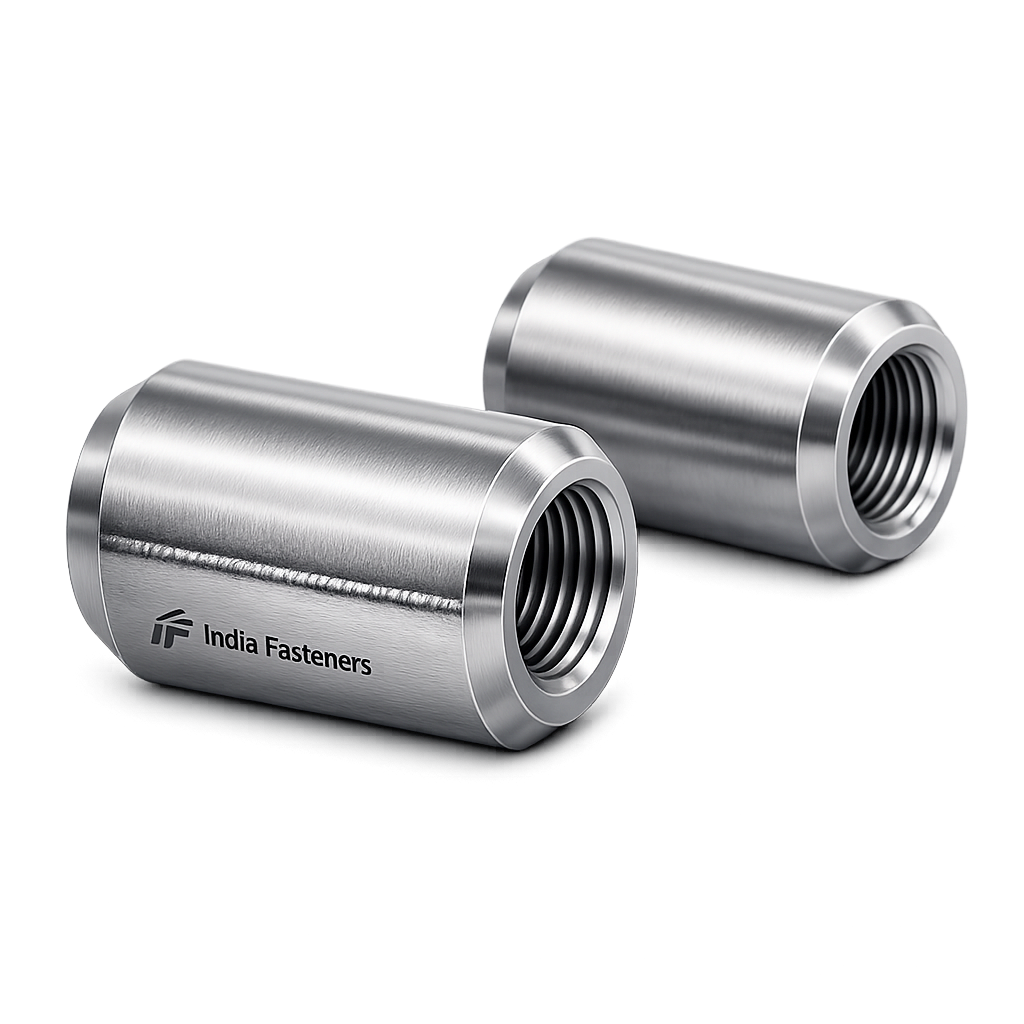
Sleeve Nut
1. Regional Industry Context — Middle East Engineering Environment
Sleeve nuts are widely utilized across Middle East industrial construction where extended threaded connections are required to maintain structural continuity, mechanical alignment, and load reliability.
Unlike short engagement fastening systems, GCC infrastructure projects frequently demand long axial thread engagement capable of sustaining:
- Continuous vibration
- Thermal expansion cycles
- Offshore corrosion exposure
- High static and dynamic tensile loading
- Long service intervals with limited maintenance access
The regional operating environment directly influences fastening selection philosophy adopted by EPC contractors and consultants.
1.1 Oil & Gas Plant Structural Assemblies
Within refinery and upstream processing facilities, sleeve nuts are commonly used for:
- Pipe rack bracing assemblies
- Modular structural steel connections
- Equipment support frames
- Elevated platform tie connections
- Pipe shoe restraint assemblies
Saudi and UAE fabrication practices favor threaded rod joining rather than welding in many auxiliary structures to enable future dismantling without hot work permits.
Sleeve nuts provide:
- Continuous tensile load transfer
- Adjustable assembly alignment
- Replaceable connection interfaces
- Reduced field welding risk
1.2 Pipe Support Systems
Pipe support engineering across Gulf facilities requires accommodation of:
- Thermal pipe growth
- Dynamic vibration
- Maintenance accessibility
Sleeve nuts connect threaded rods in:
- Spring hangers
- Variable supports
- Rigid hanger assemblies
- Sway brace systems
Extended engagement length reduces localized thread stress concentration compared with standard nuts.
1.3 Cable Tray Suspension Systems
Electrical infrastructure within petrochemical and desalination projects involves extensive suspended cable tray networks.
Sleeve nuts enable:
- Vertical rod extensions
- Height adjustment during installation
- Alignment correction during commissioning
GCC consultants typically specify long coupling connections to avoid rod replacement when routing modifications occur.
1.4 Equipment Skid Installation
Equipment skids used in:
- Compressor packages
- Pump assemblies
- Instrumentation modules
- Process skids
require precise leveling.
Sleeve nuts support:
- Anchor bolt extensions
- Adjustable leveling assemblies
- Alignment correction without structural modification
1.5 HVAC & District Cooling Infrastructure
District cooling plants across UAE and Qatar operate under:
- High humidity
- Continuous vibration
- Elevated ambient temperatures
Sleeve nuts are applied in:
- Fan support frames
- Chiller structural mounting
- Pipe suspension assemblies
- Vibration isolation systems
Long engagement length increases fatigue resistance.
1.6 Offshore Platform Structural Connections
Offshore platforms introduce combined risks:
- Salt spray corrosion
- Cyclic loading
- Wind and wave vibration
- Restricted maintenance access
Sleeve nuts fabricated from high-strength alloy or stainless materials maintain structural reliability where replacement intervals are extended.
1.7 Heavy Fabrication Yards — Saudi Arabia & UAE
Fabrication yards in Dammam, Jubail, Ras Al Khair, Abu Dhabi and Dubai employ sleeve nuts during:
- Modular preassembly
- Temporary alignment structures
- Transportation bracing
- Load transfer assemblies
Threaded joining allows rapid assembly/disassembly without structural damage.
1.8 Power Generation Auxiliary Structures
Power plants use sleeve nuts within:
- Turbine auxiliary platforms
- Exhaust duct supports
- Structural bracing members
- Access ladder assemblies
Thermal cycling requires threaded connections capable of maintaining preload stability.
1.9 Desalination Plant Mechanical Supports
Desalination environments introduce aggressive chloride exposure.
Sleeve nuts are installed in:
- Reverse osmosis skid frames
- Pipe gallery supports
- Chemical dosing platforms
- Structural maintenance walkways
Material selection becomes critical for corrosion resistance.
1.10 Engineering Drivers Behind Sleeve Nut Selection
Extended Thread Engagement Requirement
GCC structural specifications emphasize:
- Minimum engagement equal to rod diameter or greater
- Load sharing across multiple threads
- Reduced risk of thread stripping
Load Transfer Reliability
Sleeve nuts create continuous tensile load paths between threaded members, preserving structural integrity over extended lengths.
2. Technical Definition of Sleeve Nut
A Sleeve Nut is defined as:
An internally threaded elongated hexagonal fastener designed to join two externally threaded components while transmitting tensile loads through continuous thread engagement.
2.1 Functional Characteristics
- Internally threaded along extended length
- Hexagonal external profile
- Load-bearing mechanical coupling
- Alignment-critical fastening component
Used for joining:
- Threaded rods
- Stud bolts
- Anchor bolts
- Tie rods
2.2 Sleeve Nut vs Standard Hex Nut
| Parameter | Standard Hex Nut | Sleeve Nut |
|---|---|---|
| Length | Short | Extended |
| Thread Engagement | Limited | Full-length |
| Primary Function | Clamping | Coupling |
| Load Transfer | Surface compression | Axial tensile continuity |
| Alignment Capability | Minimal | High |
2.3 Coupling Nut vs Sleeve Nut Terminology
In international standards:
- Coupling Nut → generic term
- Sleeve Nut → extended-length coupling used for structural continuity
GCC EPC documentation often uses both terms interchangeably depending on specification origin.
2.4 Thread Engagement Principles
Thread engagement determines joint capacity.
Proper sleeve nut design ensures:
- Multiple load-sharing threads
- Reduced shear stress
- Uniform load distribution
- Prevention of localized failure
2.5 Tensile Load Continuity
Load transfers from:
Rod A → Internal Threads → Nut Body → Internal Threads → Rod B
No load interruption occurs when engagement length meets engineering requirements.
2.6 Applicable International Standards
Dimensional & Fastener Standards
- ASME B18.2.2 — Square and Hex Nuts
- DIN 6334 — Hexagon Coupling Nuts
- ISO 898 — Mechanical Property Classification
Material Standards
- ASTM A563 — Carbon Steel Nuts
- ASTM A193 — High Strength Alloy Bolting
- ASTM A194 — Alloy Steel Nuts
- ASTM A276 — Stainless Steel Bars
3. Load Transfer & Thread Engagement Engineering
3.1 Tensile Load Path
The tensile force travels axially through the connected rods.

Where:
 = tensile stress
 = applied load
 = tensile stress area
Sleeve nut integrity depends on internal thread shear capacity exceeding rod tensile capacity.
3.2 Minimum Engagement Length Theory
Engineering rule: 
Where:
 = engagement length
 = nominal thread diameter
High-strength assemblies may require: 
3.3 Thread Shear Failure Prevention
Thread shear area: 
Where:
 = mean thread diameter
- = engagement length
Increasing sleeve nut length increases shear resistance proportionally.
3.4 Stress Distribution Along Threads
Initial threads near load entry carry higher stress.
Extended sleeve nuts allow redistribution across multiple threads, minimizing peak loading.
3.5 Joint Elongation Behavior
Threaded assemblies elongate under tension.
Sleeve nuts:
- Increase elastic deformation length
- Reduce stiffness mismatch
- Improve fatigue performance
3.6 Vibration Resistance Principles
Vibration causes preload loss through micro-movement.
Sleeve nuts improve resistance by:
- Increased frictional interface
- Extended thread contact
- Improved axial stability
3.7 Proof Load Estimation

Where:
 = proof load
 = tensile stress area
 = proof stress
EPC projects typically apply safety factors between 2.0 – 3.5 depending on structural classification.
3.8 GCC EPC Safety Factors
Consultant review typically validates:
- Thread engagement ≥ design requirement
- Nut material strength ≥ rod strength
- Failure mode controlled by rod yielding rather than thread stripping
Design philosophy ensures predictable behavior during overload conditions.
4. Applicable Materials for Sleeve Nuts — Mapped to GCC Service Conditions
Material selection for sleeve nuts used in Middle East EPC projects is governed primarily by mechanical reliability, corrosion resistance, and temperature service capability rather than cost considerations.
GCC project specifications typically align sleeve nut material grade with the connected threaded rod or stud to ensure uniform load behavior and eliminate differential mechanical failure.
The sleeve nut must never become the weak element in the tensile load path.
4.1 Carbon Steel Sleeve Nuts — Structural Service
ASTM A563 Grades (Carbon Steel Nut Specification)
ASTM A563 governs carbon steel nuts commonly used in structural applications.
Relevant grades include:
- Grade A
- Grade C
- Grade DH (High Strength)
Engineering Characteristics
- Good machinability
- Economical structural application
- Suitable for non-corrosive indoor environments
- Compatible with structural threaded rods
GCC Applications
- Pipe rack structural connections
- Indoor equipment supports
- HVAC steel assemblies
- Cable tray suspension systems
4.2 High Strength Alloy Steel Sleeve Nuts
ASTM A193 Grade B7
One of the most widely specified bolting grades across Saudi Aramco and ADNOC projects.
Mechanical Characteristics
- Quenched and tempered alloy steel
- High tensile strength capability
- Stable performance under cyclic loading
- Elevated temperature suitability
Operating Temperature Range
-29°C to approximately 425°C
Typical GCC Applications
- Refinery piping supports
- Compressor skids
- Structural bolting exposed to vibration
- Power plant auxiliary steel structures
B7 sleeve nuts are frequently paired with B7 threaded rods to maintain mechanical compatibility.
ASTM A320 Grade L7
Designed for low-temperature environments requiring impact toughness.
Engineering Characteristics
- Controlled impact properties
- Low-temperature fracture resistance
- Improved toughness versus B7
GCC Applications
Although Gulf climates are warm, L7 materials may be required for:
- LNG facilities
- Cryogenic processing areas
- Refrigeration units
- Gas export terminals
4.3 ASTM A194 Alloy Nut Grades
ASTM A194 grades are used where pressure equipment bolting standards apply.
Typical grades:
- 2H
- 7
- 8
- 8M
These materials provide compatibility with pressure boundary bolting systems and may be specified when sleeve nuts form part of pressure equipment support structures.
4.4 Stainless Steel Sleeve Nuts
ASTM A276 Stainless Steel Bars
Common grades:
- SS304
- SS316 / SS316L
SS304 Sleeve Nuts
Characteristics:
- Good atmospheric corrosion resistance
- Suitable for indoor industrial environments
- Resistant to humidity exposure
Typical GCC Use:
- Electrical infrastructure
- Indoor plant mechanical supports
- Instrumentation structures
SS316 Sleeve Nuts
Enhanced molybdenum content improves chloride resistance.
Required where exposure includes:
- Coastal facilities
- Marine atmosphere
- Desalination plants
- Chemical processing areas
SS316 is frequently specified by UAE offshore contractors.
4.5 Duplex Stainless Steel — ASTM A182 / UNS S31803 (F51)
Duplex stainless steel combines:
- High strength
- Superior chloride stress corrosion resistance
- Improved fatigue performance
Engineering Advantages:
- Nearly double yield strength compared to austenitic stainless steels
- Excellent resistance to pitting corrosion
- Suitable for offshore splash zones
Typical GCC Applications:
- Offshore platforms
- Seawater handling systems
- Desalination intake structures
- Marine exposed structural assemblies
4.6 Alloy Steel Options for High Temperature Service
Where operating temperatures exceed standard alloy limits, project specifications may require:
- Chromium-molybdenum steels
- Heat-resistant alloys
- Special project-specific materials
Used in:
- Gas turbines
- Boiler auxiliary structures
- Flare stack assemblies
4.7 Sour Service & NACE Considerations
Oil & gas environments containing hydrogen sulfide require compliance with sour service practices.
Engineering controls include:
- Hardness limitation
- Controlled heat treatment
- Hydrogen embrittlement prevention
- Material certification verification
Sleeve nuts intended for sour environments must satisfy NACE hardness requirements defined by project specifications.
5. Material Comparison Table — GCC Engineering Selection Reference
| Material Grade | Yield Strength (MPa) | Tensile Strength (MPa) | Operating Temperature | Corrosion Resistance | Typical GCC Application |
|---|---|---|---|---|---|
| ASTM A563 Gr A | ~250 | 400–550 | -20°C to 300°C | Moderate | Structural indoor steel |
| ASTM A563 Gr DH | ~450 | 690–850 | -20°C to 400°C | Moderate | Heavy structural fastening |
| ASTM A193 B7 | ~720 | 860–1035 | -29°C to 425°C | Moderate | Oil & gas structural supports |
| ASTM A320 L7 | ~720 | 860–1035 | -101°C service | Moderate | LNG & cryogenic facilities |
| ASTM A194 2H | ~650 | 850 | Up to 425°C | Moderate | Pressure equipment supports |
| SS304 | ~215 | 515 | -196°C to 870°C | Good | Indoor industrial use |
| SS316 | ~205 | 515 | -196°C to 870°C | High | Coastal & desalination plants |
| Duplex F51 | ~450 | 620–880 | -50°C to 300°C | Very High | Offshore & marine exposure |
6. Heat Treatment & Metallurgical Control
Heat treatment directly governs mechanical reliability of sleeve nuts used in EPC applications.
Improper heat treatment can cause:
- Thread deformation
- Brittle fracture
- Hydrogen embrittlement
- Load capacity reduction
6.1 Quenching & Tempering
Applied primarily to alloy steel grades such as ASTM A193 B7.
Process:
- Heating above transformation temperature
- Rapid quenching
- Controlled tempering
Purpose:
- Achieve required strength
- Improve toughness
- Reduce brittleness
6.2 Normalizing
Used for carbon steel grades.
Benefits:
- Grain refinement
- Improved machinability
- Uniform mechanical properties
6.3 Stress Relieving
Performed after machining or forming.
Prevents:
- Residual stress cracking
- Dimensional distortion
- Thread misalignment during service
6.4 Solution Annealing — Stainless Steel
Required for SS304 and SS316 sleeve nuts.
Process removes:
- Carbide precipitation
- Sensitization risk
- Reduced corrosion resistance
Rapid cooling preserves corrosion properties.
6.5 Hydrogen Embrittlement Prevention
High-strength fasteners are susceptible to hydrogen absorption during:
- Acid pickling
- Electroplating
- Improper coating processes
Preventive controls include:
- Baking after plating
- Controlled coating chemistry
- Hardness monitoring
6.6 Hardness Control for Sour Service
Typical limits enforced by consultants:
- Maximum hardness ~22 HRC for sour environments
- Verified through batch hardness testing
Hardness exceeding limits increases sulfide stress cracking risk.
6.7 Impact Testing for Low Temperature Service
For L7 materials and LNG projects:
- Charpy impact testing required
- Verification of ductility at low temperature
Ensures safe performance during thermal shock conditions.
7. Manufacturing Process Flow — EPC Documentation Level
Manufacturing of sleeve nuts for international EPC supply follows a traceable and controlled sequence.
7.1 Raw Material Traceability
Each batch begins with:
- Mill test certificate review
- Heat number allocation
- Chemical composition verification
Traceability must remain intact through entire production cycle.
7.2 Heat Number Verification
Material identification ensures:
- Grade conformity
- Mechanical compatibility
- Inspection readiness
Traceability markings link finished sleeve nuts to original steel melt.
7.3 Bar Cutting & Preparation
Certified steel bars are cut according to:
- Required nut length
- Allowance for machining tolerances
Cut surfaces inspected for lamination defects.
7.4 Forging or Cold Forming
Depending on size and grade:
Hot Forging
- Preferred for heavy-duty sleeve nuts
- Improves grain flow orientation
- Enhances fatigue resistance
Cold Forming
- Applied to smaller sizes
- Maintains dimensional consistency
7.5 Precision Drilling & Tapping
Critical stage for performance reliability.
Operations include:
- Center drilling
- Controlled internal boring
- Thread tapping or thread rolling
Thread geometry verified against tolerance class requirements.
7.6 Internal Thread Control
Thread inspection ensures:
- Proper pitch diameter
- Correct flank angle
- Uniform thread depth
- Smooth load transfer surfaces
Go / No-Go gauges applied per standard practice.
7.7 CNC Hex Machining
External hex profile machined to achieve:
- Accurate across-flats dimension
- Proper wrench engagement
- Installation safety
Dimensional consistency assists torque transmission.
7.8 Chamfering
Chamfering provides:
- Easy rod insertion
- Prevention of thread damage
- Reduced installation time
Both ends normally chamfered.
7.9 Heat Treatment
Performed according to material grade requirement:
- Furnace calibration maintained
- Temperature uniformity monitored
- Process recorded for documentation
7.10 Surface Finishing
Depending on specification:
- Black finish
- Zinc coating
- Hot dip galvanizing
- Passivation for stainless steel
Surface treatment selected based on corrosion environment.
7.11 Coating or Galvanizing Control
Coating thickness verified to maintain:
- Corrosion protection
- Thread fit tolerance
- Assembly compatibility
Excess coating thickness may interfere with engagement.
7.12 Final Inspection
Inspection stages include:
- Dimensional verification
- Thread gauge inspection
- Visual examination
- Mechanical testing review
7.13 Stamping & Traceability Marking
Finished sleeve nuts marked with:
- Manufacturer identification
- Material grade
- Heat traceability reference
Marking allows field verification during EPC inspection.
7.14 Dimensional Tolerance & Thread Accuracy Control
Manufacturing discipline ensures:
- Interchangeability with global threaded components
- Alignment accuracy
- Prevention of cross-threading
Thread class tolerance compliance is essential for EPC approval.
8. Sleeve Nut Dimensional Reference Tables
Dimensional control of sleeve nuts is a primary review item during EPC vendor evaluation. Consultants verify compatibility with international threaded systems to ensure interchangeability across multinational project supply chains.
The dimensional references below align with practices derived from DIN 6334 and equivalent ASME manufacturing philosophy.
8.1 Standard Metric Sleeve Nut Dimensions
| Thread Size | Overall Length (mm) | Across Flats (mm) | Thread Pitch (mm) | Internal Thread Length (mm) | Approx. Weight (kg/100 pcs) |
|---|---|---|---|---|---|
| M6 | 18 | 10 | 1.0 | 18 | 0.60 |
| M8 | 24 | 13 | 1.25 | 24 | 1.20 |
| M10 | 30 | 17 | 1.5 | 30 | 2.20 |
| M12 | 36 | 19 | 1.75 | 36 | 3.50 |
| M16 | 48 | 24 | 2.0 | 48 | 7.40 |
| M20 | 60 | 30 | 2.5 | 60 | 14.0 |
| M24 | 72 | 36 | 3.0 | 72 | 24.5 |
| M30 | 90 | 46 | 3.5 | 90 | 48.0 |
| M36 | 108 | 55 | 4.0 | 108 | 78.0 |
8.2 Imperial Sleeve Nut Dimensions
| Thread Size | Overall Length (in) | Across Flats (in) | Thread Pitch | Internal Thread Length (in) | Weight (lb/100 pcs) |
|---|---|---|---|---|---|
| 1/4″ | 3/4 | 7/16 | UNC | 3/4 | 1.1 |
| 3/8″ | 1 | 9/16 | UNC | 1 | 2.3 |
| 1/2″ | 1-1/2 | 3/4 | UNC | 1-1/2 | 4.5 |
| 5/8″ | 1-3/4 | 15/16 | UNC | 1-3/4 | 7.8 |
| 3/4″ | 2 | 1-1/8 | UNC | 2 | 12.6 |
| 1″ | 2-1/2 | 1-1/2 | UNC | 2-1/2 | 26.0 |
| 1-1/4″ | 3 | 1-7/8 | UNC | 3 | 45.0 |
| 1-1/2″ | 3-1/2 | 2-1/4 | UNC | 3-1/2 | 78.0 |
Engineering Notes
- Internal thread length normally equals overall nut length.
- Engagement symmetry is required unless specified otherwise.
- Dimensional tolerances must maintain wrench clearance requirements defined by EPC installation procedures.
9. Mechanical Strength & Proof Load Table
Mechanical compatibility between sleeve nut and threaded rod is mandatory. EPC specifications typically require nut strength equal to or higher than the connected fastener.
| Material Grade | Proof Load (MPa) | Approx Tensile Capacity (MPa) | Compatible Rod Grade | Allowable Load Range |
|---|---|---|---|---|
| ASTM A563 Gr A | 380 | 400–550 | ASTM A36 / Gr 4.6 | Structural light duty |
| ASTM A563 Gr DH | 620 | 690–850 | ASTM A325 equivalent | Structural heavy duty |
| ASTM A193 B7 | 720 | 860–1035 | A193 B7 rods | High strength EPC bolting |
| ASTM A320 L7 | 720 | 860–1035 | L7 rods | Cryogenic service |
| SS304 | 210 | 515 | SS304 rods | Corrosion resistant assemblies |
| SS316 | 205 | 515 | SS316 rods | Marine & desalination |
| Duplex F51 | 450 | 620–880 | Duplex rods | Offshore structures |
Engineering Principle
Failure mode hierarchy required by consultants:
- Rod yielding
- Elastic elongation
- Thread deformation
Thread stripping must not occur prior to rod yield.
10. Thread Engagement Design Guide (MANDATORY)
Thread engagement length directly controls sleeve nut load capacity.
10.1 Minimum Engagement Requirement
General engineering rule:
Where:
- = engagement length
- = nominal thread diameter
For high-strength alloy systems:
10.2 Thread Shear Capacity
Where:
 = shear area
- = mean diameter
- = engagement length
Increasing sleeve nut length proportionally increases thread shear strength.
10.3 Example Engineering Calculation
Given
- Thread size: M20
- Mean diameter ≈ 18.4 mm
- Engagement length = 60 mm

Result:
Thread shear capacity significantly exceeds tensile stress area of rod, confirming safe design.
10.4 Failure Mode Comparison
| Condition | Result |
|---|---|
| Insufficient engagement | Thread stripping |
| Equal strength materials | Controlled yielding |
| Excess hardness | Brittle fracture risk |
| Correct engagement | Predictable load transfer |
10.5 Safe Installation Limits
Consultant validation typically checks:
- Engagement length verified visually
- Minimum full thread contact achieved
- Equal rod insertion depth from both ends
- No exposed incomplete threads within load zone
10.6 EPC Submission Validation Logic
Engineering submittals normally include:
- Sleeve nut drawing
- Engagement verification
- Material compatibility statement
- Mechanical property certification
Acceptance depends on demonstrating controlled load transfer.
11. Torque & Installation Chart (MANDATORY)
Torque application generates preload required for structural integrity.
Torque values vary based on lubrication condition and material grade.
11.1 Recommended Torque Values — ASTM A193 B7 Compatibility
| Thread Size | Dry Torque (Nm) | Lubricated Torque (Nm) | Approx Preload (%) |
|---|---|---|---|
| M10 | 45 | 32 | 70% |
| M12 | 80 | 56 | 70% |
| M16 | 195 | 135 | 70% |
| M20 | 380 | 265 | 70% |
| M24 | 660 | 460 | 70% |
| M30 | 1320 | 925 | 70% |
| M36 | 2300 | 1600 | 70% |
11.2 Preload Engineering Concept
Preload must:
- Prevent joint separation
- Maintain frictional locking
- Resist vibration loosening
Typical EPC practice targets 65–75% of proof load.
11.3 Controlled Tightening Practices
Recommended procedures:
- Apply lubrication consistently
- Use calibrated torque wrench
- Tighten symmetrically when multiple rods exist
- Avoid impact wrench final tightening
11.4 Lubrication Influence
Lubrication reduces friction coefficient, increasing preload for same torque.
Uncontrolled lubrication causes preload variation and must be avoided.
12. Mechanical Property Reference Table
| Material | Yield Strength (MPa) | Tensile Strength (MPa) | Hardness | Elongation | Impact Energy* |
|---|---|---|---|---|---|
| ASTM A563 DH | 450 | 690–850 | 24–32 HRC | 12% | — |
| ASTM A193 B7 | 720 | 860–1035 | 28–35 HRC | 16% | Optional |
| ASTM A320 L7 | 720 | 860–1035 | ≤ 34 HRC | 18% | Required |
| SS304 | 215 | 515 | HRB 95 | 40% | High |
| SS316 | 205 | 515 | HRB 95 | 40% | High |
| Duplex F51 | 450 | 620–880 | 28 HRC | 25% | Moderate |
*Impact testing required when specified.
13. Corrosion Resistance Comparison Table
GCC environmental exposure varies significantly between inland desert plants and offshore facilities.
| Material | Marine Exposure | High Humidity | Chemical Plant | Offshore Atmosphere | High Temperature Climate |
|---|---|---|---|---|---|
| Carbon Steel | Low | Low | Moderate | Poor | Good |
| Hot Dip Galvanized | Moderate | Moderate | Moderate | Limited | Moderate |
| SS304 | Moderate | Good | Good | Moderate | Excellent |
| SS316 | High | High | Excellent | High | Excellent |
| Duplex Stainless Steel | Very High | Very High | Excellent | Excellent | Very Good |
Engineering Selection Logic
- Inland desert facilities → Carbon steel acceptable
- Coastal UAE projects → SS316 preferred
- Offshore platforms → Duplex stainless recommended
Material selection must consider lifecycle maintenance cost rather than initial procurement cost.
14. Inspection & Quality Assurance Requirements
Quality assurance of sleeve nuts used in EPC projects follows structured inspection philosophy.
14.1 Thread Gauge Inspection
Inspection tools:
- Go gauge
- No-Go gauge
- Pitch diameter verification
Ensures interchangeability with international threaded rods.
14.2 Positive Material Identification (PMI)
PMI testing confirms alloy composition.
Common methods:
- XRF analysis
- Spectrographic testing
Required for:
- Stainless steel
- Duplex materials
- Alloy steels
14.3 Hardness Testing
Hardness testing verifies:
- Heat treatment effectiveness
- Sour service compliance
- Mechanical integrity
Methods:
- Rockwell testing
- Portable hardness testers
14.4 Dimensional Inspection
Inspection verifies:
- Length tolerance
- Across flats dimension
- Chamfer geometry
- Thread concentricity
Dimensional deviation may prevent proper torque transfer.
14.5 Coating Thickness Verification
For galvanized sleeve nuts:
- Magnetic thickness gauge measurement
- Compliance with project coating specification
Excess coating thickness can cause assembly interference.
14.6 Third-Party Inspection Readiness
Projects commonly involve independent inspection agencies.
Inspection scope may include:
- Manufacturing surveillance
- Witness testing
- Random sampling
- Documentation review
14.7 EN 10204 Certification
Typical certification supplied:
- EN 10204 Type 3.1 — Manufacturer certification
- EN 10204 Type 3.2 — Independent inspection validation (when specified)
Documentation confirms material traceability and mechanical compliance.
14.8 Consultant Expectations for Fastening Components
EPC consultants evaluate sleeve nuts based on:
- Mechanical compatibility
- Traceable manufacturing
- Documented inspection records
- Standard compliance
- Installation reliability
Fasteners are treated as critical structural elements, not commodity hardware.
15. Industries Served — Middle East Engineering Applications
Sleeve nuts supplied for GCC projects function as structural load-transmitting components rather than general fastening hardware. Their application spans industries where reliability, maintainability, and inspection traceability are required throughout the asset lifecycle.
15.1 Oil & Gas Facilities
Oil & gas installations across Saudi Arabia, UAE, Qatar, Kuwait, Oman, and Bahrain operate under stringent mechanical integrity programs.
Sleeve nuts are incorporated into:
- Pipe rack structural extensions
- Process equipment support frames
- Modular plant construction assemblies
- Maintenance platform connections
- Temporary erection supports
- Structural tie rod assemblies
Engineering rationale includes:
- Elimination of field welding
- Adjustable installation alignment
- Controlled dismantling during shutdowns
- Reduced hot work exposure
In refinery environments, sleeve nuts assist in maintaining structural continuity where threaded rods must be extended without introducing weld heat-affected zones.
15.2 Petrochemical Plants
Petrochemical facilities introduce additional challenges:
- Continuous vibration from rotating equipment
- Thermal cycling
- Chemical exposure
- Restricted maintenance access
Typical sleeve nut usage:
- Reactor platform structures
- Pipe bridge supports
- Structural bracing systems
- Cable tray extensions
- Mechanical access platforms
Extended thread engagement provides improved fatigue performance compared with short engagement nut systems.
15.3 Power Generation Stations
Power plants require fastening systems capable of long operational life under elevated temperature variation.
Applications include:
- Turbine auxiliary steelwork
- Exhaust duct structural supports
- Maintenance gantries
- Boiler auxiliary framing
- Transformer platform supports
Engineering selection focuses on maintaining preload stability during expansion and contraction cycles.
15.4 Desalination Plants
Desalination facilities represent one of the most aggressive corrosion environments in the GCC region.
Exposure conditions:
- Continuous salt mist
- Chloride concentration
- High humidity
- Elevated ambient temperature
Sleeve nuts are installed within:
- Reverse osmosis skid assemblies
- Intake structure supports
- Chemical dosing platforms
- Pipe gallery systems
- Maintenance walkways
Material selection typically shifts toward SS316 or Duplex stainless steel grades to control long-term corrosion risk.
15.5 Offshore Platforms
Offshore structural fastening demands high mechanical reliability due to limited accessibility.
Typical offshore uses:
- Deck support structures
- Equipment skid tie assemblies
- Cable ladder suspension systems
- Temporary lifting arrangements
- Structural reinforcement members
Engineering priorities include:
- Corrosion resistance
- Fatigue strength
- Traceable material certification
- Predictable failure mode behavior
15.6 Structural Steel Fabrication Industry
Fabrication yards supplying modular units to Middle East projects frequently utilize sleeve nuts during:
- Preassembly alignment
- Transportation bracing
- Modular joining systems
- Temporary structural stabilization
Threaded joining enables rapid erection without structural modification.
15.7 Infrastructure Mega-Projects
Large infrastructure programs across the Gulf region require adjustable fastening systems.
Applications include:
- Metro infrastructure supports
- Bridge service platforms
- Industrial buildings
- Utility corridor structures
- Mechanical service frameworks
Sleeve nuts allow tolerance adjustment during large-scale assembly.
15.8 District Cooling Systems
District cooling facilities rely heavily on suspended mechanical infrastructure.
Sleeve nuts support:
- Pipe hanger extensions
- Fan assembly supports
- Structural maintenance access
- Pump platform alignment
The extended thread length accommodates installation tolerances commonly encountered in congested mechanical spaces.
16. Export & GCC Supply Capability
International EPC supply requires structured export discipline beyond manufacturing capability.
India Fasteners supplies sleeve nuts within controlled export documentation frameworks aligned with GCC procurement practices.
16.1 Regional Export Coverage
Supply capability includes:
- Saudi Arabia
- United Arab Emirates (Dubai / Abu Dhabi)
- Qatar
- Oman
- Kuwait
- Bahrain
Logistics planning considers project schedules, inspection hold points, and documentation review periods.
16.2 Export Packaging Discipline
Packaging must preserve thread integrity and corrosion protection during marine transport.
Typical measures include:
- Batch segregation by heat number
- Protective oil application where permitted
- Moisture-resistant packing
- Heavy-duty export cartons or crates
- Palletized handling systems
- Container vibration protection
Packaging design prevents thread impact damage during long-distance shipment.
16.3 Corrosion Protection During Transit
Transit exposure may exceed several weeks under marine humidity.
Protection methods:
- Vapor corrosion inhibitor materials
- Sealed polyethylene liners
- Controlled desiccant placement
- Coating preservation inspection prior to dispatch
16.4 Project Documentation Package
Each export supply may include:
- Mill Test Certificates
- Heat Treatment Records
- Dimensional Inspection Reports
- Mechanical Test Results
- Coating Certification
- Material Traceability Documentation
- Packing List with Heat Mapping
- Certificate of Conformance
Documentation structure supports EPC submittal approval workflows.
16.5 Inspection Release Documentation
Prior to shipment, inspection release may involve:
- Client inspection notification
- Third-party verification
- Release note issuance
- Shipment authorization record
Inspection readiness reduces project delays at destination ports.
16.6 Material Traceability Records
Traceability maintained through:
Raw Material → Manufacturing Batch → Inspection Record → Packing Unit → Shipment Documentation
Traceability enables verification during site audits or failure investigations.
16.7 Container Loading Control
Controlled loading procedures include:
- Weight distribution monitoring
- Segregation of stainless and carbon steel materials
- Protection against mechanical damage
- Documentation matching container seal numbers
These practices align with EPC logistics expectations.
17. Procurement & Installation Engineering View
From a procurement engineering perspective, sleeve nuts are evaluated based on installation reliability and lifecycle maintainability rather than unit cost.
17.1 Thread Inspection Before Installation
Site inspection practices normally include:
- Visual thread examination
- Gauge verification where required
- Removal of transport debris
- Confirmation of coating condition
Damaged threads must not be installed.
17.2 Alignment Control
Correct alignment prevents eccentric loading.
Installation requirements:
- Axial rod alignment
- Equal engagement depth
- Avoidance of forced assembly
- No cross-threading
Misalignment introduces bending stresses not considered in design calculations.
17.3 Torque Tightening Sequence
Where preload is required:
- Hand engagement verification
- Preliminary tightening
- Controlled torque application
- Final inspection confirmation
Uniform torque application ensures predictable load transfer.
17.4 Lubrication Requirements
Lubrication practices depend on specification:
- Molybdenum disulfide compounds
- Anti-seize paste for stainless steel
- Controlled application quantity
Lubrication affects torque coefficient and preload accuracy.
17.5 Anti-Seize Usage
Particularly important for stainless steel assemblies to prevent:
- Galling
- Thread seizure
- Installation damage
Anti-seize compounds must remain compatible with project temperature limits.
17.6 Field Inspection Checklist
Typical field verification includes:
- Correct material grade
- Traceability marking visibility
- Engagement length confirmation
- Proper torque application
- Coating integrity check
Documentation of installation may form part of mechanical completion dossiers.
17.7 Maintenance & Replacement Guidelines
Sleeve nuts allow maintenance flexibility:
- Rod replacement without cutting
- Adjustment during settlement correction
- Disassembly without structural damage
Replacement recommended if:
- Threads show deformation
- Corrosion penetration observed
- Mechanical damage detected
17.8 Storage for Desert Climate Conditions
Site storage must consider:
- Sand contamination
- High temperature exposure
- Condensation during night cooling
Recommended practices:
- Elevated storage racks
- Covered storage areas
- Sealed packaging retention until installation
18. Custom Engineering Capabilities
GCC projects frequently require non-standard fastening solutions tailored to project specifications.
India Fasteners supports engineered sleeve nut supply aligned with EPC drawing requirements.
18.1 Non-Standard Lengths
Custom lengths manufactured to accommodate:
- Extended rod engagement
- Structural tolerance adjustments
- Retrofit plant modifications
18.2 Special Thread Forms
Available configurations may include:
- UNC / UNF
- Metric coarse or fine
- Left-hand threads
- Special pitch designs
Thread form compatibility verified against mating component drawings.
18.3 Heavy-Duty Sleeve Nuts
Designed for:
- Large diameter tie rods
- Structural tension members
- Offshore load applications
Manufacturing incorporates controlled forging and enhanced heat treatment.
18.4 High Temperature Service Grades
Materials supplied for elevated temperature service:
- Alloy steels
- Heat resistant materials
- Project-specific metallurgy
Used within turbine and furnace structural systems.
18.5 NACE Compliant Supply
Where specified, sleeve nuts may be produced with:
- Controlled hardness limits
- Verified heat treatment records
- Sour service documentation support
Compliance aligns with oil & gas service environments containing hydrogen sulfide.
18.6 Special Coating Systems
Available coating options include:
- Hot dip galvanizing
- Zinc flake systems
- PTFE coating
- Fluoropolymer protective coatings
- Passivation treatments
Coating selection depends on environmental exposure classification.
18.7 Project Stamping & Traceability
Project-driven identification may include:
- Client-specific marking
- Heat number stamping
- Batch identification
- Inspection traceability coding
Supports field verification during construction and commissioning phases.
Technical Closing Statement
Sleeve nuts supplied for GCC industrial projects must demonstrate:
- Understanding of bolted joint mechanics
- Material discipline aligned with international standards
- Controlled manufacturing processes
- Inspection transparency
- Installation reliability
- Traceable export documentation
The engineering approach presented reflects fastening systems intended for evaluation under EPC contractor review, consultant scrutiny, and third-party inspection environments typical of Middle East oil & gas, power, desalination, and infrastructure developments.