
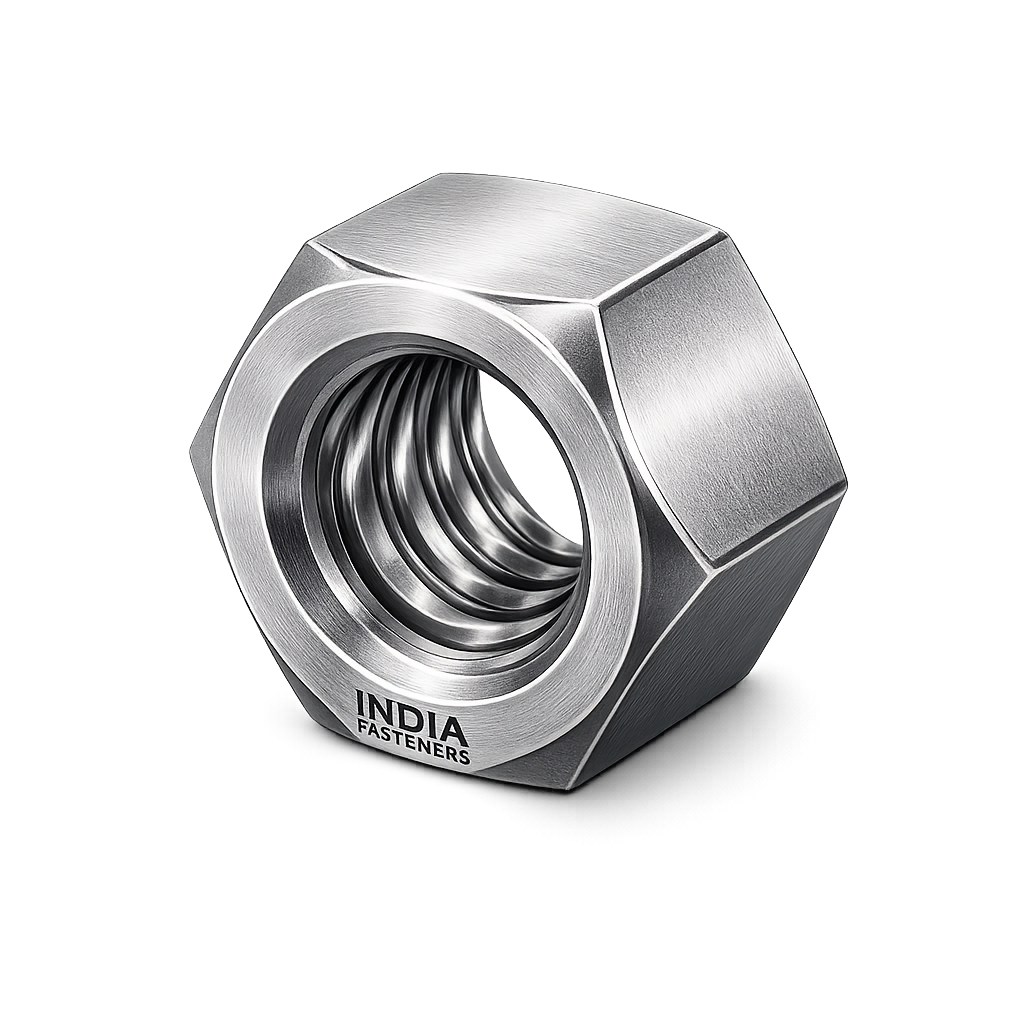
Distorted thread nut
1. GCC Industrial Operating Environment
Bolted joint reliability within Gulf Cooperation Council (GCC) industrial infrastructure operates under mechanical conditions significantly more severe than conventional industrial environments. Mechanical fastener selection in these projects is therefore governed by integrity engineering rather than procurement convenience.
Distorted thread nuts are primarily specified where loss of preload directly affects safety, containment, or equipment availability.
1.1 Oil & Gas Processing Facilities
Hydrocarbon processing installations across Saudi Arabia, UAE, and Qatar operate continuous duty systems exposed to:
- Multi-axis vibration from pumps and compressors
- Pressure pulsation within piping systems
- Elevated process temperatures
- Cyclic shutdown/startup stresses
Typical bolted joints include:
- Pump base frames
- Compressor skids
- Pipe supports
- Heat exchanger assemblies
- Structural access platforms
Joint loosening results primarily from transverse vibration, not inadequate tightening torque.
1.2 Offshore Platforms
Offshore installations introduce combined degradation mechanisms:
- Salt-laden marine atmosphere
- Wind-induced vibration
- Structural oscillation
- Thermal gradients between day/night cycles
Offshore fastening systems must operate without reliance on polymer inserts or chemical adhesives that degrade under:
- UV exposure
- Temperature cycling
- Hydrocarbon contamination
All-metal prevailing torque nuts eliminate polymer dependency.
1.3 Refinery Installations (Jubail / Ruwais Operational Context)
Refineries operate dense mechanical assemblies exposed to:
- Continuous rotating machinery vibration
- Thermal expansion of pipe racks
- High temperature flange connections
- Maintenance access limitations
Unscheduled access to bolted joints is often restricted due to process hazards. Locking reliability must therefore be intrinsic to the fastener, not dependent on periodic retightening.
1.4 LNG Facilities
Liquefied natural gas facilities introduce additional challenges:
- Cryogenic contraction cycles
- Thermal shock during cooldown
- Differential expansion between materials
Mechanical locking systems must maintain clamp load despite dimensional changes occurring across wide temperature ranges.
1.5 Gas Compression Stations
Gas compression equipment produces high-frequency vibration spectra capable of inducing self-loosening even when bolts are tightened to specification.
Primary risk factors:
- Dynamic axial loads
- Resonant structural vibration
- Repeated transient loading events
Distorted thread nuts generate prevailing torque independent of clamp load, maintaining resistance during preload reduction events.
1.6 Power Generation Turbines
Gas and steam turbine auxiliary structures experience:
- Rotational imbalance forces
- High temperature radiation
- Thermal cycling during load changes
Fasteners must retain locking capability beyond standard torque retention mechanisms.
1.7 Desalination Installations
Desalination facilities combine:
- Marine corrosion
- Pump vibration
- Humidity exposure
- Salt crystallization
Locking performance must remain stable without degradation from environmental exposure.
1.8 Structural Steel Assemblies
Large steel structures encounter:
- Wind excitation
- Thermal expansion of long members
- Repetitive stress reversals
Self-loosening commonly originates from microscopic slip between joint surfaces.
Why Self-Locking All-Metal Nuts Are Preferred
GCC project specifications frequently restrict or prohibit alternative locking methods.
Nylon Insert Lock Nuts
Limitations:
- Polymer softening above ~120°C
- Chemical degradation in hydrocarbons
- Reduced locking under heat exposure
Unsuitable for refinery and turbine environments.
Double Nutting
Limitations:
- Requires precise installation skill
- Increased assembly time
- Difficult inspection verification
Not preferred for large EPC installations.
Chemical Thread Locking Compounds
Limitations:
- Cure dependency
- Surface preparation requirements
- Limited reuse
- Contamination sensitivity
Not suitable for heavy industrial maintenance environments.
Spring Washers
Known engineering limitations:
- Flatten under load
- Loss of elasticity
- Minimal vibration resistance
Widely excluded from critical bolting standards.
Engineering Preference
All-metal distorted thread nuts provide:
- Mechanical locking independent of temperature
- No polymer components
- Immediate locking action
- Reusability within defined limits
- Inspection-visible locking mechanism
2. Technical Definition of Distorted Thread Nut
A distorted thread nut is defined as:
An all-metal prevailing torque locking nut incorporating controlled geometric deformation of internal threads to create elastic interference with mating bolt threads, producing sustained rotational resistance during installation and service.
2.1 Fundamental Characteristics
- All-metal construction
- Integral locking feature
- No additional components
- Controlled deformation zone
- Reusable mechanical locking action
The locking action exists before clamp load development.
2.2 Top-Lock Distortion Principle
During manufacturing, the upper section of the nut undergoes controlled deformation.
This deformation:
- Alters thread circularity
- Creates interference with bolt threads
- Generates radial contact pressure
The locking feature activates immediately upon thread engagement.
2.3 Elliptical Deformation Concept
The internal thread profile becomes slightly non-circular.
Result:
- Two or three localized interference zones
- Increased frictional resistance
- Elastic recovery during installation
The deformation remains within metallurgical elastic limits.
2.4 Tri-Lobular Locking Zones
Many distorted thread designs employ:
- Three-point interference geometry
- Distributed contact pressure
- Balanced load distribution
This prevents localized galling while maintaining locking performance.
2.5 Radial Pressure Generation
Locking occurs through:
![\[P_r = \frac{F_i}{A_c}\]](https://indiafastners.com/wp-content/ql-cache/quicklatex.com-2e75a3b43dbc6633997d8e5108410d44_l3.png "Rendered by QuickLaTeX.com")
Where:
 = radial pressure
 = interference force
 = contact area
Radial pressure increases frictional resistance to rotation.
2.6 Terminology Clarification
| Fastener Type | Technical Meaning |
|---|---|
| Distorted Thread Nut | Nut with permanently deformed thread section |
| Prevailing Torque Nut | General category of locking nuts generating resistance prior to seating |
| Stover Nut | Specific top-lock distorted thread design |
| Center Lock Nut | Distortion located at mid-height |
| Nylon Insert Lock Nut | Polymer-based locking mechanism |
All distorted thread nuts are prevailing torque nuts, but not all prevailing torque nuts are distorted thread designs.
3. Mechanical Locking Theory
3.1 Prevailing Torque Generation
Prevailing torque is the torque required to rotate a nut on a bolt without clamp load.
![\[T_p = F_f \times r\]](https://indiafastners.com/wp-content/ql-cache/quicklatex.com-05a4f543d42e58100d685a1fca4b8431_l3.png "Rendered by QuickLaTeX.com")
Where:
 = prevailing torque
 = friction force from interference
 = effective thread radius
This torque remains present throughout service.
3.2 Clamp Load Retention
Bolt preload:
![\[F = \frac{T}{K \times D}\]](https://indiafastners.com/wp-content/ql-cache/quicklatex.com-1d526bf32831a128706e0d44343eae7e_l3.png "Rendered by QuickLaTeX.com")
Where:
 = preload
 = tightening torque
 = nut factor
 = bolt diameter
Distorted thread nuts prevent preload loss caused by rotation.
3.3 Self-Loosening Mechanism
According to vibration loosening research (Junker principle):
Self-loosening occurs when:
- Transverse displacement exceeds frictional resistance
- Micro-slip reduces clamp force
- Nut rotation begins incrementally
Standard nuts rely entirely on clamp load friction.
Distorted thread nuts add independent rotational resistance.
3.4 Dynamic Load Behavior
Under vibration:
- Joint experiences lateral motion
- Clamp force fluctuates
- Friction alone becomes insufficient
- Rotation initiates
Prevailing torque interrupts rotation initiation.
3.5 Friction Relationship
Total tightening torque:
![\[T = T_{thread} + T_{bearing} + T_{prevailing}\]](https://indiafastners.com/wp-content/ql-cache/quicklatex.com-5dd957a562792d04e2906e4a4ca78a19_l3.png "Rendered by QuickLaTeX.com")
Where prevailing torque remains active even when preload decreases.
3.6 EPC Safety Margin Philosophy
GCC EPC specifications apply conservative engineering margins:
- Redundant locking mechanisms preferred
- Passive mechanical safety favored
- Maintenance-independent solutions required
Distorted thread nuts align with these principles by providing:
Inspection-verifiable compliance
Built-in locking reliability
Predictable performance
4. Applicable Standards — Mapped to GCC Industrial Usage
Distorted thread nuts used within GCC oil & gas, petrochemical, power generation, and desalination projects must comply with internationally recognized fastening standards accepted by EPC contractors and third-party inspection bodies.
Mechanical consultants within Saudi Aramco, ADNOC, QatarEnergy, and regional EPC organizations evaluate locking fasteners primarily against material specification compliance, prevailing torque validation, and manufacturing control discipline.
Distorted thread nuts are therefore governed by a combination of:
- Material standards
- Dimensional standards
- Functional locking performance standards
- Inspection and certification requirements
4.1 ASTM A194 — High Integrity Bolting Applications
ASTM A194 covers carbon, alloy, and stainless steel nuts intended for high-pressure or high-temperature bolting.
Common Grades Used for Distorted Thread Nuts
ASTM A194 Grade 2H
- Quenched and tempered carbon steel
- High strength pressure equipment applications
- Widely accepted in refinery and pressure vessel bolting
Typical GCC Use:
- Pressure vessel supports
- Pipe flange bolting
- Structural heavy bolting
ASTM A194 Grade 7
- Alloy steel construction
- Elevated temperature resistance
- Improved creep resistance
Typical Applications:
- Gas compression equipment
- High temperature piping systems
- Turbine auxiliary structures
ASTM A194 Grade 8
- Austenitic stainless steel
- Corrosion resistant environments
- Marine and desalination service
Typical GCC Applications:
- Offshore platforms
- Seawater handling equipment
- Chemical processing units
4.2 ASTM A563 — Structural Bolting Standard
ASTM A563 applies primarily to structural applications.
Relevant Grades:
- DH
- C
- A
Used in:
- Structural steel assemblies
- Pipe rack structures
- Wind-exposed installations
Consultant Requirement:
Material grade must match structural bolt specification (ASTM A325/A490 or ISO equivalents).
4.3 ISO 7042 — Prevailing Torque Type All-Metal Nuts
ISO 7042 defines:
- Dimensional requirements
- Mechanical properties
- Prevailing torque nut configuration
Key Characteristics:
- Hexagon nuts with all-metal locking feature
- Controlled deformation geometry
- Metric thread systems
Widely referenced in European-origin EPC specifications operating in the Middle East.
4.4 ISO 2320 — Functional Locking Performance Standard
ISO 2320 represents the primary acceptance standard for distorted thread nuts.
It defines:
- Minimum prevailing torque
- Maximum prevailing torque
- First assembly torque limits
- Reusability requirements
- Torque retention after cycles
Inspection agencies verify compliance through controlled testing.
ISO 2320 compliance is frequently mandatory during vendor qualification.
4.5 DIN 980V — Metal Lock Nut Standard
DIN 980V specifies:
- Top-lock distorted thread design
- Mechanical locking performance
- Dimensional tolerances
Common in European EPC projects operating in UAE and Qatar.
4.6 ASME B18.16M — Metric Locking Nuts
Provides:
- Dimensional envelope
- Thread engagement criteria
- Across-flats requirements
- Height tolerances
Required for compatibility with ASME-based bolting systems.
4.7 Standard Mapping to GCC Applications
| Standard | GCC Engineering Use |
|---|---|
| ASTM A194 | Pressure equipment bolting |
| ASTM A563 | Structural steel connections |
| ISO 7042 | Metric prevailing torque nuts |
| ISO 2320 | Locking performance validation |
| DIN 980V | Top-lock distorted thread nuts |
| ASME B18.16M | Dimensional compatibility |
4.8 Consultant Approval Expectations
Mechanical consultants evaluate:
- Standard traceability
- Grade compatibility with bolts
- Locking function verification
- Dimensional conformity
- Inspection documentation availability
Approval is based on technical compliance, not supplier branding.
5. Material Engineering & Selection
Material selection determines performance under GCC environmental exposure.
Distorted thread nuts must simultaneously satisfy:
- Mechanical strength requirements
- Locking deformation stability
- Corrosion resistance
- Temperature capability
- Sour service compatibility
5.1 Carbon Steel
Characteristics:
- Economical structural material
- High strength after heat treatment
- Suitable for dry industrial environments
Mechanical Behavior:
- High proof load capability
- Stable deformation during distortion forming
Temperature Capability:
Up to ~300°C depending on grade.
Typical GCC Applications:
- Structural steel assemblies
- Equipment foundations
- Pipe support systems
Limitations:
Requires protective coating for corrosion resistance.
5.2 Alloy Steel
Alloy steel distorted thread nuts are preferred for critical bolting.
Advantages:
- Higher tensile strength
- Improved fatigue resistance
- Elevated temperature stability
Typical Grades:
- ASTM A194 Grade 7
- Alloy quenched and tempered steels
Temperature Capability:
Up to 450–500°C depending on alloy chemistry.
Applications:
- Compressors
- Turbine structures
- High-pressure systems
5.3 Stainless Steel — Grade 304
Properties:
- Excellent atmospheric corrosion resistance
- Non-magnetic condition
- Good formability
Common Uses:
- General chemical service
- Desalination auxiliary systems
- Outdoor installations
Limitations:
Lower strength compared to alloy steels.
5.4 Stainless Steel — Grade 316
Enhanced characteristics:
- Molybdenum addition improves chloride resistance
- Marine atmosphere suitability
Typical GCC Applications:
- Offshore platforms
- Seawater piping systems
- Coastal installations
Temperature Capability:
Up to ~500°C intermittent exposure.
5.5 Duplex Stainless Steel
Designed for aggressive environments.
Advantages:
- High strength
- Superior chloride stress corrosion resistance
- Reduced weight requirement
Applications:
- Offshore oil & gas
- Sour service systems
- LNG infrastructure
5.6 High Temperature Alloy Grades
Used where thermal cycling dominates.
Characteristics:
- Creep resistance
- Oxidation resistance
- Stable locking deformation
Applications:
- Furnace structures
- High temperature flanges
- Turbine exhaust systems
Hydrogen Sulfide (H₂S) / NACE Considerations
In sour service:
- Hardness must be controlled
- Heat treatment becomes critical
- Material selection follows NACE MR0175 guidance
Distorted thread forming must not introduce brittle zones.
6. Material Comparison Table
| Material Grade | Yield Strength (MPa) | Hardness Range | Temperature Limit | Corrosion Resistance | Typical GCC Industry Use |
|---|---|---|---|---|---|
| Carbon Steel | 240–350 | 22–32 HRC | 300°C | Low | Structural assemblies |
| Alloy Steel | 450–850 | 24–36 HRC | 500°C | Moderate | Pressure equipment |
| Stainless Steel 304 | ~215 | HRB 70–95 | 400°C | Good | Chemical plants |
| Stainless Steel 316 | ~205 | HRB 70–95 | 500°C | High | Offshore & desalination |
| Duplex Stainless | 450–550 | 25–32 HRC | 300°C | Very High | Offshore & LNG |
| High Temp Alloy | 600+ | Controlled | 700°C+ | High | Turbine service |
Values represent typical engineering ranges; project specifications govern final selection.
7. Heat Treatment & Metallurgical Discipline
Distorted thread nuts rely heavily on metallurgical stability.
Improper heat treatment compromises locking integrity.
7.1 Quenching & Tempering
Applied to carbon and alloy steel grades.
Objectives:
- Achieve required strength
- Maintain ductility
- Prevent brittle fracture
Process:
- Austenitizing
- Rapid quenching
- Tempering at controlled temperature
Result:
Balanced hardness and toughness.
7.2 Stress Relieving
Necessary after forming operations.
Purpose:
- Remove residual stresses
- Prevent distortion cracking
- Improve fatigue resistance
7.3 Solution Annealing (Stainless Grades)
Performed to:
- Restore corrosion resistance
- Dissolve carbide precipitation
- Maintain ductility
Followed by rapid cooling.
7.4 Hardness Control per ASTM Requirements
Hardness directly affects:
- Thread strength
- Galling resistance
- Hydrogen embrittlement susceptibility
Typical Control Methods:
- Rockwell testing
- Batch verification
- Heat number documentation
7.5 Hydrogen Embrittlement Avoidance
Critical for plated fasteners.
Controls include:
- Post-plating baking
- Controlled electroplating parameters
- Surface cleanliness verification
Failure to control hydrogen ingress may result in delayed fracture.
7.6 Grain Flow Considerations After Forming
Cold forming aligns grain structure along load paths.
Benefits:
- Increased fatigue resistance
- Improved mechanical continuity
- Stable distortion geometry
Improper forming disrupts grain flow and reduces locking durability.
7.7 Sour Service Hardness Limits
Typical requirements:
- ≤ 22 HRC (depending on NACE classification)
Inspection documentation must confirm compliance.
7.8 Heat Treatment Documentation Expectations
EPC projects typically require:
- Furnace calibration records
- Heat charts
- Batch traceability
- Mechanical test results
8. Manufacturing Process Flow — Engineering Control Level
Manufacturing distorted thread nuts requires controlled repeatability rather than simple machining.
Step 1 — Raw Material Verification
Incoming inspection includes:
- Mill test certificate review
- Chemical composition verification
- Heat number assignment
Material segregation maintained.
Step 2 — Heat Number Traceability
Each production batch linked to:
- Raw material heat
- Production lot
- Inspection records
Traceability maintained through final shipment.
Step 3 — Cold or Hot Forming
Hex shape produced by forging or cold forming.
Advantages:
- Improved grain flow
- Higher fatigue resistance
- Reduced machining defects
Step 4 — Precision Thread Tapping
Threads produced under controlled tolerances.
Requirements:
- Correct pitch diameter
- Surface finish control
- Thread flank integrity
Step 5 — Controlled Distortion Forming Operation
Critical stage defining locking performance.
Operation introduces:
- Top-lock deformation
- Elliptical geometry
- Controlled interference zone
Engineering Controls:
- Calibrated tooling
- Measured deformation range
- Repeatability verification
Excess distortion causes galling.
Insufficient distortion causes locking failure.
Step 6 — Thread Gauging Verification
Inspection using:
- GO gauge
- Modified prevailing torque gauge
- Functional fit testing
Confirms installation capability.
Step 7 — Deburring & Cleaning
Removes:
- Forming residue
- Metal fragments
- Surface contaminants
Required before coating or heat treatment.
Step 8 — Surface Finishing / Coating
Applied according to project specification.
Process control prevents dimensional change affecting prevailing torque.
Step 9 — Heat Treatment
Executed after forming where required.
Ensures:
- Final mechanical properties
- Dimensional stability
- Distortion retention
Step 10 — Final Inspection
Includes:
- Dimensional verification
- Prevailing torque testing
- Hardness testing
- Visual inspection
Step 11 — Lot Traceability Marking
Identification may include:
- Manufacturer mark
- Grade identification
- Heat traceability reference
Distortion Control Tolerance & Repeatability
Prevailing torque performance depends on:
- Controlled deformation depth
- Uniform radial pressure
- Consistent tooling condition
Manufacturing repeatability is a primary factor evaluated during EPC vendor qualification audits.
9. Dimensional Standard Tables
Dimensional conformity ensures interchangeability within internationally standardized bolting systems used across GCC EPC projects. Distorted thread nuts must maintain dimensional compatibility with specified bolt standards while incorporating the locking deformation feature.
Dimensional verification is typically conducted against:
- ASME B18.2.2
- ASME B18.16M
- ISO 4032 / ISO 7042
- DIN 980V
Dimensions remain standardized even though internal thread geometry contains controlled distortion.
9.1 Metric Distorted Thread Nut Dimensions (Reference)
| Thread Size | Pitch (mm) | Across Flats (mm) | Nut Height (mm) | Proof Load (kN) | Approx. Weight (kg/1000) |
|---|---|---|---|---|---|
| M6 | 1.0 | 10 | 6 | 8.0 | 2.4 |
| M8 | 1.25 | 13 | 8 | 14.6 | 5.1 |
| M10 | 1.5 | 17 | 10 | 23 | 10.5 |
| M12 | 1.75 | 19 | 12 | 33 | 17 |
| M16 | 2.0 | 24 | 16 | 60 | 41 |
| M20 | 2.5 | 30 | 20 | 95 | 80 |
| M24 | 3.0 | 36 | 24 | 135 | 145 |
| M30 | 3.5 | 46 | 30 | 215 | 305 |
Values represent common EPC design references; project specifications prevail.
9.2 UNC Distorted Thread Nut Dimensions (Reference)
| Thread Size | TPI | Across Flats (in) | Nut Height (in) | Proof Load (lbf) |
|---|---|---|---|---|
| 1/4″ | 20 | 7/16 | 1/4 | 4,200 |
| 3/8″ | 16 | 9/16 | 11/32 | 8,500 |
| 1/2″ | 13 | 3/4 | 7/16 | 14,000 |
| 5/8″ | 11 | 15/16 | 35/64 | 22,500 |
| 3/4″ | 10 | 1-1/8 | 21/32 | 32,000 |
| 1″ | 8 | 1-1/2 | 7/8 | 55,000 |
Engineering Dimensional Considerations
Consultants typically verify:
- Minimum thread engagement ≥ bolt diameter
- Full bearing surface contact
- Proper wrench clearance
- Compatibility with heavy hex configurations
Distortion must not alter external geometry, ensuring standard tooling compatibility.
10. Prevailing Torque Performance Table (MANDATORY)
Prevailing torque defines the locking effectiveness prior to clamp load development.
Testing is conducted in accordance with ISO 2320 functional testing procedures.
Prevailing Torque Requirements — Typical ISO 2320 Range
| Thread Size | Minimum Prevailing Torque (Nm) | Maximum Prevailing Torque (Nm) | First Installation Torque Limit | Reuse Limit (Cycles) |
|---|---|---|---|---|
| M8 | 0.6 | 3.0 | 25 | 5 |
| M10 | 1.0 | 5.0 | 49 | 5 |
| M12 | 1.5 | 7.0 | 85 | 5 |
| M16 | 3.0 | 15 | 210 | 5 |
| M20 | 5.0 | 25 | 410 | 5 |
| M24 | 7.5 | 40 | 710 | 5 |
Values depend on coating condition and lubrication state.
10.1 ISO 2320 Acceptance Criteria
Acceptance requires:
- Prevailing torque present before seating
- Torque remaining above minimum after cycles
- No thread damage
- No galling occurrence
Testing sequence:
- Installation
- Removal
- Reinstallation cycles
- Torque measurement verification
10.2 Torque Decay Behavior
Distorted thread nuts exhibit gradual torque reduction due to elastic relaxation.
Engineering expectation:
- Controlled decrease after initial use
- Stable torque after early cycles
- Continued locking function within reuse limits
Excessive torque loss indicates improper distortion forming.
11. Clamp Load & Torque Relationship
Correct tightening torque ensures sufficient bolt preload while maintaining locking performance.
11.1 Torque vs Preload Relationship
Approximate relation:
Where:
- = Clamp load
- = Applied torque
- = Nut factor (0.15–0.25 typical)
- = Nominal bolt diameter
11.2 K-Factor Discussion
The nut factor represents friction conditions including:
- Thread friction
- Bearing surface friction
- Surface coatings
- Lubrication condition
Typical Values:
| Condition | K Factor |
|---|---|
| Dry | 0.20–0.25 |
| Zinc plated | 0.18–0.22 |
| Lubricated | 0.15–0.18 |
| PTFE coated | 0.12–0.15 |
Distorted thread locking torque adds to installation torque but does not significantly change preload calculation when accounted properly.
11.3 Influence of Coatings
Coatings modify friction behavior:
- Lower friction → higher preload at same torque
- Higher friction → reduced preload
Torque procedures must therefore reflect coating specification.
11.4 Calculation Example
Example:
Bolt Size: M16
Applied Torque:
![\[T = 200 \; \text{N·m}\]](https://indiafastners.com/wp-content/ql-cache/quicklatex.com-6ca5b5658ae902c2f209128555caaeb3_l3.png "Rendered by QuickLaTeX.com")
![\[K = 0.18\]](https://indiafastners.com/wp-content/ql-cache/quicklatex.com-033ffb70a3abef6529f76d1e3d7313fe_l3.png "Rendered by QuickLaTeX.com")
![\[F = \frac{200}{0.18 \times 0.016}\]](https://indiafastners.com/wp-content/ql-cache/quicklatex.com-a18ff75ea380e0bd65c8b42aa270db7e_l3.png "Rendered by QuickLaTeX.com")
![\[F \approx 69{,}400 \; \text{N}\]](https://indiafastners.com/wp-content/ql-cache/quicklatex.com-f14c05f65af77ab41021c1b9bbf8f84e_l3.png "Rendered by QuickLaTeX.com")
Clamp load generated ≈ 69 kN.
Prevailing torque component is measured separately and added during tightening control procedures.
12. Mechanical Property Table
Mechanical properties must align with ASTM or ISO grade requirements.
| Property | Carbon Steel | Alloy Steel | Stainless 304 | Stainless 316 |
|---|---|---|---|---|
| Proof Load (MPa) | 600 | 830 | 450 | 450 |
| Tensile Strength (MPa) | 800 | 1040 | 700 | 700 |
| Hardness | 22–32 HRC | 24–36 HRC | HRB 70–95 | HRB 70–95 |
| Proof Stress | High | Very High | Moderate | Moderate |
| Reusability | Limited cycles | Limited cycles | Moderate | Moderate |
Mechanical properties verified through batch testing.
13. Anti-Vibration Performance Analysis
Distorted thread nuts are designed to resist rotational loosening caused by dynamic loading.
13.1 Resistance to Transverse Vibration
Under transverse displacement:
- Standard nuts rely solely on clamp force
- Micro-slip causes gradual rotation
Distorted thread nuts maintain resistance due to prevailing torque independent of clamp load.
13.2 Impact Loading Resistance
Shock loads temporarily reduce preload.
Locking mechanism continues functioning because:
- Radial interference remains active
- Rotation resistance persists during preload loss events
13.3 Thermal Cycling Resistance
Thermal expansion causes:
- Bolt elongation changes
- Clamp load variation
All-metal locking remains stable since no polymer degradation occurs.
13.4 Rotating Machinery Performance
Common applications:
- Pumps
- Fans
- Compressors
- Turbine auxiliaries
Locking function remains effective under continuous vibration spectra.
13.5 Comparative Locking Method Evaluation
| Locking Method | Vibration Resistance | Temperature Capability | Reusable | Inspection Visibility |
|---|---|---|---|---|
| Distorted Thread Nut | High | High | Yes | Yes |
| Spring Washer | Low | Moderate | Yes | Limited |
| Chemical Locking | Moderate | Limited | No | No |
| Double Nut | Moderate | High | Yes | Skill dependent |
| Nylon Insert Lock Nut | Moderate | Low | Limited | Yes |
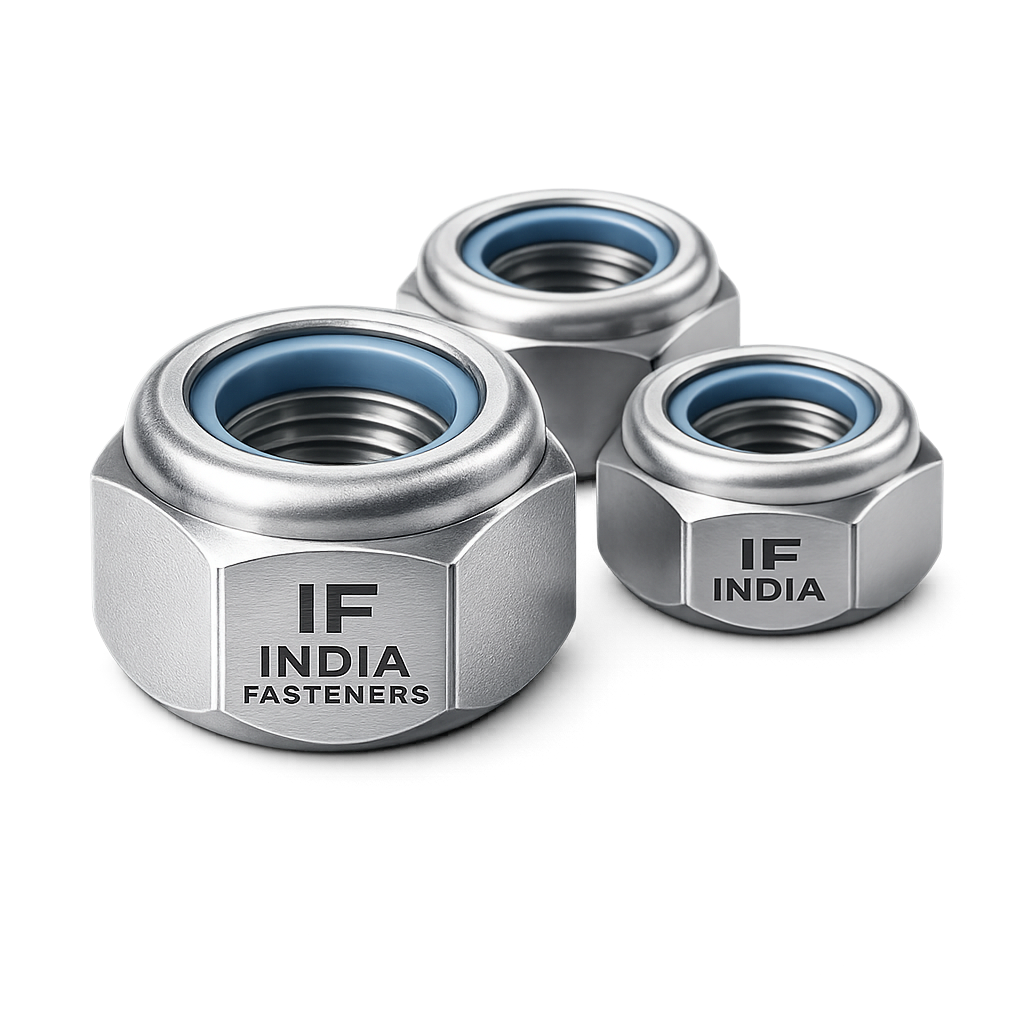
Engineering preference favors integral mechanical locking systems.
14. Surface Coating & Corrosion Protection
GCC environments require coating selection aligned with exposure severity.
14.1 Hot Dip Galvanizing
Characteristics:
- Thick zinc coating
- Long-term atmospheric protection
- Suitable for structural steel
Considerations:
- Thread allowance required
- Re-tapping often necessary
Applications:
- Outdoor steel structures
- Pipe racks
- Desalination facilities
14.2 Zinc Electroplating
Advantages:
- Uniform coating thickness
- Good appearance
- Controlled dimensional impact
Limitations:
- Hydrogen embrittlement risk
- Limited high temperature capability
Used in indoor industrial environments.
14.3 Mechanical Galvanizing
Process:
- Mechanical bonding of zinc particles
Benefits:
- Reduced hydrogen risk
- Uniform coverage
Suitable for structural bolting.
14.4 PTFE Coating
Properties:
- Reduced friction
- Chemical resistance
- Anti-galling behavior
Applications:
- Stainless steel assemblies
- Chemical plants
- Offshore equipment
14.5 Dacromet / Geomet Systems
Non-electrolytic zinc-aluminum coatings.
Advantages:
- High corrosion resistance
- No hydrogen embrittlement
- Thin coating suitable for threads
Commonly specified in GCC offshore and marine environments.
14.6 Phosphate Coating
Used primarily as:
- Lubrication base
- Temporary corrosion protection
Often combined with oil or wax treatments.
Coating Selection vs Environment
| Environment | Recommended Coating |
|---|---|
| Offshore marine | Geomet / Stainless |
| Desert refinery | Zinc flake systems |
| Structural outdoor | Hot dip galvanizing |
| High temperature | Phosphate / uncoated alloy |
| Chemical exposure | PTFE or Stainless |
15. Inspection & Quality Assurance
GCC projects require inspection systems aligned with third-party verification procedures.
15.1 Thread Gauging
Inspection tools:
- GO gauge — verifies minimum fit
- NO-GO gauge — prevents oversize threads
Functional assembly testing often required.
15.2 Prevailing Torque Testing
Performed using calibrated torque equipment.
Verification includes:
- Initial torque measurement
- Multiple cycle testing
- Acceptance against ISO 2320 limits
15.3 Hardness Testing
Methods:
- Rockwell testing
- Batch sampling
Confirms heat treatment effectiveness.
15.4 Dimensional Inspection
Measured parameters:
- Across flats
- Nut height
- Thread pitch
- Bearing surface
Ensures compatibility with EPC bolting systems.
15.5 Coating Thickness Verification
Measured using:
- Magnetic thickness gauges
- Micrometer verification
- Coating certification records
15.6 Positive Material Identification (PMI)
Applied when required for:
- Alloy steels
- Stainless steels
- Sour service applications
Confirms chemical composition compliance.
15.7 Lot Traceability Control
Each shipment linked to:
- Raw material heat number
- Manufacturing batch
- Inspection records
- Test reports
Traceability remains auditable through project lifecycle.
15.8 EN 10204 Certification
Typical documentation supplied:
- 3.1 Certificate — Manufacturer verified testing
- 3.2 Certificate — Third-party witness verification
Mandatory for many GCC EPC contracts.
Inspection Readiness Philosophy
Consultant expectations include:
- Measurable performance verification
- Repeatable manufacturing control
- Documented compliance evidence
- Audit-ready production system
Distorted thread nuts supplied for GCC projects must demonstrate compliance through documented engineering discipline rather than declaration.
16. Industrial Applications Across GCC Projects
Distorted thread nuts are selected in GCC engineering projects where loss of bolt preload represents mechanical risk, operational downtime exposure, or safety concern. Application selection follows mechanical integrity philosophy rather than general fastening practice.
16.1 Oil & Gas Processing Plants
Hydrocarbon facilities contain large quantities of rotating and pressurized equipment generating continuous vibration spectra.
Typical applications include:
- Pump skid assemblies
- Compressor mounting frames
- Pipe support brackets
- Equipment platforms
- Structural walkways
Engineering Rationale:
- Continuous vibration promotes transverse joint movement.
- Standard nuts rely solely on clamp load friction.
- Distorted thread nuts introduce rotational resistance independent of preload.
This provides locking performance even during temporary preload reduction events.
16.2 Rotating Equipment Assemblies
Rotating machinery represents the primary source of fastener loosening in refinery environments.
Equipment Examples:
- Centrifugal pumps
- Gas compressors
- Cooling tower fans
- Blower systems
- Turbine auxiliary components
Mechanical Challenges:
- Cyclic dynamic loading
- High-frequency vibration
- Resonance amplification
Distorted thread nuts prevent progressive back-off caused by micro-rotation.
16.3 Pipeline Support Structures
Pipeline systems across GCC facilities experience:
- Thermal expansion movement
- Wind-induced oscillation
- Fluid pulsation forces
Support structures must maintain integrity without frequent retightening.
Locking Requirement:
Maintain clamp force during expansion and contraction cycles without reliance on maintenance intervention.
16.4 Pressure Vessel Installations
While flange bolting often uses heavy hex nuts without distortion, auxiliary structures surrounding pressure equipment require locking fasteners.
Applications:
- Insulation supports
- Access ladders
- Instrument mounting brackets
- Structural reinforcement assemblies
Mechanical Objective:
Prevent loosening where inspection access may be restricted.
16.5 Structural Steel Connections
Large industrial structures experience:
- Temperature gradients exceeding 50°C daily variation
- Wind excitation
- Operational vibration transmission
Distorted thread nuts provide stability in secondary structural bolting where preload verification is difficult after commissioning.
16.6 Wind & Vibration Exposed Equipment
Common GCC installations exposed to environmental excitation:
- Flare structures
- Elevated pipe racks
- Cable tray systems
- Lighting towers
Self-locking mechanical fasteners reduce long-term maintenance dependency.
16.7 Power Generation Turbine Facilities
Gas and steam turbine installations produce:
- Rotational imbalance forces
- Thermal cycling during load variation
- Continuous vibration transmission through foundations
Distorted thread nuts are used in:
- Auxiliary frames
- Exhaust duct supports
- Control equipment mounting
All-metal construction eliminates polymer degradation risk.
16.8 Desalination Facilities
Desalination environments combine vibration with aggressive corrosion exposure.
Typical installations:
- High-capacity pumps
- Intake structures
- Motor supports
- Structural platforms
Locking fasteners must operate reliably under saline humidity without chemical locking systems.
17. Installation Engineering Guidance
Proper installation practices directly influence locking performance and joint reliability.
17.1 Recommended Bolt Grade Pairing
Nut strength must equal or exceed bolt strength classification.
Typical pairings:
| Nut Grade | Bolt Grade |
|---|---|
| ASTM A194 2H | ASTM A193 B7 |
| ASTM A563 DH | ASTM A325 |
| Stainless A194 8 | Stainless bolts |
| Alloy Steel Grade 7 | High temperature bolts |
Mismatch may cause thread stripping or preload loss.
17.2 Torque Tightening Procedure
Recommended sequence:
- Inspect threads for damage or contamination
- Confirm coating/lubrication condition
- Hand start nut engagement
- Apply torque using calibrated tool
- Account for prevailing torque during tightening
- Achieve specified installation torque
Prevailing torque must not be mistaken for seating torque.
17.3 Lubrication Considerations
Lubrication affects preload accuracy.
Engineering Controls:
- Use specified lubricant only
- Avoid uncontrolled field lubrication
- Maintain consistent friction conditions
Lubrication reduces scatter in clamp load values.
17.4 Installation Sequence for Multi-Bolt Joints
Recommended approach:
- Snug tightening pattern
- Cross-pattern torque application
- Incremental torque increase
- Final verification pass
Uniform preload distribution improves joint performance.
17.5 Reuse Limitations
Distorted thread nuts are reusable within defined limits.
General practice:
- Reuse allowed after inspection
- Replace if prevailing torque falls below minimum requirement
- Replace if galling or thread damage observed
Reuse limits typically verified by torque testing.
17.6 Field Inspection Checklist
Inspection personnel typically verify:
- Correct material grade marking
- Coating condition
- Full thread engagement
- No visible deformation damage
- Prevailing torque presence during removal
Inspection visibility supports maintenance planning.
17.7 EPC Installation Discipline
GCC EPC specifications emphasize:
- Documented torque procedures
- Calibrated tools
- Installation traceability
- Supervisor verification records
Fastener reliability is considered part of mechanical integrity management.
18. Export & GCC Supply Capability
Industrial fasteners supplied to GCC projects must meet export and documentation expectations aligned with EPC logistics systems.
18.1 Export Regions Supported
Supply capability structured for:
- Saudi Arabia
- United Arab Emirates (Dubai / Abu Dhabi)
- Qatar
- Oman
- Kuwait
- Bahrain
Export execution aligns with project procurement timelines.
18.2 Export Packaging Standards
Packaging designed to preserve traceability and coating integrity.
Typical controls:
- Moisture-resistant packaging
- Batch segregation
- Corrosion inhibitor inclusion where required
- Weight-controlled cartons or pallets
Packaging must prevent thread damage during transport.
18.3 Moisture Protection
GCC shipping routes introduce humidity exposure during transit.
Protection measures:
- Vapor corrosion inhibitor (VCI) packaging
- Sealed pallet wrapping
- Desiccant inclusion for marine shipment
18.4 Project Documentation Pack
Typical shipment documentation includes:
- Material Test Certificates
- Heat number traceability records
- Dimensional inspection reports
- Prevailing torque test reports
- Coating certification
- Packing list with batch identification
Documentation must align with EPC material control systems.
18.5 Mill Test Certificates
Certificates reference:
- Chemical composition
- Mechanical properties
- Heat treatment condition
- Standard compliance
Issued per EN 10204 requirements.
18.6 Inspection Release Notes
Where required:
- Pre-shipment inspection
- Third-party witness approval
- Release authorization documentation
Inspection release often required prior to shipment dispatch.
18.7 Traceability Documentation
Traceability maintained from:
Raw material → Manufacturing lot → Inspection records → Export shipment.
Consultants may audit traceability years after installation.
18.8 Container Loading Discipline
Engineering logistics considerations:
- Mixed material segregation
- Grade identification labeling
- Protection against mechanical impact
- Load stability during marine transport
Container loading becomes part of quality assurance responsibility.
19. Procurement & Consultant Evaluation Perspective
Distorted thread nut suppliers are evaluated through technical audit rather than commercial presentation.
19.1 Material Compliance Verification
Consultants confirm:
- Material grade conformity
- Mechanical property compliance
- Standard certification validity
Material substitution is typically prohibited without approval.
19.2 Prevailing Torque Validation
Evaluation includes:
- ISO 2320 testing evidence
- Repeatability of results
- Manufacturing consistency
Locking function must be demonstrable through data.
19.3 Traceability Assessment
Auditors verify:
- Heat number linkage
- Production batch control
- Documentation continuity
Traceability is essential for long-term asset integrity management.
19.4 Standard Conformity Review
Consultants review alignment with:
- ASTM standards
- ISO functional requirements
- ASME dimensional compatibility
Non-standard designs require engineering justification.
19.5 Inspection Readiness
Supplier capability evaluated through:
- Inspection procedures
- Calibration records
- Quality management discipline
- Document control systems
Inspection readiness indicates manufacturing maturity.
19.6 Manufacturing Repeatability
Critical evaluation factor:
Ability to produce consistent prevailing torque performance across production batches.
Repeatability demonstrates controlled distortion forming processes.
19.7 Technical Audit Outcome Expectation
A technically acceptable supplier demonstrates:
- Understanding of vibration-induced loosening mechanisms
- Metallurgical control discipline
- Verified locking performance
- Traceable manufacturing system
- Inspection transparency
20. Custom Engineering Capability
GCC projects frequently require non-standard fastening solutions aligned with project-specific engineering requirements.
20.1 Non-Standard Thread Sizes
Capability may include:
- Special metric pitches
- UNC/UNF variants
- Oversize threads
- Project-specific tolerances
Used in equipment imported from multiple global standards.
20.2 Heavy Hex Configurations
Required for:
- High load bolting
- Pressure equipment supports
- Structural assemblies requiring increased bearing area
Geometry adjusted without compromising locking function.
20.3 High Temperature Applications
Custom solutions developed for:
- Furnace structures
- Turbine zones
- Exhaust systems
Material and heat treatment selection ensures distortion stability under thermal exposure.
20.4 Special Coatings for Offshore Service
Engineering options include:
- Zinc flake coating systems
- Marine-grade stainless materials
- Low-friction coatings preventing galling
Coating selection driven by corrosion classification.
20.5 NACE Compliant Supply
Where sour service exists:
- Hardness control verified
- Material chemistry controlled
- Documentation aligned with NACE requirements
Critical for upstream oil & gas installations.
20.6 Project Stamping & Identification
Custom marking may include:
- Project identification codes
- Material grade marking
- Heat traceability reference
Supports site material verification.
20.7 Custom Prevailing Torque Ranges
Engineering adjustment of distortion geometry enables:
- Higher locking resistance for vibration-critical assemblies
- Controlled torque ranges for automated installation systems
Customization performed within ISO 2320 functional limits.
Final Engineering Position
Distorted thread nuts represent a mechanically integrated locking solution aligned with GCC mechanical integrity philosophy.
When manufactured under controlled metallurgical discipline, verified through ISO prevailing torque testing, and supported by traceable documentation systems, the fastening solution satisfies EPC evaluation criteria for:
- Vibration resistance
- Thermal stability
- Inspection transparency
- Long-term operational reliability
A supplier demonstrating the above characteristics presents a fastening system suitable for technical review within Saudi Aramco, ADNOC, QatarEnergy, and regional EPC contractor procurement processes.