
Tap End Stud Bolts
1. Role of Stud Bolting in GCC Indus
Industrial bolting systems are fundamental mechanical elements used to maintain structural integrity in pressure-containing equipment. Within oil and gas infrastructure across the Gulf Cooperation Council (GCC), bolting systems are used to secure flange joints, equipment housings, rotating machinery casings, and pressure vessel covers.
In hydrocarbon processing facilities, bolted joints must withstand:
- Internal pressure loads
- External mechanical loads
- Thermal expansion stresses
- Vibration cycles
- Corrosive process environments
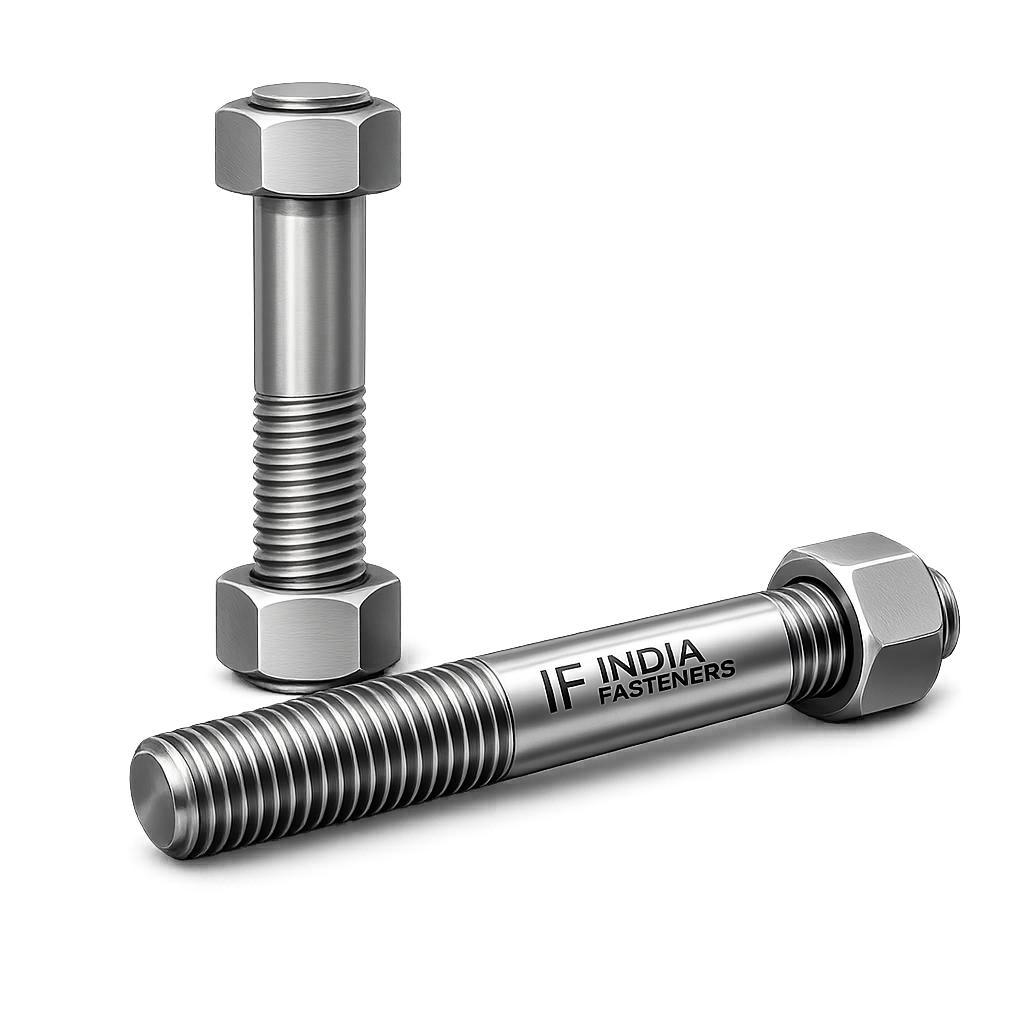
Tap end stud bolts are commonly used in equipment assemblies where one end of the stud is threaded directly into a tapped hole in a pressure boundary component, while the opposite end receives a nut for controlled tightening.
This configuration is widely used in critical mechanical assemblies across multiple sectors.
Oil & Gas Transmission Pipelines
Pipeline compressor stations and valve manifolds rely on high-strength bolting systems to secure:
- Valve bonnet assemblies
- Compressor casing covers
- Pipeline flange connections
- Instrumentation ports
Tap end stud bolts are frequently used where equipment bodies contain threaded holes designed to accept studs permanently or semi-permanently.
The stud configuration allows repeated removal of external nuts during maintenance without damaging the internal equipment threads.
Refinery Process Units
Petroleum refineries include multiple process units operating under elevated temperatures and pressures, including:
- Hydrocrackers
- Distillation columns
- Catalytic reformers
- Desulfurization reactors
Equipment used in these units often contains tapped holes in thick pressure boundaries such as:
- Pump casings
- Heat exchanger channel covers
- Valve bodies
- Reactor access covers
Tap end studs allow secure engagement into these tapped components while providing external nut tightening to generate the required clamping force.
Petrochemical Reactors
Petrochemical processing units operate under conditions involving:
- High internal pressure
- Elevated operating temperatures
- Chemical exposure
Equipment assemblies such as:
- Reactor closures
- Catalyst chamber covers
- Polymerization vessel flanges
often rely on stud bolting systems designed to maintain consistent preload under fluctuating thermal conditions.
Tap end stud bolts allow accurate positioning and controlled tightening while protecting the threaded holes in the main equipment body.
LNG Terminals
Liquefied Natural Gas (LNG) facilities operate in extreme temperature environments where equipment can experience temperatures approaching:
- –162°C during LNG processing
Stud bolting systems used in LNG equipment require materials capable of maintaining ductility and impact resistance at cryogenic temperatures.
Low-temperature stud materials such as ASTM A320 grades are frequently used in these installations.
Tap end stud bolts are commonly used in LNG equipment housings where threaded holes exist within structural components.
Offshore Platforms
Offshore production platforms present additional environmental challenges including:
- Continuous vibration from rotating machinery
- Saltwater corrosion
- Wind and wave-induced structural movement
Equipment housings and valve bodies on offshore facilities frequently incorporate tapped holes designed to accept stud bolts. Tap end studs provide stable engagement into these components while allowing rapid removal of external nuts during maintenance operations.
Desalination Plants
Thermal desalination and reverse osmosis plants use bolted joints in equipment such as:
- High-pressure pumps
- Heat exchanger channel covers
- Brine circulation equipment
- Seawater intake systems
The presence of chloride-rich seawater environments increases corrosion risk in bolting systems. Stainless steel and corrosion-resistant alloy studs are often used in these applications.
Tap end studs help prevent repeated wear of internal equipment threads during maintenance operations.
Steam Turbine Systems
Power generation plants use large steam turbines operating under high temperature and pressure conditions.
Bolting systems secure:
- Turbine casing sections
- Bearing housings
- Valve assemblies
- Steam chest covers
These components frequently use threaded holes designed to accept stud bolts.
Tap end stud bolts allow controlled tightening and easier equipment servicing compared to conventional bolt assemblies.
Power Generation Boilers
Industrial boilers and steam generation systems contain multiple pressure boundaries requiring reliable bolting solutions.
Bolted joints are used in:
- Boiler drum access covers
- Steam header connections
- Inspection openings
- Safety valve mountings
Tap end stud bolts allow permanent installation of the stud into the pressure component while allowing repeated removal of external nuts during maintenance cycles.
Flange Joint Integrity in Hydrocarbon Service
Flanged joints are among the most critical mechanical connections within hydrocarbon processing plants.
Joint integrity depends on:
- Proper bolt preload
- Gasket compression
- Uniform load distribution
- Resistance to relaxation or vibration
Loss of preload can result in:
- Hydrocarbon leakage
- Fire hazards
- Environmental incidents
- Equipment shutdowns
Industrial bolting systems are therefore engineered to maintain stable clamping force under operational loads.
Load Transfer Between Flange Faces
In a bolted flange joint, bolts or studs apply clamping force that compresses the gasket between the two flange faces.
The bolt preload must exceed:
- Internal pressure separating force
- Thermal expansion forces
- External piping loads
Tap end stud bolts provide the required tensile loading while engaging securely into equipment bodies.
The threaded engagement inside the equipment transfers load through the internal threads of the tapped hole.
Vibration and Pressure Cycling in Refinery Environments
Mechanical equipment used in refining and petrochemical plants is subject to continuous vibration and pressure fluctuation.
Examples include:
- Reciprocating compressors
- Centrifugal pumps
- Turbine systems
- Pipeline compressors
These dynamic loads can cause bolt relaxation or loosening if bolting systems are improperly designed.
Tap end stud bolts maintain stable engagement in the equipment body while allowing controlled torque application to the external nut.
Thermal Expansion in Desert Operating Climates
Industrial plants across the Middle East operate in environments where ambient temperatures can exceed:
- 50°C during summer months
Equipment exposed to direct sunlight may experience additional thermal expansion.
Temperature fluctuations can cause differential expansion between:
- Bolts
- Flanges
- Equipment housings
Material selection and bolt preload must account for these conditions.
Corrosion Risks in Coastal Gulf Installations
Many GCC industrial facilities are located near coastal areas where exposure to marine atmosphere is common.
Corrosion risks include:
- Chloride-induced corrosion
- Salt spray exposure
- High humidity levels
Bolting systems used in these environments often require:
- Protective coatings
- Corrosion-resistant alloys
- Proper lubrication practices
Tap end stud bolts are often manufactured using alloy steels or stainless materials depending on service conditions.
2. Technical Definition of Tap End Stud Bolt
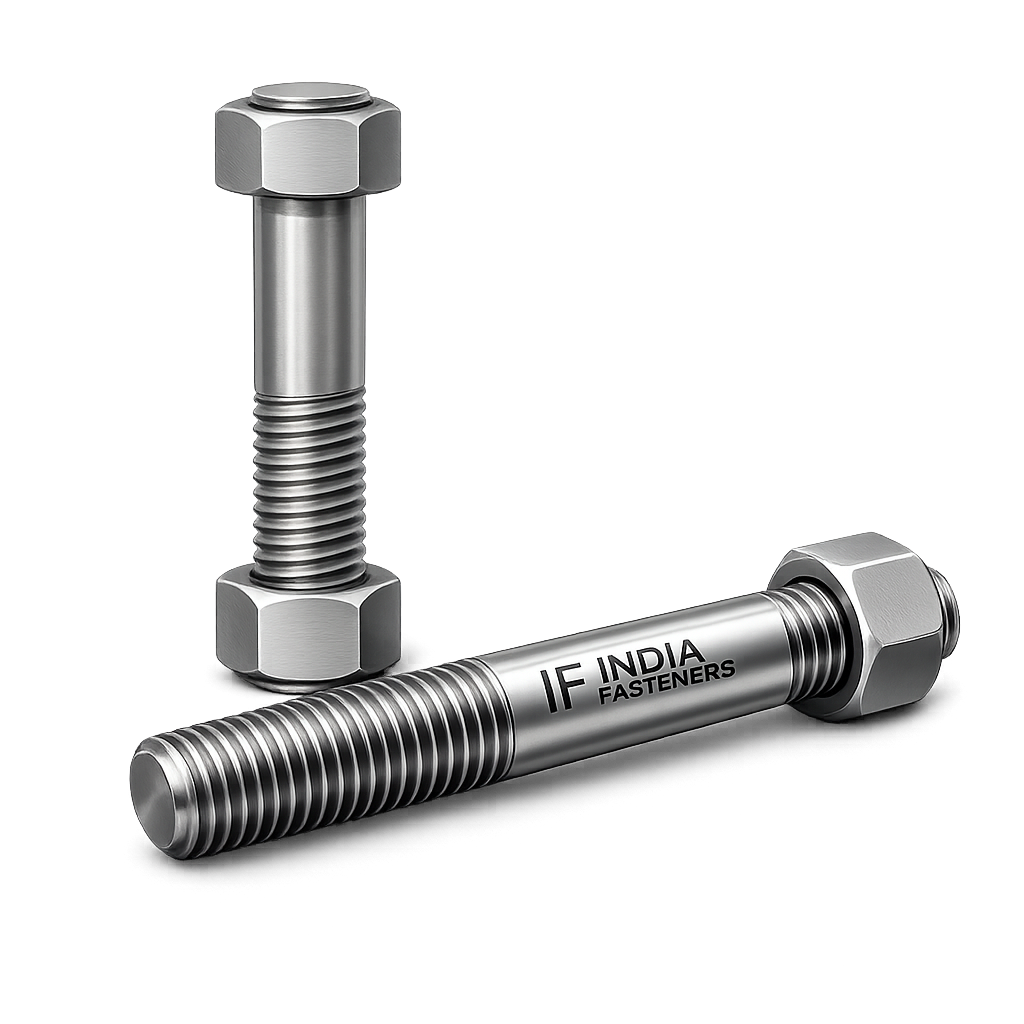
A Tap End Stud Bolt is a double-ended threaded fastener designed with unequal thread lengths.
The stud consists of:
- A short threaded end known as the tap end
- A longer threaded end designed for nut engagement
The tap end is threaded into a pre-machined tapped hole in a pressure component or equipment body. The opposite end protrudes through the mating component and receives a nut to generate the required clamping force.
Tap End Configuration
The tap end thread is shorter and designed specifically to match the thread depth of the tapped hole.
Typical tap end engagement is designed to achieve sufficient thread shear area to resist bolt tensile loading.
Nut End Configuration
The nut end of the stud contains a longer thread length to allow:
- Nut engagement
- Washer placement where required
- Controlled tightening
This threaded section enables torque application to generate bolt preload.
Unthreaded Shank Section
Certain tap end stud configurations include a short unthreaded section between the two threaded portions.
This shank area can improve fatigue performance by preventing stress concentration at the thread roots.
Advantages of Tap End Stud Bolts
Tap end studs provide several operational advantages in equipment assemblies.
Controlled Thread Engagement
The short tap end ensures the stud engages the equipment threads without excessive penetration that could interfere with internal components.
Protection of Equipment Threads
Repeated tightening and loosening of bolts can damage tapped holes in equipment bodies.
Tap end studs remain installed in the equipment while only the external nut is removed during maintenance.
Reduced Thread Galling
Stud-and-nut assemblies allow torque to be applied to the nut rather than the stud itself, reducing friction and galling on equipment threads.
Uniform Clamping Force
Studs provide more consistent load distribution compared with bolts inserted directly through equipment components.
Easier Maintenance
Maintenance teams can remove nuts and disassemble equipment without disturbing the stud embedded in the equipment body.
3. Tap End Stud Bolt vs Fully Threaded Stud Bolts
Different stud bolt configurations are used depending on the type of mechanical joint being assembled.
Understanding these differences is important for correct engineering selection.
Tap End Stud Bolts
Tap end studs are designed for use in assemblies where one component contains a threaded hole.
Characteristics:
- Unequal thread lengths
- One end threaded into equipment body
- One end used for nut tightening
Typical applications include:
- Pump casings
- Valve bodies
- Compressor housings
- Turbine casings
Fully Threaded Stud Bolts
Fully threaded studs have threads across the entire length of the fastener.
These studs are used in flange joints where both sides receive nuts.
Common applications include:
- Pipe flange connections
- Heat exchanger flange joints
- Pressure vessel flanges
Double End Stud Bolts
Double end studs have equal thread lengths on both ends with a short unthreaded section in the center.
These studs are often used in machinery assemblies where symmetrical engagement is required.
Stud Bolts with Nuts on Both Sides
In pipeline flange assemblies, studs typically pass completely through both flanges and receive nuts on both ends.
This configuration is common in:
- ASME B16.5 flange connections
- Pressure vessel nozzle flanges
- Heat exchanger channel flanges
Tap end studs are not typically used in these through-bolted connections.
Applications in Industrial Equipment
Tap end stud bolts are commonly used in mechanical equipment where threaded holes are machined directly into the equipment housing.
Examples include:
Pump Casings
Process pumps frequently use stud bolts to secure casing covers and inspection plates.
Valve Bodies
Valve bonnet assemblies often rely on tap end studs threaded into the valve body.
Compressor Housings
Large compressors use stud bolting systems to secure casing halves.
Turbine Casings
Steam turbine housings use heavy-duty stud bolts to maintain casing alignment under high temperature conditions.
Pressure Vessel Covers
Access covers and manways may use tap end studs threaded into the vessel body.
Engineering Considerations
Correct stud selection requires analysis of several mechanical factors.
Thread Engagement Length
Thread engagement must provide adequate shear area to resist tensile loads applied to the stud.
Insufficient engagement can cause thread stripping.
Load Transfer Through Threads
The internal threads in the equipment body transfer tensile loads generated by bolt preload.
Material compatibility between stud and equipment threads must be considered.
Bolt Stretch Behavior
Bolts function as elastic springs.
During tightening, the bolt stretches slightly while generating clamping force across the joint.
Proper stud length is required to achieve sufficient elastic stretch.
Risk of Thread Stripping
Thread stripping occurs when the shear strength of the internal threads is exceeded.
Proper thread engagement length and material hardness control are necessary to prevent this failure mode
Material Engineering, Standards & Manufacturing Discipline for Tap End Stud Bolts
Industrial stud bolting used in pressure equipment must meet strict metallurgical, mechanical, and dimensional requirements defined by internationally recognized standards. For tap end stud bolts used in refinery equipment, petrochemical units, and power generation systems, compliance with ASTM material specifications and ASME pressure equipment codes is mandatory.
Material selection, heat treatment discipline, and manufacturing control determine the long-term reliability of stud bolting systems operating under elevated pressure, cyclic loading, and temperature fluctuations.
4. Applicable Bolting Standards
Tap end stud bolts used in industrial pressure equipment are manufactured according to ASTM material specifications and assembled in accordance with ASME pressure equipment codes.
These standards define mechanical properties, chemical composition limits, heat treatment procedures, and inspection requirements.
ASTM A193 – Alloy Steel Bolting for High Temperature or High Pressure Service
ASTM A193 is the primary material specification governing alloy steel bolting used in:
- Pressure vessels
- Flanged piping systems
- High temperature process equipment
- Heat exchangers
- Turbines and compressors
The specification covers alloy and stainless steel bolting materials designed for high strength and elevated temperature performance.
Common grades used for tap end stud bolts include:
ASTM A193 B7
Chromium-molybdenum alloy steel used in refinery piping and pressure vessel applications.
Typical applications include:
- Flange joints in hydrocarbon service
- Heat exchanger channel covers
- Pump casing bolting
- Valve bonnet assemblies
B7 studs are widely used due to their balance of strength, availability, and cost efficiency.
ASTM A193 B16
A higher temperature chromium-molybdenum-vanadium alloy steel used in elevated temperature service.
B16 studs are typically specified for:
- Steam turbines
- Power plant equipment
- High temperature refinery reactors
The material provides improved creep resistance and high temperature strength compared to B7.
ASTM A320 – Alloy Steel Bolting for Low Temperature Service
ASTM A320 specifies alloy steel bolting designed for low temperature operation where impact toughness must be maintained.
This specification is frequently used in:
- LNG processing facilities
- Cryogenic piping systems
- Refrigerated hydrocarbon storage equipment
Common grades include:
ASTM A320 L7
A low temperature alloy steel with controlled heat treatment to maintain impact toughness at sub-zero temperatures.
Typical uses include:
- LNG plant piping equipment
- Cryogenic valve assemblies
- Low temperature pump housings
ASTM A320 L43
A nickel-chromium-molybdenum alloy steel used where enhanced low temperature performance is required.
This grade is used in critical cryogenic equipment and specialized LNG service.
ASTM A193 Stainless Steel Grades
For corrosion resistant applications, stainless steel studs may be used.
Common grades include:
ASTM A193 B8
Equivalent to AISI 304 stainless steel.
Used in:
- Chemical processing equipment
- Desalination plant components
- Marine environments
ASTM A193 B8M
Equivalent to AISI 316 stainless steel.
Provides improved resistance to chloride corrosion and is frequently used in:
- Offshore installations
- Seawater service equipment
- Desalination plants
ASTM A194 – Nut Pairing Standards
Stud bolts are assembled with nuts manufactured according to ASTM A194.
Common nut grades include:
| Stud Grade | Typical Nut Pairing |
|---|---|
| ASTM A193 B7 | ASTM A194 2H |
| ASTM A193 B16 | ASTM A194 4 |
| ASTM A320 L7 | ASTM A194 7 |
| Stainless Steel B8 | ASTM A194 8 |
Correct nut pairing ensures mechanical compatibility between the stud and nut.
ASME B16.5 Flange Bolting Requirements
ASME B16.5 defines flange dimensions, pressure classes, and bolting requirements for pipe flanges used in industrial piping systems.
Tap end studs may be used in equipment connections that interface with ASME B16.5 flanges.
The standard defines:
- Bolt circle diameter
- Bolt hole spacing
- Bolt diameter selection
- Number of bolts required for each flange size
These parameters determine stud diameter and length requirements.
ASME PCC-1 – Bolted Flange Joint Assembly
ASME PCC-1 provides guidance on the correct assembly of bolted flange joints.
The standard addresses:
- Bolt lubrication
- Torque tightening procedures
- Bolt stress calculations
- Joint leak prevention practices
Maintenance engineers across GCC refineries follow PCC-1 guidelines during flange assembly operations.
ASME B31.3 – Process Piping Code
ASME B31.3 governs piping systems used in chemical plants, refineries, and petrochemical facilities.
The code defines design considerations for:
- Pressure containment
- Bolting materials
- Flange joint design
- Thermal expansion effects
Bolting materials specified under ASTM A193 and ASTM A320 are commonly referenced within B31.3 piping systems.
ISO Metric Thread Compatibility
Tap end stud bolts may be produced using either:
- Unified National threads (UNC / UNF)
- Metric ISO threads
Metric threading is commonly used in equipment manufactured according to European standards.
Thread compatibility must match the tapped hole specification in the equipment housing.
Temperature Limits for Common Stud Materials
Material selection must consider maximum service temperature limits.
Typical temperature ranges include:
| Material | Approximate Temperature Limit |
|---|---|
| ASTM A193 B7 | up to 425°C |
| ASTM A193 B16 | up to 520°C |
| ASTM A320 L7 | down to –101°C |
| Stainless Steel B8 | up to 540°C |
| Stainless Steel B8M | up to 540°C |
Actual allowable stresses depend on ASME code calculations.
Hydrogen Service Restrictions
Hydrogen service environments introduce risk of hydrogen embrittlement.
Bolting materials exposed to hydrogen environments must comply with hardness limits and metallurgical requirements designed to prevent hydrogen-induced cracking.
Certain high-strength materials may require special evaluation before use in hydrogen service.
Sour Gas Considerations
Facilities processing sour hydrocarbons containing hydrogen sulfide must comply with hardness limits defined by NACE standards.
Excessive hardness increases susceptibility to sulfide stress cracking.
Typical hardness limits for sour service applications are controlled during heat treatment and verified during inspection.
5. Material Comparison Table
The following table provides a comparison of common stud bolt materials used in GCC industrial projects.
| Material Grade | Yield Strength | Tensile Strength | Maximum Service Temperature | Corrosion Resistance | Typical GCC Application |
|---|---|---|---|---|---|
| ASTM A193 B7 | ~720 MPa | ~860 MPa | ~425°C | Moderate | Refinery piping flanges |
| ASTM A193 B16 | ~795 MPa | ~965 MPa | ~520°C | Moderate | Steam turbines |
| ASTM A320 L7 | ~720 MPa | ~860 MPa | Low temperature service | Moderate | LNG plants |
| Stainless Steel 304 | ~215 MPa | ~505 MPa | ~540°C | Good | Chemical processing |
| Stainless Steel 316 | ~205 MPa | ~515 MPa | ~540°C | Excellent | Marine & desalination |
Material selection must consider the operating environment, mechanical loading, and corrosion exposure.
6. Heat Treatment & Metallurgical Control
Heat treatment processes determine the mechanical properties of alloy steel stud bolts.
Controlled thermal processing ensures the required strength, toughness, and hardness levels are achieved.
Quenching and Tempering
Most alloy steel studs such as ASTM A193 B7 are produced through quenching and tempering.
The process involves:
- Heating steel to the austenitizing temperature
- Rapid quenching in oil or water
- Reheating to a controlled tempering temperature
This process produces a tempered martensitic microstructure with high strength and improved toughness.
Normalizing
Certain alloy steels undergo normalizing treatment to refine grain structure.
Normalizing involves heating above the transformation temperature followed by controlled air cooling.
This process produces uniform mechanical properties throughout the material.
Stress Relieving
After machining operations such as thread rolling or cutting, stress relieving may be performed to reduce residual stresses.
Residual stress can influence fatigue life and dimensional stability.
Solution Annealing for Stainless Steel
Stainless steel studs require solution annealing to restore corrosion resistance and ductility.
This process involves:
- Heating stainless steel to approximately 1050°C
- Rapid cooling
Solution annealing dissolves chromium carbides and restores corrosion resistance.
Hardness Control
Hardness limits are specified in ASTM material standards to ensure appropriate mechanical behavior.
Excessive hardness increases susceptibility to brittle fracture and hydrogen embrittlement.
Hardness testing is typically conducted using:
- Rockwell hardness testing
- Brinell hardness testing
Grain Refinement
Fine grain microstructures improve both strength and toughness.
Controlled heat treatment ensures grain size remains within acceptable limits.
Hydrogen Embrittlement Prevention
High-strength bolting materials are susceptible to hydrogen embrittlement if hydrogen atoms diffuse into the steel lattice.
Preventive measures include:
- Controlled heat treatment
- Avoiding excessive electroplating without proper baking
- Monitoring hardness limits
NACE Hardness Control for Sour Service
For sour gas applications containing hydrogen sulfide, hardness limits must comply with NACE guidelines.
Typical maximum hardness limits are controlled to prevent sulfide stress cracking.
7. Manufacturing Process Flow
The manufacturing process for tap end stud bolts involves several controlled stages to ensure dimensional accuracy, material integrity, and traceability.
Raw Material Verification
Manufacturing begins with alloy steel bar stock supplied by certified steel mills.
Each batch is accompanied by a mill test certificate indicating:
- Chemical composition
- Mechanical properties
- Heat number identification
Material verification ensures the correct alloy grade is used.
Heat Number Traceability
Each bar of raw material carries a heat number that links the finished product to the original steel melt.
Traceability allows verification of material properties throughout the manufacturing process.
Cutting from Alloy Steel Bar Stock
Bars are cut to required lengths using automated cutting equipment.
Length tolerance must allow for thread machining and any required shank section.
CNC Thread Rolling or Thread Cutting
Threads may be produced using either:
- Thread rolling
- Thread cutting
Thread rolling is often preferred because it:
- Improves fatigue resistance
- Maintains grain continuity
- Produces smoother thread surfaces
Thread cutting is used when certain thread forms or materials cannot be rolled.
Tap End Thread Length Machining
The short thread section for equipment engagement is machined to precise length requirements.
Thread tolerance must match the tapped hole specification of the equipment.
Nut End Thread Machining
The longer threaded section is machined to allow proper nut engagement and tightening.
Thread pitch must match the nut specification.
Heat Treatment Cycle
After machining, alloy steel studs undergo heat treatment to achieve the required mechanical properties.
Temperature and time are carefully controlled to ensure proper microstructure formation.
Straightness Verification
Stud bolts must remain straight after heat treatment.
Excessive bow or distortion can prevent proper installation.
Straightness is verified using inspection fixtures.
Surface Finishing
Surface finishing may include:
- Black oxide coating
- Phosphate coating
- Oil protection
- Specialized corrosion resistant coatings
Coatings reduce corrosion and improve installation performance.
Final Inspection
Before release, stud bolts undergo comprehensive inspection procedures including:
- Dimensional verification
- Thread gauge inspection
- Hardness testing
- Visual examination
These checks confirm compliance with applicable standards.
Marking and Traceability Stamping
Finished studs are marked with identification information including:
- Material grade
- Manufacturer identification
- Heat number traceability
Marking ensures traceability throughout the supply chain.
Technical Data Tables, Mechanical Calculations & Quality Control for Tap End Stud Bolts
Engineering design and procurement of tap end stud bolts for pressure equipment require reference to dimensional data, mechanical load capacity, torque requirements, and thread engagement calculations. These parameters ensure that bolted joints maintain required clamping forces without exceeding material limits or causing thread failure in equipment housings.
Industrial bolting used in refinery and power plant equipment must therefore be evaluated based on mechanical properties, load capacity, and installation torque values.
8. Tap End Stud Bolt Dimensional Reference Table
Tap end stud bolts are produced in a wide range of diameters and lengths depending on equipment design requirements. The tap end thread length must correspond to the depth of the tapped hole in the equipment body, while the nut end thread must accommodate nut engagement and tightening.
Typical dimensional guidelines used in industrial equipment assemblies are shown below.
| Nominal Diameter | Overall Length (mm) | Tap End Thread Length (mm) | Nut End Thread Length (mm) | Thread Pitch | Recommended Engagement Depth |
|---|---|---|---|---|---|
| M12 / 1⁄2 in | 60 – 120 | 15 – 18 | 25 – 35 | 1.75 / 13 UNC | 1.0 – 1.25 × diameter |
| M16 / 5⁄8 in | 70 – 140 | 18 – 22 | 30 – 40 | 2.0 / 11 UNC | 1.0 – 1.25 × diameter |
| M20 / 3⁄4 in | 80 – 180 | 20 – 25 | 35 – 45 | 2.5 / 10 UNC | 1.0 – 1.25 × diameter |
| M24 / 7⁄8 in | 100 – 220 | 24 – 30 | 40 – 55 | 3.0 / 9 UNC | 1.0 – 1.5 × diameter |
| M30 / 1 in | 120 – 260 | 30 – 35 | 50 – 65 | 3.5 / 8 UNC | 1.0 – 1.5 × diameter |
| M36 / 1-1⁄4 in | 140 – 320 | 35 – 40 | 60 – 75 | 4.0 / 7 UNC | 1.25 – 1.5 × diameter |
Actual dimensions may vary based on equipment manufacturer specifications and flange thickness.
9. Load Capacity & Tensile Strength Table
Bolt selection in pressure equipment must ensure that the stud bolt can withstand tensile forces generated by:
- Flange separation forces
- Internal pressure
- Thermal expansion
- External piping loads
The load capacity of a stud bolt depends on its tensile stress area and material mechanical properties.
Typical tensile loading data for ASTM A193 B7 studs are shown below.
| Bolt Diameter | Proof Load (kN) | Yield Load (kN) | Maximum Tensile Load (kN) | Recommended Working Load (kN) |
|---|---|---|---|---|
| 1⁄2 in | 70 | 85 | 100 | 55 |
| 5⁄8 in | 110 | 135 | 160 | 85 |
| 3⁄4 in | 160 | 195 | 230 | 120 |
| 7⁄8 in | 220 | 265 | 310 | 165 |
| 1 in | 280 | 340 | 400 | 215 |
| 1-1⁄4 in | 440 | 525 | 620 | 330 |
Recommended working load typically corresponds to approximately 60–70% of yield strength to provide safety margin.
Safety Factors in EPC Flange Joint Design
Engineering design of flange joints normally incorporates safety factors to prevent bolt failure.
Design considerations include:
- Bolt preload exceeding internal pressure forces
- Bolt stress remaining below yield limit
- Allowance for relaxation or creep
Typical preload target values used in flange assembly range between:
60% to 75% of bolt yield strength
This preload ensures that the gasket remains compressed under operating conditions.
10. Bolt Torque Chart
Proper torque application is necessary to generate the required bolt preload. Torque values depend on several factors including bolt diameter, material strength, lubrication condition, and friction coefficient.
The following torque values provide general guidance for ASTM A193 B7 and ASTM A320 L7 stud bolts.
Torque Values for Alloy Steel Stud Bolts
| Bolt Size | Dry Torque (Nm) | Lubricated Torque (Nm) |
|---|---|---|
| 1⁄2 in | 90 | 70 |
| 5⁄8 in | 180 | 140 |
| 3⁄4 in | 310 | 240 |
| 7⁄8 in | 500 | 380 |
| 1 in | 760 | 570 |
| 1-1⁄4 in | 1,320 | 980 |
| 1-1⁄2 in | 2,150 | 1,600 |
Lubricated torque values assume the use of anti-seize or molybdenum-based thread lubricants.
Friction Factor Assumptions
Bolt torque calculations depend on the friction coefficient between threads and nut bearing surfaces.
Typical friction factors include:
- Dry steel threads: 0.18 – 0.22
- Lubricated threads: 0.10 – 0.15
Lower friction allows higher preload for the same torque value.
Preload Percentage
Torque values are normally calculated to generate bolt stress equivalent to:
Approximately 70% of the bolt yield strength
This level provides adequate clamping force without exceeding elastic deformation limits.
Gasket Compression Requirements
Bolting systems must provide sufficient compressive force to maintain gasket sealing performance.
Different gasket types require different seating stresses.
Examples include:
- Spiral wound gaskets
- Ring type joint (RTJ) gaskets
- Compressed fiber gaskets
Insufficient bolt preload may result in leakage during pressure operation.
11. Thread Engagement Calculation Guide
Correct thread engagement between the tap end stud and the equipment body is critical for preventing thread stripping or stud pull-out.
The minimum engagement length depends on the shear strength of the internal threads.
Minimum Engagement Depth
For steel components, the recommended thread engagement depth is typically:
1.0 × bolt diameter
For weaker materials such as cast iron or aluminum alloys, the engagement may increase to:
1.5 × bolt diameter
Thread Shear Area
The shear area of the engaged threads determines the load capacity of the threaded connection.
The relationship between thread shear area and load can be expressed as:

Where:
 = thread shear area
 = nominal thread diameter
 = thread engagement length
Increasing the engagement length increases the available shear area and improves resistance to thread stripping.
Prevention of Thread Stripping
Thread stripping may occur if:
- Engagement depth is insufficient
- Equipment material is weaker than the stud material
- Bolt preload exceeds allowable thread shear strength
Engineering controls include:
- Correct tap depth design
- Hardness compatibility between stud and equipment threads
- Proper torque control during installation
Bolt Pull-Out Failure
Bolt pull-out occurs when the internal threads in the equipment fail before the stud itself.
This failure mode is prevented by ensuring that the thread shear strength exceeds the tensile strength of the stud bolt.
12. Mechanical Property Table
Mechanical properties of stud bolt materials determine their ability to resist tensile loading and maintain preload during operation.
Typical mechanical property values are summarized below.
| Material Grade | Yield Strength | Tensile Strength | Elongation | Hardness Limit | Impact Energy |
|---|---|---|---|---|---|
| ASTM A193 B7 | 720 MPa | 860 MPa | 16% | 35 HRC max | Not specified |
| ASTM A193 B16 | 795 MPa | 965 MPa | 14% | 35 HRC max | Not specified |
| ASTM A320 L7 | 720 MPa | 860 MPa | 16% | 34 HRC max | 20–27 J at −101°C |
| SS304 (B8) | 215 MPa | 505 MPa | 30% | 223 HB max | Good toughness |
| SS316 (B8M) | 205 MPa | 515 MPa | 30% | 223 HB max | Good toughness |
Low temperature grades such as L7 are impact tested to confirm toughness under cryogenic service conditions.
13. Corrosion Resistance Comparison
Corrosion exposure is a critical consideration for bolting systems operating in offshore and coastal environments across the Middle East.
The following comparison highlights corrosion resistance characteristics of common stud bolt materials.
| Material | Marine Atmosphere | Refinery Chemicals | Sour Gas Exposure | High Temperature Oxidation |
|---|---|---|---|---|
| Carbon Steel | Poor | Moderate | Limited | Moderate |
| Alloy Steel | Moderate | Moderate | Limited | Good |
| Stainless Steel 304 | Good | Good | Moderate | Good |
| Stainless Steel 316 | Excellent | Excellent | Moderate | Good |
Stainless steels provide improved corrosion resistance but may have lower mechanical strength compared with alloy steels.
Material selection must balance corrosion performance and mechanical requirements.
14. Inspection & Quality Assurance
Industrial bolting supplied for pressure equipment projects must undergo comprehensive inspection procedures to verify material integrity and dimensional compliance.
Inspection requirements are typically defined by project specifications or EPC contractor documentation.
Positive Material Identification (PMI)
PMI testing verifies the chemical composition of the stud bolt material using portable spectrometers.
This confirms that the supplied material matches the specified alloy grade.
Ultrasonic Testing (UT)
UT inspection may be performed on large diameter studs to detect internal defects such as:
- Inclusions
- Voids
- Internal cracks
This testing is usually required for critical pressure equipment applications.
Magnetic Particle Inspection (MPI)
MPI testing is used to detect surface or near-surface cracks in ferromagnetic materials.
The process involves applying magnetic fields and iron particles to reveal surface discontinuities.
Thread Gauge Inspection
Thread dimensions must comply with specified thread standards.
Inspection is conducted using calibrated thread gauges including:
- Go gauges
- No-Go gauges
This ensures proper fit between stud and nut.
Hardness Testing
Hardness testing confirms compliance with ASTM hardness limits.
Hardness values outside specified limits may indicate improper heat treatment.
Dimensional Inspection
Critical dimensions verified during inspection include:
- Overall stud length
- Thread length
- Thread pitch
- Straightness
These parameters ensure compatibility with equipment assemblies.
Third-Party Inspection Readiness
Stud bolts supplied for EPC projects may require inspection by independent agencies.
Common inspection organizations operating in Middle East projects include:
- International certification bodies
- Project consultant inspection teams
- Owner representative inspectors
Manufacturers must maintain inspection facilities and documentation to support these verification procedures.
EN 10204 Certification
Industrial bolting materials supplied to international projects often require certification according to EN 10204.
Two common document types include:
EN 10204 3.1 Certificate
Issued by the manufacturer confirming compliance with material specifications.
EN 10204 3.2 Certificate
Issued jointly by the manufacturer and an independent inspection authority.
These documents confirm material traceability and compliance with project requirements.
GCC Project Applications, Export Supply & Procurement Engineering for Tap End Stud Bolts
Industrial tap end stud bolts are used extensively in pressure equipment and rotating machinery across energy, petrochemical, and infrastructure projects in the Gulf Cooperation Council (GCC) region. Engineering contractors and procurement teams responsible for refinery construction, LNG processing facilities, and power generation plants require stud bolting systems that comply with recognized international standards while maintaining traceable manufacturing and inspection documentation.
Manufacturers supplying tap end stud bolts for EPC projects must therefore demonstrate capability in material control, export logistics, inspection readiness, and installation support documentation.
15. Industries Served (Middle East Focus)
Tap end stud bolts are used in a range of industrial sectors where equipment assemblies rely on threaded housings for bolted joints. These industries require bolting solutions capable of maintaining mechanical integrity under high pressure, elevated temperatures, cyclic loading, and corrosive environments.
Oil & Gas Production Facilities
Upstream oil and gas production facilities contain equipment operating under continuous mechanical loading and pressure conditions. Mechanical assemblies in these installations frequently incorporate tapped holes designed for stud bolting systems.
Typical applications include:
- Wellhead equipment housings
- Separator vessel covers
- Valve bonnet assemblies
- Pump casings
- Compressor housings
Tap end stud bolts are used to secure equipment covers and mechanical components where the equipment body contains pre-machined threaded holes.
In these assemblies, the tap end stud is installed into the equipment housing, while the nut end provides controlled tightening and clamping force.
Petroleum Refineries
Refineries process crude oil through complex thermal and catalytic processes involving high temperatures and internal pressures.
Mechanical assemblies within refinery process units include:
- Heat exchanger channel covers
- Reactor access covers
- Pump casing connections
- Pressure vessel inspection ports
Tap end stud bolts are used in equipment where one component contains tapped holes and the mating component is secured using external nuts.
This configuration protects the equipment threads from repeated wear during maintenance cycles.
Petrochemical Plants
Petrochemical plants operate process equipment used for the production of chemical intermediates such as ethylene, propylene, and polymer materials.
These plants utilize mechanical equipment including:
- Polymerization reactors
- Catalyst chamber assemblies
- High-pressure compressors
- Heat exchanger channel covers
Stud bolting systems must withstand process temperatures, pressure fluctuations, and chemical exposure.
Tap end stud bolts are used in equipment housings where threaded holes are part of the structural design.
LNG Terminals
Liquefied Natural Gas (LNG) processing facilities operate under cryogenic conditions where equipment temperatures can reach approximately −162°C.
Bolting materials used in these environments must maintain:
- Impact toughness
- Ductility at low temperatures
- Resistance to brittle fracture
Tap end studs manufactured from low temperature alloy steel grades such as ASTM A320 L7 are used in cryogenic equipment assemblies.
Applications include:
- LNG pump housings
- Cryogenic valve assemblies
- Cold box equipment enclosures
Power Generation Plants
Thermal power plants, combined cycle gas turbine facilities, and steam power stations rely on stud bolting systems in rotating machinery and pressure equipment.
Applications include:
- Steam turbine casing bolts
- Pump housings
- Boiler inspection covers
- Valve assemblies
Tap end studs are often used in equipment bodies with threaded holes designed for permanent stud installation.
Desalination Plants
Desalination facilities operating in coastal regions process seawater to produce potable water. Mechanical equipment in these plants operates in chloride-rich environments.
Bolting systems are used in:
- High-pressure pumps
- Heat exchanger channel covers
- Seawater intake equipment
- Brine circulation pumps
Stainless steel stud bolts or corrosion-resistant coatings may be required in these environments.
Tap end studs allow equipment covers to be removed during routine maintenance without disturbing the threaded holes in the equipment body.
Pipeline Compressor Stations
Pipeline infrastructure transporting hydrocarbons across long distances includes compressor stations used to maintain gas pressure.
Mechanical equipment used in these stations includes:
- Gas compressors
- Cooling systems
- Control valves
- Pump assemblies
Tap end stud bolts are used in equipment housings where threaded holes allow direct stud installation.
16. Export Supply Capability
Manufacturers supplying stud bolting systems to international projects must maintain organized export procedures and documentation systems.
Industrial tap end stud bolts supplied to the Middle East typically follow export procedures designed to ensure traceability and compliance with project documentation requirements.
Regional Export Markets
Export shipments for industrial stud bolts are commonly supplied to the following regions:
Saudi Arabia
Saudi Arabia operates one of the largest oil and gas infrastructures in the world. Industrial bolting is required for refinery expansions, petrochemical complexes, and pipeline infrastructure.
Projects typically require documentation supporting compliance with ASTM material standards and pressure equipment codes.
United Arab Emirates
The UAE operates large energy and infrastructure projects including:
- Offshore oil production facilities
- LNG processing plants
- Power generation plants
- Desalination facilities
Stud bolting systems are used extensively in rotating machinery and pressure equipment assemblies.
Qatar
Qatar operates LNG production facilities and petrochemical plants requiring stud bolting systems capable of operating under cryogenic and high pressure conditions.
Tap end studs manufactured from alloy steel and low temperature grades are used in various equipment assemblies.
Oman
Industrial development projects in Oman include refinery expansions and petrochemical installations where stud bolting systems are used in pressure equipment.
Kuwait
Refinery modernization and petrochemical plant upgrades require bolting systems compliant with international pressure equipment standards.
Bahrain
Energy infrastructure and refinery projects require industrial stud bolting used in equipment housings and pressure systems.
Export Documentation
Export shipments of tap end stud bolts normally include documentation required by project procurement teams and inspection authorities.
Typical export documentation includes:
Mill Test Certificates
Mill test certificates verify chemical composition and mechanical properties of the material used to manufacture the stud bolts.
These certificates include:
- Heat number identification
- Mechanical test results
- Chemical composition analysis
Inspection Release Notes
Inspection release documentation confirms that the products have passed required inspection procedures before shipment.
Inspection release notes may be issued after review by third-party inspection agencies or project inspectors.
Material Traceability Records
Traceability documentation links finished products to raw material heat numbers.
This traceability allows verification of material origin and manufacturing records.
Packing List Documentation
Packing lists provide shipment details including:
- Quantity of studs
- Material grade
- Size and length specifications
- Package identification numbers
This documentation assists warehouse and project logistics teams during receiving operations.
Container Loading Procedures
Industrial stud bolts are typically packaged in export crates or pallets designed to prevent mechanical damage during transport.
Container loading procedures ensure:
- Protection from moisture exposure
- Prevention of mechanical deformation
- Identification of each shipment package
Proper packaging reduces risk of thread damage during international transport.
17. Installation Engineering & Field Assembly
Correct installation practices are essential to ensure that tap end stud bolts achieve the required clamping force and maintain joint integrity.
Improper installation procedures can lead to bolt relaxation, gasket leakage, or thread damage.
Engineering procedures for stud installation are typically defined by project specifications or assembly guidelines.
Thread Lubrication Practices
Thread lubrication is recommended during installation to reduce friction and prevent thread galling.
Lubrication materials commonly used include:
- Molybdenum disulfide based lubricants
- Anti-seize compounds
- Graphite based lubricants
Proper lubrication allows more accurate torque-to-preload relationship.
Tap End Installation Procedure
The short threaded end of the stud is inserted into the tapped hole in the equipment body.
Installation guidelines include:
- Cleaning of tapped hole threads
- Light lubrication if permitted by specification
- Hand installation of stud to required depth
The stud should be installed without applying excessive torque that could damage internal threads.
Stud Insertion into Equipment Body
The tap end is typically inserted until the stud shoulder or thread stop reaches the equipment surface.
Correct insertion ensures that the stud does not bottom out in the tapped hole.
Bottoming may prevent proper preload generation during nut tightening.
Nut Tightening Procedure
Once the mating component is installed, the nut is threaded onto the exposed stud end.
Tightening is performed using calibrated torque tools.
The tightening process generates tensile loading within the stud which produces compressive force across the joint surfaces.
Cross-Pattern Tightening
For multi-bolt assemblies such as equipment covers or flanged joints, nuts should be tightened using a cross-pattern sequence.
This tightening method distributes clamping force evenly and prevents distortion of mating surfaces.
Torque Wrench Calibration
Torque tools used during assembly must be calibrated to ensure accurate torque application.
Calibration intervals are typically defined by maintenance procedures or project specifications.
Uncalibrated tools may result in under-tightening or over-tightening.
Bolt Preload Verification
Preload verification methods may include:
- Torque measurement
- Bolt elongation measurement
- Hydraulic tensioning
These methods confirm that the desired clamping force has been achieved.
Flange Leak Prevention Practices
Proper bolt installation practices contribute to reliable flange joint sealing.
Leak prevention measures include:
- Correct gasket installation
- Uniform bolt preload
- Proper tightening sequence
- Verification of bolt stress levels
These procedures are widely used in refinery maintenance operations and equipment assembly.
18. Custom Engineering Capabilities
Industrial equipment used in EPC projects often requires stud bolting systems with dimensions or materials outside standard catalog specifications.
Manufacturers supplying tap end stud bolts must therefore provide flexibility in engineering and manufacturing capabilities.
Non-Standard Stud Lengths
Equipment assemblies may require stud bolts with specific lengths determined by:
- Equipment housing thickness
- Gasket dimensions
- Nut engagement requirements
Manufacturers produce custom stud lengths according to project drawings.
Metric and UNC Threads
Tap end stud bolts may be manufactured using different thread systems depending on equipment design.
Common thread systems include:
- Metric ISO threads
- Unified National Coarse (UNC) threads
- Unified National Fine (UNF) threads
Thread specification must match the tapped hole design of the equipment body.
Special Alloy Materials
Certain applications require stud bolts manufactured from specialized alloy steels or corrosion resistant materials.
These may include:
- High temperature alloys
- Nickel-based materials
- Duplex stainless steels
Material selection depends on process conditions and corrosion exposure.
High Temperature Bolting Systems
Equipment operating at elevated temperatures requires stud bolts capable of maintaining mechanical strength and creep resistance.
High temperature applications may include:
- Steam turbines
- Refinery reactors
- High pressure boilers
Alloy steel grades designed for elevated temperature service are typically used.
Low Temperature LNG Bolting
Cryogenic equipment requires stud bolts with controlled impact toughness at low temperatures.
Low temperature alloy steels such as ASTM A320 grades are commonly used in LNG facilities.
These materials undergo impact testing to confirm performance at sub-zero temperatures.
PTFE or Xylan Coated Studs
Certain applications require coated stud bolts to improve corrosion resistance or reduce friction during tightening.
Common coating systems include:
- PTFE coatings
- Xylan fluoropolymer coatings
- Zinc phosphate coatings
These coatings reduce corrosion exposure and improve assembly performance.
Project-Specific Marking
Industrial bolting supplied to EPC projects may require marking systems that identify:
- Material grade
- Manufacturer identification
- Heat number traceability
- Project-specific identification codes
Marking ensures traceability during installation and inspection procedures