
Heavy hex nut
1. Regional Industry Context — Middle East Critical Service Conditions
Bolted joint reliability is a governing factor in operational integrity across Middle East hydrocarbon, power, and water infrastructure. Facilities operating in the Gulf Cooperation Council (GCC) region are exposed simultaneously to:
- High internal pressure systems
- Elevated operating temperatures
- Cyclic thermal expansion
- Marine atmospheric corrosion
- Continuous vibration environments
- Long operational design life expectations exceeding 25–40 years
Under these conditions, the performance of fastening components becomes directly linked to plant safety, availability, and regulatory compliance.
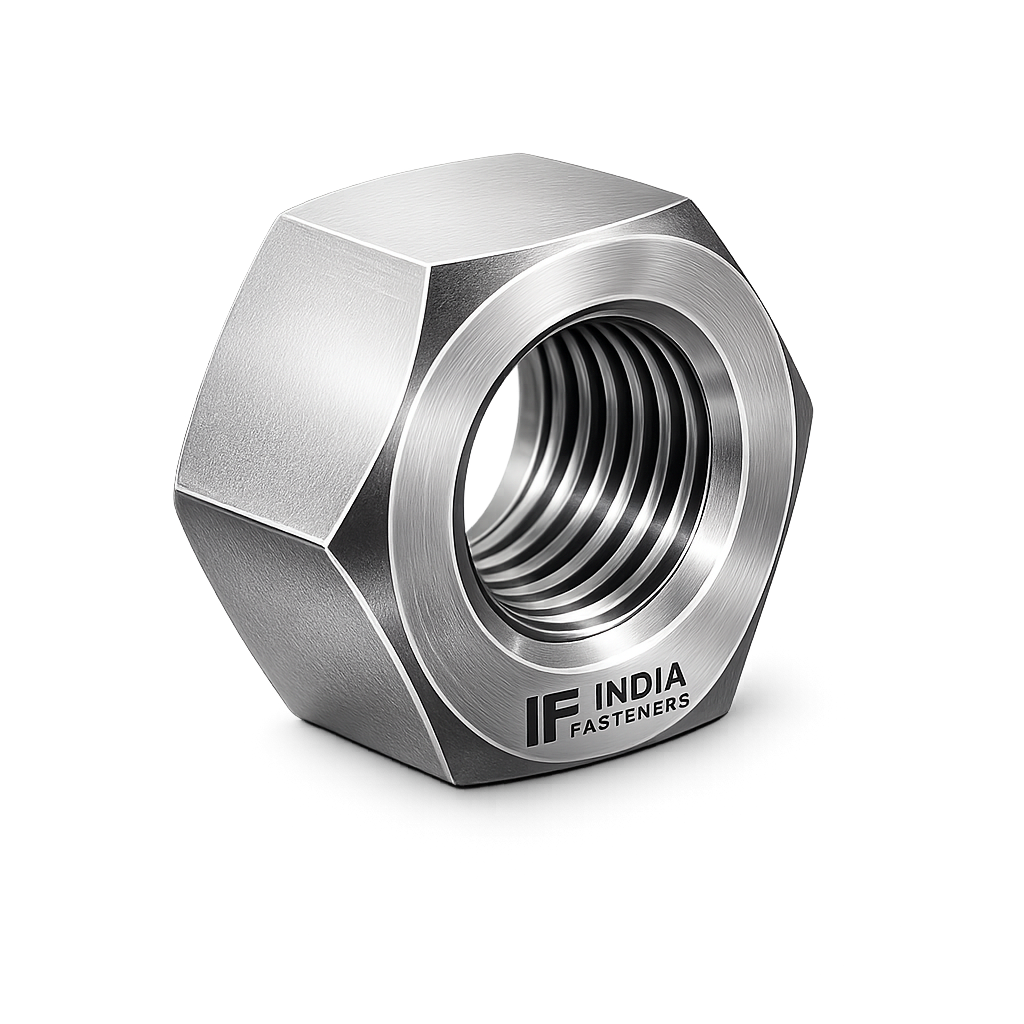
Heavy hex nuts form part of the primary load-bearing fastening assemblies used in pressure-retaining systems throughout GCC industrial installations.
1.1 Major GCC Application Environments
Oil & Gas Upstream Facilities
Production manifolds, wellhead assemblies, choke systems, and gathering pipelines operate under:
- High pressure hydrocarbon service
- Sour gas exposure (H₂S environments)
- Temperature fluctuations between shutdown and operating states
Heavy hex nuts are paired with high-strength stud bolts to maintain flange sealing stress.
Refining Complexes — Jubail, Yanbu, Ruwais Type Installations
Refineries operating in coastal desert environments experience:
- Salt-laden humidity
- Continuous thermal cycling
- Vibration from rotating process equipment
Bolted flange joints in hydrocrackers, distillation towers, and reformers rely on controlled preload retention. Loss of preload directly risks fugitive emissions or hydrocarbon leakage.
LNG Facilities — Qatar Operations
Liquefied natural gas plants introduce additional mechanical challenges:
- Cryogenic temperatures
- Extreme contraction during cooldown
- Thermal shock during startup sequences
Heavy hex nuts manufactured to controlled metallurgical properties ensure compatibility with low-temperature bolting systems.
Offshore Platforms — Arabian Gulf
Offshore installations expose bolted assemblies to:
- Continuous marine spray
- Chloride-induced corrosion
- Dynamic wave-induced vibration
- Restricted maintenance access
Nut geometry and material integrity directly influence long-term joint stability.
Desalination Plants
Reverse osmosis and thermal desalination systems operate with:
- High chloride environments
- Elevated temperatures
- Continuous operation cycles
Heavy hex nuts maintain compression loads across pressure housings and piping systems.
Combined Cycle Power Plants
Gas turbines and heat recovery steam generators impose:
- High vibration loading
- Thermal expansion gradients
- Frequent startup and shutdown cycles
Bolted joint relaxation must remain controlled to prevent leakage at steam and gas flanges.
Pipeline Infrastructure
Transmission pipelines rely on thousands of flange joints where:
- Uniform preload ensures gasket sealing
- Soil movement introduces mechanical stress
- Environmental corrosion remains persistent
Heavy hex nuts support consistent clamp force distribution.
1.2 Why Bolted Joint Integrity Governs Plant Reliability
In pressure equipment, the gasket provides sealing capability, but bolt preload provides sealing energy.
Failure modes typically originate from:
- Insufficient preload
- Uneven load distribution
- Embedment relaxation
- Thermal expansion mismatch
- Corrosion-induced cross-section loss
Heavy hex nuts contribute to joint reliability by providing:
- Increased bearing surface area
- Improved stress distribution
- Higher proof-load capability
- Stable torque transfer during tightening
1.3 GCC Environmental Mechanical Challenges
Desert Thermal Cycling
Typical GCC ambient variation:
- Night temperature: ~10–20°C
- Day temperature: >50°C surface exposure
Differential expansion between flange materials and bolts reduces preload if fastening components are not properly selected.
Vibration & Fatigue Loading
Rotating equipment generates cyclic loading leading to:
- Micro-movement at thread interface
- Loss of clamp force
- Progressive loosening
Heavy hex nut geometry enhances resistance to preload loss.
Coastal Saline Atmosphere
Chloride exposure accelerates:
- Thread corrosion
- Galling risk
- Stress corrosion cracking
Material grade selection becomes mandatory under project specifications.
Preload Retention Requirement
GCC operators emphasize compliance with bolted joint practices aligned with recognized flange assem
- Gasket seating stress
- Leak prevention
- Operational safety
2. Technical Definition of Heavy Hex Nut
A heavy hex nut is a high-strength internally threaded fastening component designed for structural and pressure-retaining bolted joints requiring elevated preload capacity.
2.1 Functional Definition
Heavy hex nuts are characterized by:
- Larger width across flats compared to standard hex nuts
- Increased bearing surface area
- Greater resistance to deformation under high preload
- Compatibility with high-strength stud bolts
Primary use includes:
- Pressure vessel flange assemblies
- High-pressure piping systems
- Heat exchangers
- Structural anchoring under heavy load
2.2 Governing Standards
Heavy hex nuts supplied for EPC and GCC projects typically comply with:
- ASME B18.2.2 — Dimensional requirements
- ASTM A194 — Carbon and alloy steel nuts for high pressure service
- ASTM A563 — Structural heavy hex nuts
- ISO 4032 / ISO 898-2 — Metric mechanical property compatibility
- ASME PCC-1 — Bolted flange joint assembly guidance
These standards collectively define dimensional accuracy, mechanical strength, and performance expectations.
2.3 Difference Between Hex Nut and Heavy Hex Nut
| Parameter | Standard Hex Nut | Heavy Hex Nut |
|---|---|---|
| Width Across Flats | Smaller | Larger |
| Load Distribution | Moderate | Improved |
| Typical Service | General fastening | Pressure service |
| Preload Capacity | Lower | Higher |
| EPC Usage | Limited | Preferred |
The increased bearing area reduces localized flange stress and improves torque control during tightening.
2.4 Thread Engagement Mechanics
Threaded interaction between stud bolt and nut produces:
- Axial tensile loading in the bolt
- Compressive force between flanges
Proper engagement requires:
- Minimum one bolt diameter thread engagement
- Controlled thread tolerances
- Uniform load distribution across engaged threads
2.5 Compatibility with Stud Bolts
Heavy hex nuts are typically paired with:
- Continuous threaded stud bolts
- Double-nut flange assemblies
- High-strength alloy bolting systems
This configuration enables balanced tightening from both sides of a flange joint.
2.6 Role in Pressure Vessel Assemblies
In pressure-retaining equipment:
- Nuts sustain preload stress throughout operation.
- Bolt elongation stores elastic energy.
- Gasket compression remains stable when preload is maintained.
Heavy hex nuts therefore function as critical mechanical components rather than secondary accessories.
3. Bolted Joint Mechanics & Load Transfer Theory
3.1 Bolt Preload Generation
When torque is applied:
- Nut rotates along bolt threads.
- Bolt elongates elastically.
- Flange faces compress.
- Gasket seating stress develops.
Preload creates the clamping force preventing leakage.
3.2 Clamping Force Principle
The bolt behaves as a tension spring.
The joint behaves as a compression member.
Joint reliability depends on maintaining: Fclamp>FseparatingF_{clamp} > F_{separating}Fclamp>Fseparating
Where separating force includes:
- Internal pressure
- Thermal expansion
- External loads
3.3 Elastic Interaction — Bolt vs Flange
Bolted joints operate under elastic interaction:
- Bolt elongates
- Flange compresses
- Load redistributes dynamically
Heavy hex nuts enable accurate transfer of tightening torque into usable preload.
3.4 Torque vs Tension Relationship
Approximate torque equation: T=K×D×FT = K \times D \times FT=K×D×F
Where:
- T = Applied torque
- K = Nut factor (friction coefficient)
- D = Nominal bolt diameter
- F = Desired preload
Typical nut factor range:
- Lubricated: 0.15–0.18
- Dry condition: 0.20–0.25
3.5 Nut Factor (K-Factor)
The nut factor represents friction influence from:
- Thread surface condition
- Coating type
- Lubrication method
- Surface finish quality
Variability in K-factor directly affects achieved preload accuracy.
3.6 Stress Area Calculation
Effective tensile stress area: As=π4(d−0.9382p)2A_s = \frac{\pi}{4}(d – 0.9382p)^2As=4π(d−0.9382p)2
Where:
- d = nominal diameter
- p = thread pitch
This area determines allowable preload limits.
3.7 Proof Load Relationship
Proof load represents maximum stress without permanent deformation: Fproof=As×SproofF_{proof} = A_s \times S_{proof}Fproof=As×Sproof
Heavy hex nuts must sustain mating bolt proof loads without thread stripping.
3.8 Embedment Relaxation
Initial tightening causes microscopic surface flattening:
- Thread asperities compress
- Bearing surfaces settle
- Preload reduction occurs
Heavy hex nut geometry minimizes localized embedment losses.
3.9 Gasket Compression Mechanics
Adequate preload must:
- Seat gasket initially
- Maintain residual sealing stress during operation
- Resist pressure-induced separation
Insufficient preload results in leakage despite gasket integrity.
3.10 EPC Safety Factors Applied in GCC Facilities
Typical engineering practice applies:
- 60–75% of bolt yield strength as installation preload
- Safety margins against vibration loosening
- Controlled torque procedures verified during inspection
Heavy hex nuts must therefore demonstrate consistent mechanical behavior under verified tightening procedures.
4. Applicable Standards — Engineering Relevance for GCC Service
Heavy hex nuts used in hydrocarbon, power generation, LNG, and desalination projects within GCC countries are selected primarily based on material performance under pressure, temperature, corrosion, and inspection requirements.
Material specification governs:
- Mechanical strength
- Temperature capability
- Resistance to sulfide stress cracking
- Compatibility with stud bolt grades
- Compliance with EPC and operator specifications
Heavy hex nuts manufactured by India Fasteners are aligned with internationally recognized bolting standards routinely referenced within Saudi Arabia, UAE, Qatar, Oman, Kuwait, and Bahrain project documentation.
4.1 ASTM A194 — High Pressure / High Temperature Service Nuts
ASTM A194 defines mechanical and metallurgical requirements for nuts used with alloy and stainless steel bolting intended for pressure equipment.
ASTM A194 Grade 2H
Primary GCC Industry Grade
Characteristics:
- Quenched and tempered carbon steel
- High proof load capability
- Controlled hardness range
- Stable mechanical performance at elevated temperature
Typical Use:
- Refinery piping
- Pressure vessels
- Heat exchangers
- Hydrocarbon process flanges
- High-strength bolting systems
Service Capability:
- Moderate to high temperature operation
- Compatible with ASTM A193 B7 stud bolts
- Widely specified for Saudi Aramco and ADNOC projects
ASTM A194 Grade 2HM
Enhanced variant of Grade 2H.
Features:
- Improved creep resistance
- Higher temperature stability
- Additional heat treatment controls
Typical Applications:
- High-temperature steam service
- Power generation plants
- Boiler systems
ASTM A194 Grade 7
Alloy steel heavy hex nut designed for elevated temperature strength retention.
Applications:
- High-pressure process piping
- Petrochemical reactors
- Turbine-related assemblies
ASTM A194 Grade 7M
Modified alloy grade developed for sour service.
Key Controls:
- Reduced hardness
- Improved resistance to sulfide stress cracking
- NACE compliance suitability
Used in:
- H₂S environments
- Sour gas pipelines
- Offshore production facilities
ASTM A194 Grades 8 / 8M
Austenitic stainless steel grades.
Properties:
- Corrosion resistance
- Non-magnetic structure
- Good cryogenic performance
Applications:
- LNG facilities
- Marine exposure environments
- Desalination plants
- Chemical processing equipment
Grade 8M (Mo-bearing) provides improved chloride resistance.
ASTM A194 Grade 4 / Grade 6
Used where intermediate strength or specific temperature ranges apply.
Applications include:
- Moderate temperature service
- Structural bolting integrated with process equipment
4.2 ASTM A563 — Structural Heavy Hex Nuts
ASTM A563 covers carbon steel nuts primarily used in structural applications.
Common Grades:
- DH — High-strength structural bolting
- C — General structural use
- A — Lower strength applications
Typical GCC Usage:
- Steel structures in industrial plants
- Pipe rack construction
- Equipment supports
- Tank foundations
4.3 Supporting Engineering Standards
ASME B18.2.2 — Dimensional Standard
Defines:
- Width across flats
- Nut height
- Thread tolerances
- Bearing surface geometry
Ensures interchangeability between international manufacturers.
ASME B31.3 — Process Piping
Specifies bolting selection criteria based on:
- Design temperature
- Pressure class
- Fluid service category
Heavy hex nuts must meet allowable stress requirements referenced within piping codes.
ASME Section VIII Division 1 — Pressure Vessels
Requires:
- Certified material properties
- Traceability
- Mechanical verification
Bolting components form part of pressure boundary responsibility.
ISO 898-2 — Mechanical Properties of Nuts
Metric system equivalency defining:
- Proof loads
- Strength classes
- Hardness ranges
Allows compatibility between metric and imperial bolting systems used across multinational EPC projects.
NACE MR0175 / ISO 15156 — Sour Service Compliance
Critical for Middle East hydrocarbon production.
Controls:
- Maximum hardness limits
- Metallurgical structure
- Resistance to hydrogen sulfide cracking
Mandatory for offshore and sour gas applications.
4.4 Material Selection Mapping for GCC Service
| Service Condition | Preferred Nut Grade |
|---|---|
| Refinery High Pressure | A194 2H |
| High Temperature Steam | A194 2HM |
| Sour Gas Service | A194 7M |
| LNG Cryogenic | A194 8 / 8M |
| Structural Steel | A563 DH |
| Marine Atmosphere | A194 8M |
| Power Plant Turbine | A194 7 |
Material selection is normally approved during EPC material submittal review.
5. Material Comparison Table (Mandatory Engineering Reference)
| Grade | Yield Strength (Approx.) | Proof Load | Operating Temperature | Hardness Range | Typical GCC Application |
|---|---|---|---|---|---|
| A194 2H | High | 175 ksi class | Up to ~425°C | 24–35 HRC | Refinery & piping flanges |
| A194 2HM | High | Elevated creep resistance | Up to ~540°C | Controlled tempered | Power & steam service |
| A194 7 | Very High | High | High temperature | 24–35 HRC | Petrochemical reactors |
| A194 7M | Medium | Controlled | Sour environments | ≤22 HRC | Offshore sour gas |
| A194 8 | Medium | Moderate | Cryogenic to 425°C | HRB range | LNG equipment |
| A194 8M | Medium | Moderate | Marine/high chloride | HRB range | Desalination plants |
| A563 DH | High structural | Structural rated | Ambient service | Controlled | Steel structures |
Values shown represent typical engineering ranges; project specifications govern acceptance.
6. Heat Treatment & Metallurgical Control
Heat treatment establishes final mechanical properties and metallurgical stability.
Improper thermal control represents one of the primary causes of bolted joint failure.
6.1 Quenching and Tempering
Applied primarily to:
- ASTM A194 2H
- ASTM A194 7 grades
Process:
- Austenitizing at controlled temperature
- Rapid quenching
- Tempering to required hardness
Objectives:
- Achieve required strength
- Improve toughness
- Prevent brittle fracture
6.2 Stress Relieving
Used after forming or machining to:
- Reduce residual stresses
- Improve dimensional stability
- Prevent distortion during service
6.3 Normalization
Produces uniform grain structure.
Benefits:
- Improved machinability
- Consistent mechanical properties
- Reduced internal stresses
6.4 Solution Annealing — Stainless Steel Grades
Applied to A194 8 / 8M.
Purpose:
- Restore corrosion resistance
- Dissolve carbide precipitation
- Prevent sensitization
6.5 Tempering Control — A194 2H Nuts
Critical GCC inspection requirement.
Improper tempering may lead to:
- Excessive hardness
- Hydrogen embrittlement susceptibility
- Reduced toughness
Controlled tempering ensures acceptable hardness and ductility balance.
6.6 Hydrogen Embrittlement Prevention
Risk occurs when:
- High-strength steel absorbs hydrogen
- Delayed brittle fracture develops
Control Methods:
- Proper baking after coating
- Controlled pickling processes
- Hardness limitation
- Verified heat treatment cycles
6.7 NACE Hardness Compliance
For sour service:
- Hardness limits strictly controlled
- Metallurgical structure verified
- Documentation included in MTC
Failure to control hardness is a common rejection cause during GCC inspection.
6.8 Metallurgical Risks Controlled During Manufacturing
| Risk | Engineering Control |
|---|---|
| Over-hardening | Controlled tempering |
| Decarburization | Furnace atmosphere control |
| Thread brittleness | Post-heat treatment inspection |
| Microcracking | Magnetic particle testing |
| Grain coarsening | Temperature monitoring |
7. Manufacturing Process Flow — Documentation Level Discipline
Heavy hex nuts intended for EPC projects must demonstrate traceable manufacturing control, not only dimensional compliance.
Below represents a documentation-level process applied for project supply.
7.1 Raw Material Procurement
- Approved steel mills
- Certified chemical composition
- Heat number identification
- Incoming inspection verification
Material received with mill certificates.
7.2 Heat Number Traceability
Each production batch maintains:
- Heat identification
- Lot control records
- Traceable manufacturing route
Traceability remains intact through shipment.
7.3 Chemical Verification
Performed using:
- Spectrometer analysis
- PMI verification where required
Ensures compliance with ASTM chemistry limits.
7.4 Forging Operations
Heavy hex nuts produced through:
- Hot forging for larger diameters
- Controlled deformation process
Benefits:
- Grain flow alignment
- Improved mechanical strength
- Reduced internal defects
7.5 Thread Tapping
Internal threads produced using calibrated tooling.
Control parameters:
- Thread pitch accuracy
- Surface finish
- Concentricity
Threads comply with unified or metric class requirements.
7.6 CNC Machining Operations
Applied where dimensional precision is critical.
Controls include:
- Across flats dimension
- Nut height tolerance
- Bearing face flatness
7.7 Heat Treatment Stage
Performed according to grade-specific requirements.
Controls:
- Furnace temperature calibration
- Soak time monitoring
- Cooling rate control
- Batch recording
7.8 Surface Finishing
Depending on project specification:
- Black finish
- Phosphate coating
- Zinc plating
- Hot-dip galvanizing
- Fluoropolymer coatings
Surface preparation minimizes friction variability during tightening.
7.9 Proof Load Testing
Verification ensures nut threads withstand required load without stripping.
Testing conducted per ASTM procedures.
7.10 Hardness Verification
Performed using calibrated hardness equipment.
Acceptance ranges defined by material standard and project specification.
7.11 Final Inspection
Inspection activities include:
- Dimensional verification
- Thread gauge inspection
- Visual inspection
- Surface condition review
7.12 Marking & Identification
Each heavy hex nut marked according to standards:
- Manufacturer identification
- Grade marking
- Traceability coding
Ensures field verification capability during installation.
7.13 Dimensional Tolerance Discipline
Critical EPC acceptance parameters include:
Across Flats Control
- Ensures wrench engagement
- Prevents rounding under torque
Thread Class Accuracy
- Maintains correct preload transfer
Bearing Face Perpendicularity
- Prevents uneven load application
- Maintains flange alignment
8. Dimensional Reference Tables — Heavy Hex Nuts
Dimensional control of heavy hex nuts directly influences torque transmission, preload accuracy, and wrench engagement reliability during installation. Dimensions conform to ASME B18.2.2 for inch series and equivalent ISO metric compatibility.
The following reference values represent commonly used EPC project sizes.
8.1 Heavy Hex Nut Dimensional Table (Inch Series)
| Nominal Size | Thread Pitch (TPI) | Width Across Flats (in) | Nut Height (in) | Min Thread Engagement | Approx Weight (kg/100 pcs) |
|---|---|---|---|---|---|
| 1/2″ | 13 | 0.875 | 0.531 | ≥ 0.50D | 6 |
| 5/8″ | 11 | 1.063 | 0.656 | ≥ 0.50D | 9 |
| 3/4″ | 10 | 1.250 | 0.781 | ≥ 0.50D | 14 |
| 7/8″ | 9 | 1.438 | 0.906 | ≥ 0.50D | 20 |
| 1″ | 8 | 1.625 | 1.000 | ≥ 0.50D | 28 |
| 1-1/8″ | 7 | 1.812 | 1.125 | ≥ 0.50D | 38 |
| 1-1/4″ | 7 | 2.000 | 1.250 | ≥ 0.50D | 50 |
| 1-3/8″ | 6 | 2.188 | 1.375 | ≥ 0.50D | 65 |
| 1-1/2″ | 6 | 2.375 | 1.500 | ≥ 0.50D | 82 |
| 1-3/4″ | 5 | 2.750 | 1.750 | ≥ 0.50D | 120 |
| 2″ | 4.5 | 3.125 | 2.000 | ≥ 0.50D | 175 |
| 2-1/2″ | 4 | 3.875 | 2.500 | ≥ 0.50D | 320 |
| 3″ | 4 | 4.625 | 3.000 | ≥ 0.50D | 540 |
| 3-1/2″ | 4 | 5.375 | 3.500 | ≥ 0.50D | 800 |
| 4″ | 4 | 6.125 | 4.000 | ≥ 0.50D | 1100 |
D = nominal bolt diameter.
8.2 Metric Equivalent Reference
| Metric Size | Pitch (mm) | Width Across Flats (mm) | Nut Height (mm) |
|---|---|---|---|
| M12 | 1.75 | 22 | 12 |
| M16 | 2.0 | 27 | 16 |
| M20 | 2.5 | 34 | 20 |
| M24 | 3.0 | 41 | 24 |
| M30 | 3.5 | 50 | 30 |
| M36 | 4.0 | 60 | 36 |
| M42 | 4.5 | 70 | 42 |
| M48 | 5.0 | 75 | 48 |
| M56 | 5.5 | 85 | 56 |
| M64 | 6.0 | 95 | 64 |
Metric dimensions align with ISO heavy hex geometry used in multinational EPC projects.
9. Proof Load & Stress Capacity Table
Heavy hex nuts must sustain mating bolt proof load without thread stripping or plastic deformation.
9.1 Proof Load Matching (Typical Engineering Values)
| Bolt Size | Stress Area (in²) | Proof Load (kN) | Minimum Tensile Load (kN) | Recommended Nut Grade | Typical Bolt Pairing |
|---|---|---|---|---|---|
| 1/2″ | 0.142 | 90 | 110 | A194 2H | A193 B7 |
| 5/8″ | 0.226 | 140 | 170 | A194 2H | A193 B7 |
| 3/4″ | 0.334 | 205 | 250 | A194 2H | A193 B7 |
| 1″ | 0.606 | 370 | 450 | A194 2H | A193 B7 |
| 1-1/4″ | 0.969 | 590 | 720 | A194 2H | A193 B7 |
| 1-1/2″ | 1.405 | 860 | 1040 | A194 2H | A193 B7 |
| 2″ | 2.141 | 1300 | 1580 | A194 2H | A193 B7 |
| 3″ | 4.774 | 2900 | 3500 | A194 7 | A193 B16 |
| 4″ | 8.181 | 5000 | 6100 | A194 7 | A193 B16 |
9.2 Load Matching Principle
Engineering rule: Nut Strength≥Bolt Proof StrengthNut\ Strength \ge Bolt\ Proof\ StrengthNut Strength≥Bolt Proof Strength
Improper pairing may cause:
- Thread stripping
- Joint failure
- EPC inspection rejection
10. Bolt Torque & Preload Chart (Mandatory)
Torque values depend on friction condition, lubrication, and coating.
Assumptions:
- Target preload ≈ 70% bolt yield
- Nut factor (K) = 0.18 lubricated
- Nut factor (K) = 0.22 dry
10.1 ASTM A193 B7 Stud Bolt Pairing — A194 2H Nuts
| Bolt Size | Preload (kN) | Lubricated Torque (Nm) | Dry Torque (Nm) |
|---|---|---|---|
| 1/2″ | 65 | 90 | 110 |
| 5/8″ | 105 | 170 | 210 |
| 3/4″ | 150 | 300 | 360 |
| 7/8″ | 210 | 470 | 560 |
| 1″ | 285 | 700 | 830 |
| 1-1/4″ | 455 | 1450 | 1720 |
| 1-1/2″ | 660 | 2600 | 3100 |
| 2″ | 1020 | 6400 | 7600 |
| 3″ | 2250 | 21000 | 25000 |
10.2 ASTM A320 L7 Pairing — Low Temperature Service
| Bolt Size | Lubricated Torque (Nm) |
|---|---|
| 3/4″ | 270 |
| 1″ | 640 |
| 1-1/4″ | 1350 |
| 1-1/2″ | 2450 |
| 2″ | 6000 |
10.3 Torque Engineering Considerations
Actual torque depends on:
- Lubrication condition
- Surface coating
- Thread cleanliness
- Calibration of torque tools
- Installation procedure
GCC projects frequently require torque verification records.
11. Thread Engagement & Stripping Strength Calculation Guide
Thread stripping represents one of the primary bolted joint failure mechanisms.
11.1 Thread Shear Area Formula
Ashear=π×dm×LeA_{shear} = \pi \times d_m \times L_eAshear=π×dm×Le
Where:
- dmd_mdm = mean thread diameter
- LeL_eLe = engagement length
11.2 Nut Stripping Resistance
Required condition: Shear Strengthnut≥Tensile StrengthboltShear\ Strength_{nut} \ge Tensile\ Strength_{bolt}Shear Strengthnut≥Tensile Strengthbolt
Heavy hex nuts increase thread engagement volume, improving stripping resistance.
11.3 Minimum Engagement Requirement
General engineering guideline: Le≥1.0DL_e \ge 1.0DLe≥1.0D
Where D = bolt diameter.
11.4 Sample Engineering Calculation
For 1″ stud bolt:
Mean diameter ≈ 0.9 in
Engagement length = 1.0 in Ashear=3.14×0.9×1.0=2.83 in2A_{shear} = 3.14 \times 0.9 \times 1.0 = 2.83\ in^2Ashear=3.14×0.9×1.0=2.83 in2
If allowable shear stress = 45 ksi: Capacity=127 kipsCapacity = 127\ kipsCapacity=127 kips
Result demonstrates stripping resistance exceeding bolt tensile capacity.
This calculation format is commonly submitted within EPC bolting design reviews.
12. Mechanical Property Table
| Property | A194 2H | A194 7 | A194 7M | A194 8 | A194 8M |
|---|---|---|---|---|---|
| Proof Load | High | Very High | Controlled | Medium | Medium |
| Hardness | 24–35 HRC | 24–35 HRC | ≤22 HRC | HRB | HRB |
| Elongation | Moderate | Moderate | Higher toughness | High | High |
| Impact Resistance | Good | Good | Improved | Excellent | Excellent |
| Temperature Limit | ~425°C | High temp | Sour service | Cryogenic capable | Marine service |
13. Corrosion Resistance Comparison Table
| Material Type | Marine Exposure | Sour Gas | High Humidity | High Temperature | Chemical Processing |
|---|---|---|---|---|---|
| Carbon Steel | Low | Poor | Moderate | Good | Moderate |
| Alloy Steel | Moderate | Controlled | Moderate | Excellent | Good |
| Stainless Steel 304 | Good | Moderate | Excellent | Good | Good |
| Stainless Steel 316 | Very Good | Good | Excellent | Good | Very Good |
| Duplex Stainless | Excellent | Excellent | Excellent | Good | Excellent |
Material choice must match project corrosion management philosophy.
14. Inspection & Quality Assurance Discipline
Heavy hex nuts supplied to GCC EPC projects undergo structured inspection aligned with third-party verification expectations.
14.1 Positive Material Identification (PMI)
Used for:
- Alloy steel grades
- Stainless steel grades
- Sour service materials
Verification confirms chemical composition consistency.
14.2 Hardness Testing
Performed using calibrated equipment:
- Rockwell hardness verification
- Batch sampling methodology
- Compliance with ASTM limits
Hardness nonconformance commonly results in rejection.
14.3 Thread Gauge Inspection
Inspection tools:
- GO gauge
- NO-GO gauge
Ensures thread compatibility with stud bolts during field installation.
14.4 Proof Load Testing
Confirms:
- Thread strength
- Elastic behavior
- Absence of permanent deformation
Required for pressure equipment bolting.
14.5 Magnetic Particle Inspection (MPI)
Detects:
- Surface cracks
- Forging defects
- Heat treatment cracking
Frequently required for critical services.
14.6 Dimensional Verification
Measured parameters include:
- Width across flats
- Nut height
- Thread concentricity
- Bearing face flatness
Inspection records retained for traceability.
14.7 Coating Inspection
Verification includes:
- Coating thickness measurement
- Adhesion checks
- Surface continuity
Important for marine and offshore installations.
14.8 Documentation Package — EPC Submission
Typical documentation dossier includes:
- EN 10204 Type 3.1 certification
- Type 3.2 certification (when required)
- Material Test Certificates
- Heat traceability records
- Mechanical test reports
- Inspection release notes
14.9 GCC Consultant Expectations
Inspection authorities typically verify:
- Full traceability
- Standard compliance
- Mechanical property confirmation
- Dimensional conformance
- Marking verification
Acceptance depends on documentation clarity as much as product quality.
15. Industries Served — Heavy Hex Nuts in GCC Critical Infrastructure
Heavy hex nuts are integral components within pressure-retaining and structural bolted joints throughout Middle East industrial facilities. Their performance directly affects joint integrity, operational uptime, and plant safety compliance.
The following sections explain functional roles across major GCC industrial sectors.
15.1 Upstream Oil & Gas Facilities
Typical Environments:
- Wellhead platforms
- Gathering stations
- Gas processing plants
- Offshore production installations
Bolted Joint Functions:
- Wellhead flange assemblies
- Valve bonnet connections
- Christmas tree equipment
- Separator vessels
Engineering Requirements:
- High preload retention under vibration
- Resistance to sour gas environments
- Compatibility with high-strength stud bolts
- NACE hardness compliance where applicable
Heavy hex nuts provide improved wrench engagement and load distribution required for repeated maintenance cycles common in upstream assets.
15.2 Refineries
Typical Middle East refinery conditions include:
- Elevated ambient temperature
- Continuous thermal cycling
- Hydrocarbon exposure
- High pressure piping systems
Heavy hex nuts are applied in:
- Process piping flanges
- Reactor vessels
- Heat exchangers
- Fired heaters
- Pump and compressor systems
Engineering Importance:
Refinery reliability depends on controlled gasket compression. Heavy hex geometry allows stable preload transfer and minimizes preload loss caused by thermal expansion.
15.3 Petrochemical Complexes
Operating Conditions:
- High operating temperatures
- Chemical exposure environments
- Continuous process duty cycles
Bolting Applications:
- Polymer reactors
- Catalyst vessels
- Distillation columns
- High-pressure exchangers
Material selection typically includes alloy steel and stainless grades depending on corrosion exposure.
15.4 LNG Facilities
Liquefied Natural Gas plants impose unique requirements:
- Cryogenic temperature exposure
- Large thermal contraction cycles
- Tight leakage tolerances
Heavy hex nuts are used with:
- Low-temperature stud bolts
- Cryogenic flange systems
- LNG storage tank piping
Austenitic stainless steel grades maintain ductility at low temperature conditions.
15.5 Desalination Plants
Common GCC Conditions:
- Marine atmosphere exposure
- Chloride-rich environments
- High humidity
Applications:
- Seawater intake piping
- High-pressure reverse osmosis systems
- Pump stations
- Heat recovery units
Corrosion-resistant grades reduce maintenance frequency.
15.6 Power Generation Stations
Including:
- Combined Cycle Gas Turbine (CCGT) plants
- Steam power stations
- Cogeneration facilities
Heavy hex nuts support:
- Steam line flanges
- Turbine casings
- Boiler assemblies
- Condenser systems
High-temperature material stability becomes critical for long-term service.
15.7 Offshore Platforms
Environmental Exposure:
- Salt spray
- Constant vibration
- Structural fatigue loading
Applications include:
- Structural joints
- Process piping
- Equipment skid assemblies
Heavy hex nuts improve installation torque control during offshore maintenance activities.
15.8 Pipeline Infrastructure
Pipeline systems across Saudi Arabia, UAE, and Qatar rely on consistent bolted joint integrity.
Used in:
- Pipeline flanges
- Pump stations
- Pig launcher assemblies
- Metering stations
Joint failure prevention depends on maintaining preload despite temperature variation between day and night desert conditions.
16. Export & GCC Supply Capability
Supplying heavy hex nuts to Middle East EPC projects requires coordinated manufacturing, documentation, inspection, and logistics control.
India Fasteners operates as a manufacturer and global exporter with supply discipline aligned to project procurement requirements.
16.1 Export Regions Supported
- Saudi Arabia
- United Arab Emirates
- Qatar
- Oman
- Kuwait
- Bahrain
Shipment execution aligns with contractor and EPC material delivery schedules.
16.2 Export Packaging Standards
Packaging objectives:
- Prevent corrosion during marine transit
- Maintain traceability
- Protect threads from damage
Typical methods:
- Heat-sealed moisture barrier packaging
- VCI corrosion protection
- Wooden export crates
- Batch labeling with heat numbers
- Palletized container loading
16.3 Moisture & Gulf Climate Protection
Transport considerations include:
- High humidity exposure
- Long sea transit duration
- Temperature fluctuations inside containers
Preventive measures:
- Desiccant installation
- Protective oiling when specified
- Controlled stacking procedures
16.4 Project Documentation Dossier
Standard export documentation typically includes:
- Commercial invoice
- Packing list
- Certificate of origin
- EN 10204 3.1 material certification
- Mechanical test reports
- Heat traceability records
- Inspection release documentation
Documentation clarity directly affects customs clearance and EPC approval.
16.5 Third-Party Inspection Release
Inspection bodies commonly engaged by GCC projects include internationally recognized verification agencies.
Inspection stages:
- Raw material verification
- Dimensional inspection
- Mechanical testing review
- Marking verification
- Packing inspection
- Final release note issuance
Shipment proceeds only after inspection acceptance.
16.6 Material Traceability System
Traceability maintained through:
- Heat number stamping
- Batch production records
- Inspection reports
- Linked certification files
Traceability allows field verification long after installation.
16.7 Container Loading Discipline
Engineering-controlled loading prevents shipment damage.
Practices include:
- Weight-balanced loading
- Separation by grade
- Protective thread covering
- Container inspection prior to dispatch
17. Procurement & Installation Engineering View
From an EPC procurement perspective, heavy hex nuts are evaluated not only as components but as contributors to overall joint reliability.
17.1 Stud Bolt & Nut Pairing Rules
General pairing practice:
| Stud Bolt | Heavy Hex Nut |
|---|---|
| ASTM A193 B7 | ASTM A194 2H |
| ASTM A320 L7 | ASTM A194 4 / 7 |
| ASTM A193 B16 | ASTM A194 7 |
| Stainless Stud Bolts | ASTM A194 8 / 8M |
Incorrect pairing may cause unequal deformation and joint failure.
17.2 Lubrication Requirements
Lubrication influences preload accuracy.
Common practices:
- Molybdenum disulfide lubricants
- Anti-seize compounds
- Controlled friction coefficient verification
Dry tightening is generally avoided in critical pressure joints.
17.3 Torque Tightening Sequence
Standard flange tightening follows cross-pattern tightening.
Procedure:
- Hand tightening
- 30% torque pass
- 60% torque pass
- 100% torque pass
- Final rotational verification
Ensures uniform gasket compression.
17.4 Cross-Pattern Tightening Principle
Purpose:
- Prevent flange distortion
- Achieve uniform preload distribution
- Reduce leakage risk
Widely referenced in flange assembly procedures.
17.5 Hot Bolting Considerations
Hot bolting occurs when fasteners are replaced while equipment remains in service.
Requirements:
- Material compatibility confirmation
- Controlled torque procedure
- Qualified personnel supervision
Heavy hex nuts allow reliable wrench engagement under constrained access conditions.
17.6 Field Inspection Checklist
Typical site verification:
- Grade marking confirmation
- Thread cleanliness
- Lubrication applied
- Correct washer usage (if required)
- Torque record verification
- Damage inspection
Inspection records form part of mechanical completion documentation.
17.7 Storage Under Gulf Climate Conditions
Recommended practices:
- Covered storage
- Elevated pallets
- Protection from sand contamination
- Avoid direct sunlight exposure
- Maintain packaging integrity until installation
Improper storage may introduce corrosion before installation.
18. Custom Engineering Capabilities
Project specifications frequently require deviations from standard catalog supply.
Manufacturing flexibility supports EPC-specific engineering requirements.
18.1 Non-Standard Sizes
Capability includes:
- Large diameter heavy hex nuts
- Custom heights
- Special thread configurations
- Project-specific dimensional tolerances
18.2 Special Surface Coatings
Available coatings depending on service conditions:
- PTFE coating systems
- Fluoropolymer coatings
- Xylan coatings
- Hot-dip galvanizing
- Zinc flake systems
Coating selection affects friction coefficient and torque calculation.
18.3 NACE-Compliant Supply
Controlled manufacturing routes provide:
- Hardness limitation
- Metallurgical verification
- Sour service documentation
Applicable to H₂S environments.
18.4 High Temperature Service Nuts
Manufactured using alloy steels capable of maintaining mechanical strength under sustained elevated temperatures common in refinery and power plant service.
18.5 Low-Temperature LNG Service Materials
Austenitic stainless steel grades supplied for:
- Cryogenic service
- LNG export terminals
- Gas liquefaction facilities
Material toughness verified through mechanical testing.
18.6 Project-Specific Marking
Custom marking may include:
- EPC project codes
- Heat numbers
- Client identification
- Inspection status reference
Facilitates field traceability.
18.7 Custom Hardness Control
Certain projects impose stricter hardness limits than ASTM standards.
Manufacturing control allows:
- Narrow hardness windows
- Verified tempering cycles
- Inspection certification alignment
Final Engineering Position
Heavy hex nuts are not interchangeable commodities within GCC industrial projects. They are pressure-critical components forming part of the mechanical integrity system of pipelines, pressure vessels, rotating equipment, and structural installations.
Evaluation by EPC contractors, consultants, and inspection authorities typically focuses on:
- Understanding of bolted joint mechanics
- Correct material selection discipline
- Heat treatment and metallurgy control
- Dimensional accuracy
- Inspection readiness
- Traceability management
- Export documentation capability
The manufacturing and documentation approach demonstrated by India Fasteners aligns with expectations normally applied during technical supplier qualification and EPC material evaluation processes.